-
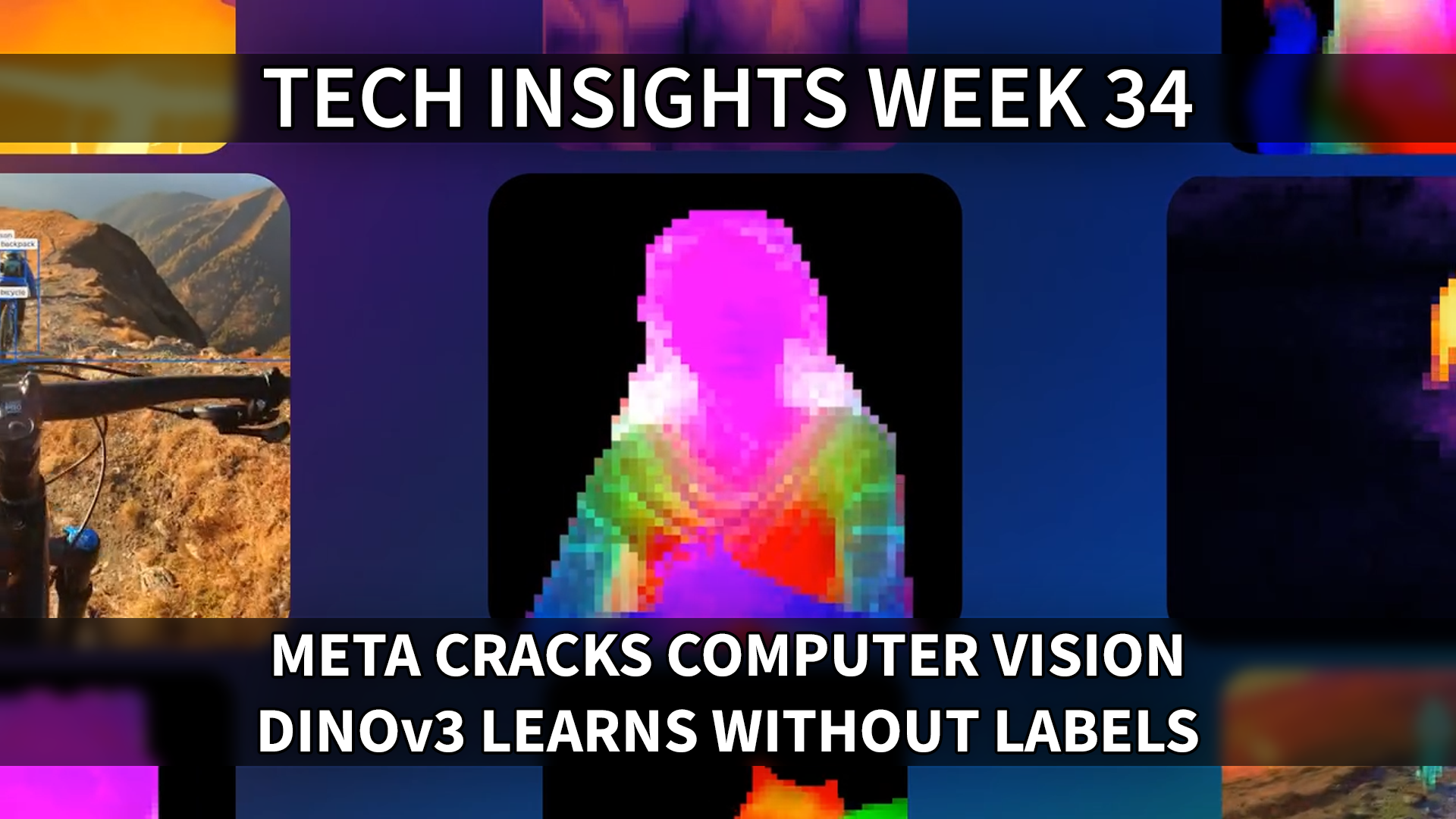
Do you know what a vision backbone is in AI? The word backbone here refers to a feature extraction network that processes input data into meaningful feature representations, also called a feature extractor. Examples of vision backbones are the traditional AlexNet which initiated the modern era of deep learning, ResNet and Google Inception (GoogLeNet). Training a backbone to recognize images have traditionally been a complex process, and you typically have to create a unique specialized backbone for each specific task: object detection might use one backbone, semantic segmentation another, and medical imaging yet another. Last week Meta launched DINOv3, a…
-
Tech Insights 2025 Week 33
Last week OpenAI launched GPT-5, their new “system of models”. Unlike GPT-4 and GPT-4o, GPT-5 is not a model but is instead a system with a smart router (OpenAI calls it the “autoswitcher”) that will try to direct your message to the right model for the task. Ask it to solve a math problem – and your request will be sent to the thinking model. Ask it about a political question, and your request is sent to a large model without thinking. And ask it to process a document or automate a simple task, then your request is sent to…
-
Tech Insights 2025 Week 32
Last week OpenAI announced that they are generating over $1 billion per month with over 700 million weekly active users. AI will soon be used daily by everyone with an Internet connection, and while most of today’s AI services can be used for free, they will soon become quite expensive. Microsoft launched “Copilot Mode” for their Edge browser last week, stating that the feature will be “free for a limited time” but after that will require a subscription. At the same time Anthropic announced new weekly limits to their $200-per-month Max subscription that will give “most users” three to five…
-
Tech Insights 2025 Week 31
The gap between EU and US when it comes to AI development just reached a critical point. Last week the US launched its AI Action Plan, which outlines an “unapologetic strategy” that prioritizes speed, deregulation, and market dominance over regulatory compliance. The Plan outlines over 90 Federal policy actions targeting infrastructure, innovation and global leadership. Meanwhile, the EU continues implementing its AI Act, a comprehensive regulatory framework that imposes strict guardrails and penalties of up to 7% of global revenue for companies using AI systems that have “unacceptable risk.” However, the technical standards needed for compliance still remain unfinished. Most…
-
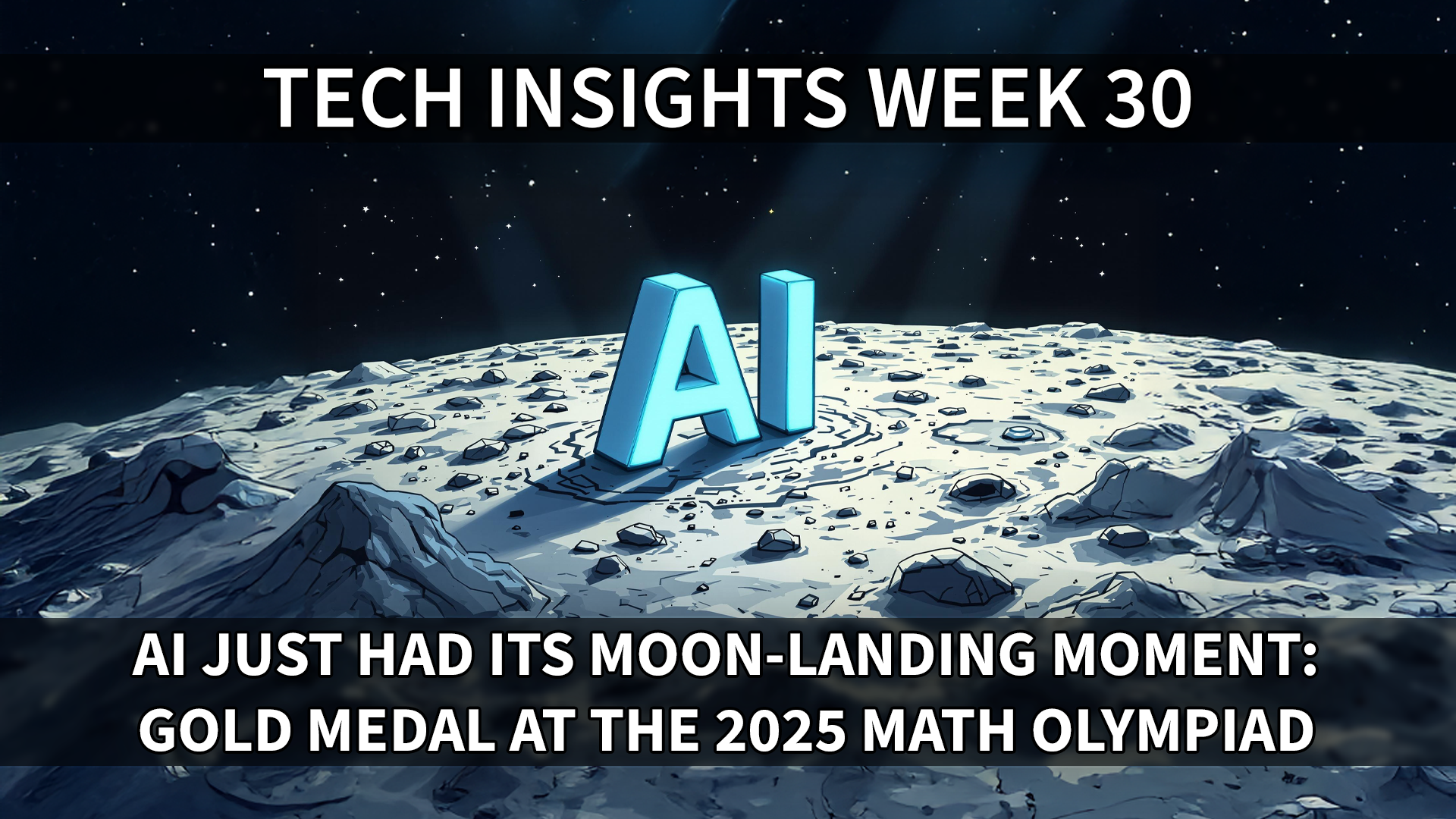
Tech Insights 2025 Week 30
Always skate to where the puck is going! In one of my previous jobs we worked closely with coach Kevin Ryan, who previously worked eight years as the general manager of 08 Stockholm Human Rights (a Basketball Club). Kevin kept pushing the famous mantra by Wayne Gretzky to always try to predict where things are heading, and not where things are right now. Last week in AI we had our first “moon landing” moment, and most people are not even aware of it. OpenAI announced that one of their experimental models, still an auto-regressive model that generates one word at…
-
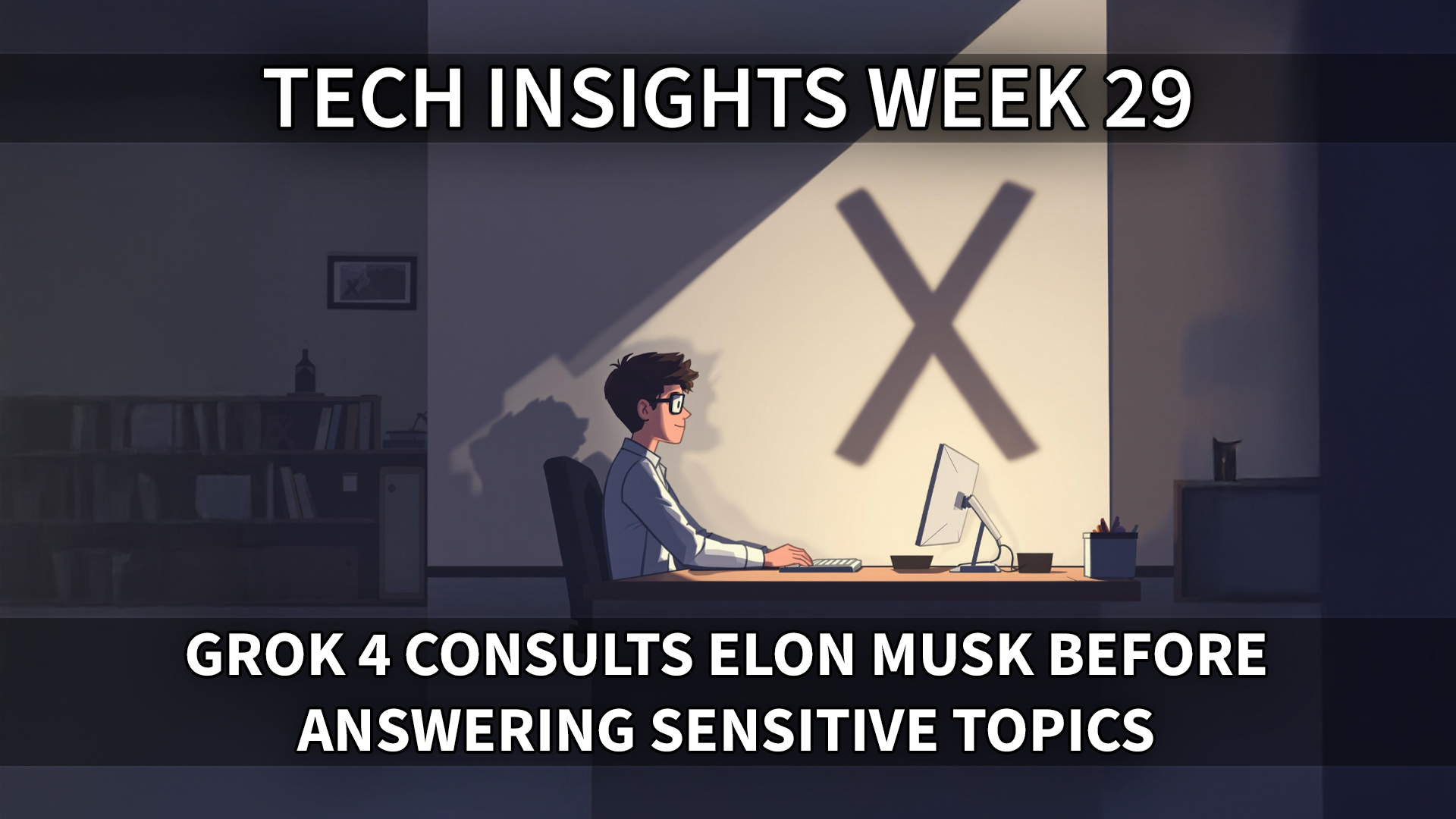
Tech Insights 2025 Week 29
Last week Elon Musk and xAI finally launched Grok 4, their next generation model, and at the same time unveiled a $300-per-month AI subscription plan called SuperGrok Heavy. “With respect to academic questions, Grok 4 is better than PhD level in every subject, no exceptions,” said Elon Musk during a livestream Wednesday night. “At times, it may lack common sense, and it has not yet invented new technologies or discovered new physics, but that is just a matter of time.” And looking at the benchmarks it looks quite impressive, especially for math and problem solving. This is truly a next-generation…
-
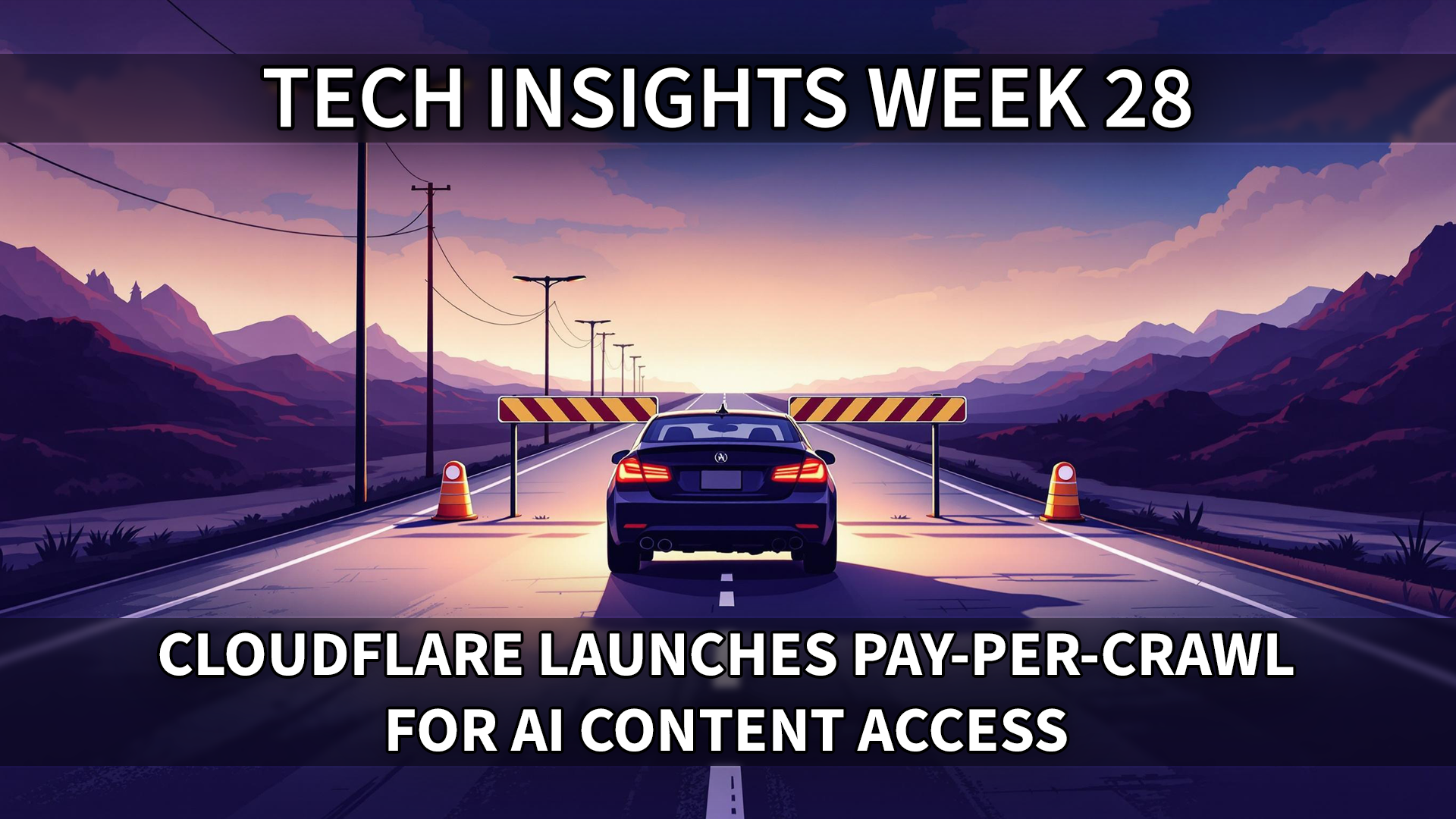
Tech Insights 2025 Week 28
Last week Perplexity joined Anthropic, Cursor, Google and OpenAI in offering a $200 “Max” subscription. We are clearly entering the next level of subscription pricing, and I am quite confident this is only the beginning. The more complex the AI models become – the longer they can run autonomously without user interaction – the more costly it will be to keep them running. Claude 4 Opus is an excellent example of this, prompted the right way it can work literally for an hour producing code and documentation of very high quality. I believe we will see the next price bump…
-
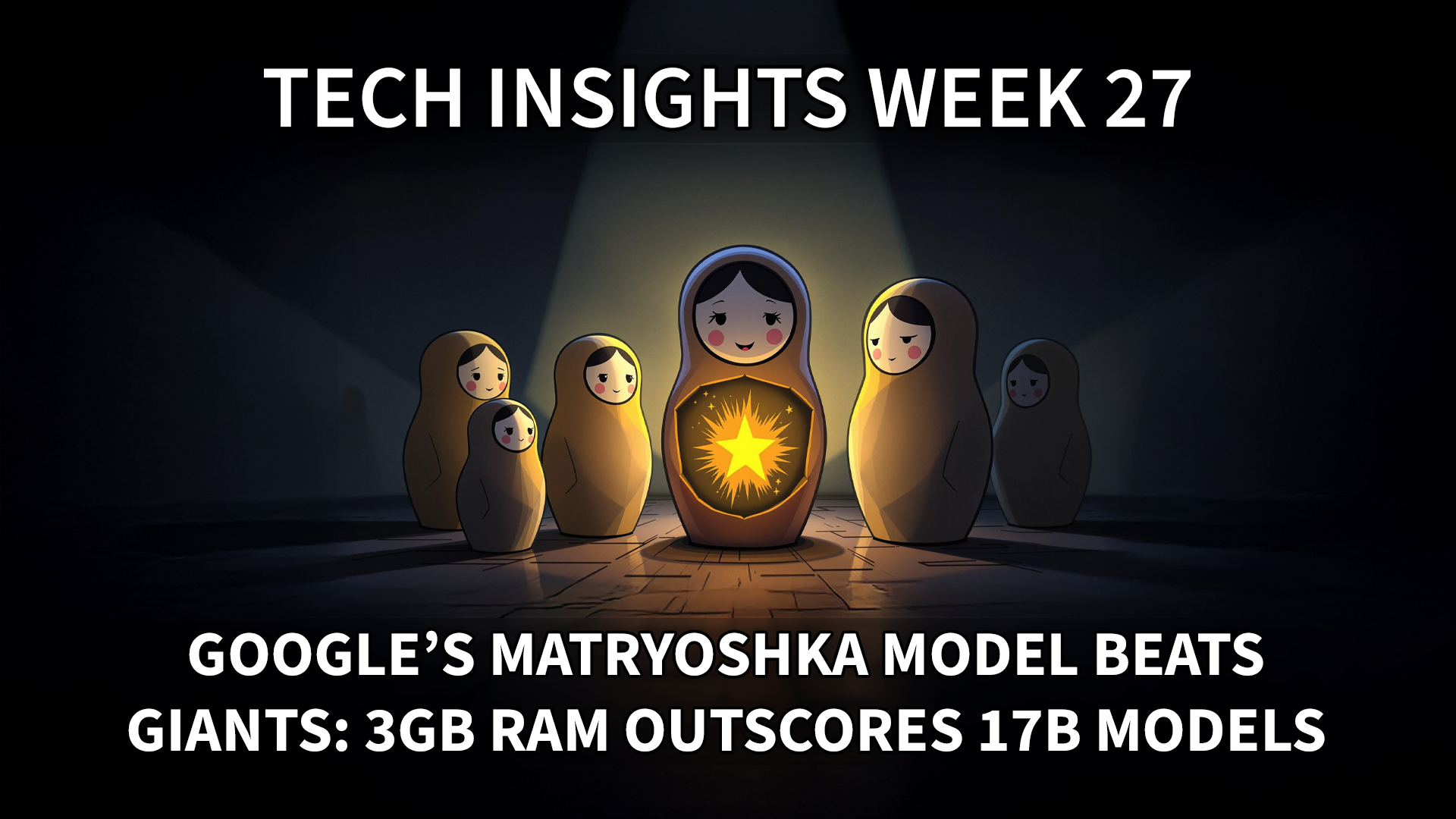
Tech Insights 2025 Week 27
This was truly a week of edge and offline models releases! First Google released the full version of Gemma 3n, a multimodal AI model designed to run on edge devices with as little as 2GB of RAM. This means you can run it on smartphones or laptops without cloud connectivity, but the performance of it is truly outstanding! The small Gemma 3n 8B model (runs on 3GB RAM) is the first model under 10B parameters to score above 1300 points on LMArena, outperforming much bigger models like GPT 4.1-nano, Llama 4 Maverick 17B and Microsoft Phi-4. Gemma 3n is released…
-
Tech Insights 2025 Week 26
Two weeks ago I wrote about my side-project with Claude Code. The project is now done, and it was built 100% with Agentic AI. It’s an app called Notebook Navigator, and it combines the best of note-taking apps like Apple Notes, Bear, Evernote, Google Keep and Notion into one single app. It is built as a plugin that replaces the user interface for the text editor Obsidian, and user feedback has so far been amazingly good. The entire application is around 13 000 lines of code and has been translated into 7 languages: English, German, Spanish, French, Japanese, Chinese Simplified…
-
Tech Insights 2025 Week 25
Should I require all my developers to start using AI? I often get that question. The answer is not a strict yes or no, but more “it depends”. If you are using a code base built on Go, Typescript, Rust or Python then the answer is always YES, go ahead, give Claude Code with Claude Max subscriptions to all your developers and you will see a productivity boost you didn’t think was possible. If you instead use .NET or JAVA, then the answer is more “it depends”, because you will be heavily dependent on the model. If you only use…