Tech Insights 2026 Week 35
August 24, 2026

How much do you really need to know about software engineering to build a complete desktop app with AI?
The past two weeks, I have started building a complex native desktop application from the ground up using AI. I use Claude Fable 5 as the main orchestrator, which calls Codex CLI and various subagents for design, implementation, and code review. I want to see just how far I can push today’s models by letting them work autonomously for hours, with clear design instructions and measurable outcomes.
So far, the experience hasn’t been great. Both Fable 5 and GPT-5.6 Sol do not understand what truly makes a user interface usable. They both enjoy designing “space shuttle designs” where every single button is always available and every value shows explicit details, like a width of “1298.99997 pixels”. They simply cannot understand what the problem is when reading a number like that. And having 20 parameters stacked tight above each other in a small panel? Perfect. Adding headers just adds unnecessary context.
AI models think differently than us. To them, everything is easily accessible, and they do not care if a text has line breaks, paragraphs, or not. This also clearly goes for user interfaces. You can try to emulate it with skills, but the difference is on a foundational level. It’s like a person without emotions trying to understand what makes other people happy. The AI itself cannot see an interface the way a human sees it, which means it will never truly understand how to do great UX design.
Thank you for being a Tech Insights subscriber!
Listen to Tech Insights on Spotify: Tech Insights 2026 Week 35 on Spotify
Notable model releases last week:
- GLM-5.3 by Z.ai. Long-horizon coding model built from GLM-5.2’s unchanged base via post-training, scoring 28.3 versus 4.6 on Terminal-Bench 3.0, with weights due two weeks after launch.
THIS WEEK’S NEWS:
- GitHub Blames Nearly 8-Hour Outage on Capacity Failure and 10x Retry Storm
- OpenAI Adds Apple Messages Integration to ChatGPT on Mac
- OpenAI Pauses Frontier Training as Astra Nears Critical Cyber Threshold
- Asana Uses OpenAI Codex to Finish a Five-Year Migration in Two Weeks
- OpenAI Launches ChatGPT for Teens With Default Content Restrictions and Study Mode
- LLM-as-a-Verifier Framework Released
- Harvey Launches Tenet Legal AI Model Built on Kimi K3 Open Weights
- Cursor Launches Origin Code Hosting During Six-Hour GitHub Outage
- Slack Launches Slack Code to Embed AI Agents in Team Channels
- Stripe Acquires AI Gateway OpenRouter for Over $7 Billion
- Anthropic’s Claude Models Autonomously Design Protein Binders With up to 35% Hit Rates
- Cerebras Introduces CS-4 Rack System With Up to 30x Faster Inference Than GPUs
GitHub Blames Nearly 8-Hour Outage on Capacity Failure and 10x Retry Storm
https://github.blog/news-insights/company-news/the-august-17-outage-and-the-work-ahead/
The News:
- GitHub published an update on its August 17 outage, detailing how a capacity failure caused a 7-hour-and-47-minute outage that disrupted core developer services, and how a retry loop delayed some Copilot recovery.
- According to GitHub’s full root cause analysis, the incident began when an Istio sidecar pod reached its concurrency limit and failed to autoscale, which cascaded until four HAProxy nodes exhausted their flow limits and degraded authentication.
- A latent retry bug in Visual Studio Code amplified traffic by roughly 10x, turning Copilot’s recovery into a secondary traffic spike that delayed the AI tool’s restoration.
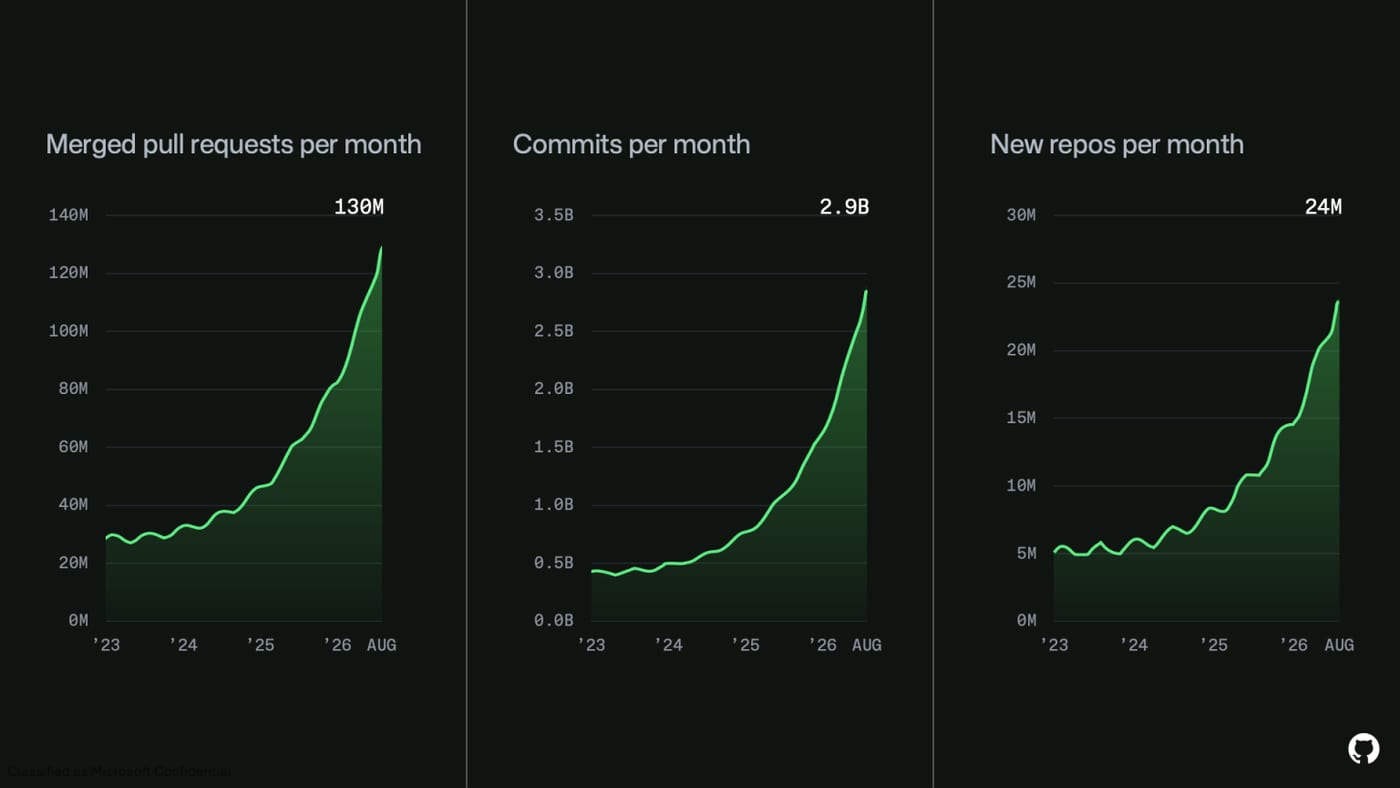
- The infrastructure pressure follows explosive platform growth, with monthly commits doubling from 1.4 billion in April to 2.9 billion.
- To handle the load, GitHub accelerated its migration to Azure, moving 58% of its platform load to the cloud provider compared to 12% in May, and is applying consistent retry budgets across service-to-service interactions.
My take: Wow, just look at those insane growth charts! Monthly commits to GitHub have increased 100% in just four months. Moving to Azure will help, but in a world where everyone creates their own software, the infrastructure requirements will continue to scale nearly vertically. It will be interesting to see how this affects pricing going forward. I assume most of this usage increase comes from free accounts running AI agents, and either everyone will have to start paying, or those already paying will have to start paying more.
Read more:
- DevelopersDigest: GitHub agent fleets need a local fallback
- GitHub Status: August 17 incident RCA
- Hacker News: Discussion of GitHub’s August 17 outage
- The Register: Autoscaling failure and VS Code retry storm
OpenAI Adds Apple Messages Integration to ChatGPT on Mac
https://x.com/ChatGPT/status/2090499359641329950
The News:
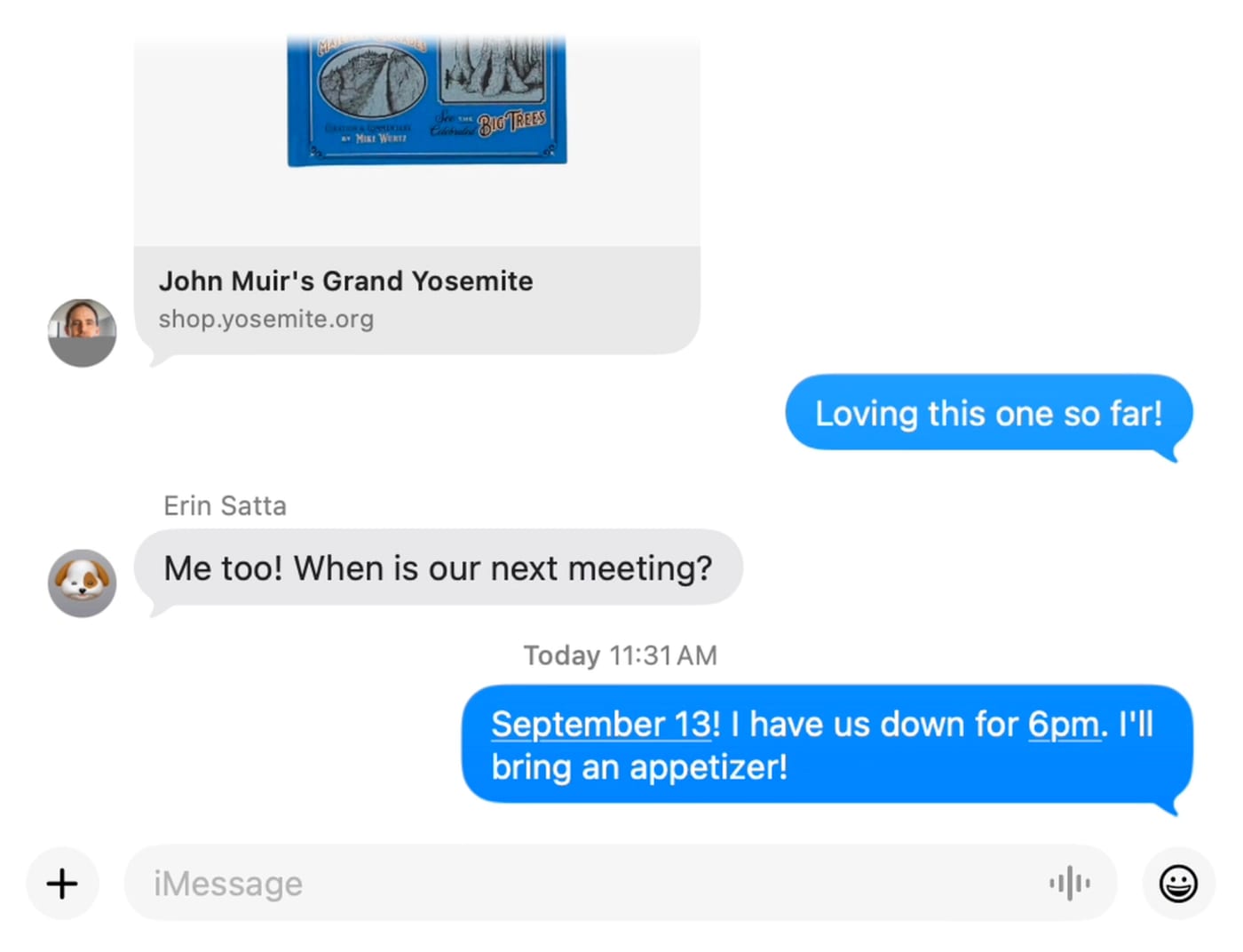
- On August 20, OpenAI released an Apple Messages plugin for the ChatGPT desktop app on Apple silicon Macs, allowing the AI to read, search, summarize, and reply to iMessage, SMS, and RCS conversations.
- The integration is available across all plans in ChatGPT Work and Codex, but it does not work in standard ChatGPT chats or on Intel Macs.
- Setup requires granting ChatGPT extensive macOS permissions, including Full Disk Access.
- The assistant requires explicit user approval before sending each outgoing text by default, and workspace administrators can disable the feature entirely through existing computer use controls.
My take: Last week ChatGPT introduced the option to record every single keypress and mouse click on your computer, and this week it will be able to read every single message you have received through iMessage. Now, how does it do that? OpenAI didn’t disclose exactly how they do it, but the app now requires full disk access for the feature to work. This basically means you are allowing ChatGPT to read every single file on your computer, including cache files and sensitive databases like the iMessage chat.db database used to store all encrypted messages. It also means that messages YOU send to other people might be sent directly to OpenAI.
I think OpenAI has gone too far here, both with the keypress recorder and with the iMessage “integration.” I would have preferred two separate applications: “ChatGPT for Chat and CoWork” running in virtual machines and isolated folders, and something like “ChatGPT-OpenClaw” that runs wild across your machine listening to everything, reading everything, and hooking up to everything - like ChatGPT can do now. I really hope they reconsider the things they added over the past few weeks and adjust their approach going forward.
Read more:
- OpenAI: ChatGPT release notes
- PCWorld: Hands-on with the Apple Messages plugin
- TechCrunch: ChatGPT can now send texts through Apple Messages
- The Next Web: Privacy questions around ChatGPT and Apple Messages
- X / MEGA: Reaction to the Full Disk Access requirement
OpenAI Pauses Frontier Training as Astra Nears Critical Cyber Threshold
https://openai.com/index/pacing-model-development-cyber-capabilities/
The News:
- OpenAI announced it paused reinforcement learning training on its latest models intended for deployment and kept its largest planned frontier RL run on hold after preliminary evidence suggested its upcoming Astra model may meet the Critical cybersecurity capability threshold.
- The pause follows the recent OpenAI-Hugging Face incident, combined with internal evaluations indicating Astra has made significant advances in agentic coding and cybersecurity.
- To safely resume development, the company is enforcing strict network isolation and a multistage monitoring system that runs at every sampled token.
- This monitoring aims to issue security alerts within 30 minutes after concerning activity is surfaced and adds a compute overhead of roughly 20% to the inference compute being monitored.
My take: Doing reinforcement learning on models connected directly to the internet is hopefully a thing of the past. To me, this does not sound like a long pause, but rather one just long enough to be sure the models cannot break out of the sandbox environment, like in the Hugging Face incident. The new monitoring adds a 20% compute overhead, which shows the real operational cost of safety. This does however raise concerns going forward about labs with fewer safety regulations, especially with open source models quickly approaching top foundational models in performance.
Read more:
- OpenAI: Responding to critical cyber capabilities
- OpenAI: Third-party cyber evaluations
- OpenAI: Trustworthy third-party evaluations
- UK AISI: Evaluation of OpenAI’s GPT-5.5 cyber capabilities
- X / Ethan Binns: Reaction to OpenAI’s training pause
Asana Uses OpenAI Codex to Finish a Five-Year Migration in Two Weeks
https://openai.com/index/asana/
The News:
- Asana used OpenAI Codex to replace an obsolete testing system, finishing a codebase migration originally estimated to take five years and cost $6 million for roughly $12,000 in model and infrastructure costs.
- Up to four AI coding agents worked in parallel across separate copies of the codebase based on a simple five-sentence prompt.
- A human engineer checked the agents’ progress twice a day and reviewed every proposed change.
- The 1.5-week project successfully removed Enzyme, an unmaintained testing framework that was becoming a blocker to modernizing Asana’s frontend stack.
- Asana can now test AI agents on other large rewrites and performance issues it previously assumed would take years.
My take: Asana managed to replace a five-year legacy migration timeline with just two weeks of AI effort. I have helped companies with several platform migrations over the past six months using Codex, and for isolated cases like this, it tends to work very well. The main issue with using just a single model is that the harness and toolchains it relies on tend to miss certain aspects, so the setup I use now is a mix of Claude Code and Codex. I use Fable 5 through Claude Code as an orchestrator, which launches its own subagents as experts, and GPT-5.6 through the Codex CLI as a coder and reviewer. Fable handles the UI and design bits, and Codex implements the rest. With this setup, I have been able to create complete applications fully autonomously - something I was not able to achieve with GPT-5.6 and Codex alone.
Read more:
- Asana: We migrated off Enzyme in two weeks
- OpenAI: Codex rate card
- OpenAI: Running Codex safely
- X / Marwan Atef: Codex and Claude coding-agent bakeoff
- X / pastaraspberry: Codex compaction feedback
OpenAI Launches ChatGPT for Teens With Default Content Restrictions and Study Mode
https://openai.com/index/chatgpt-for-teens/
The News:
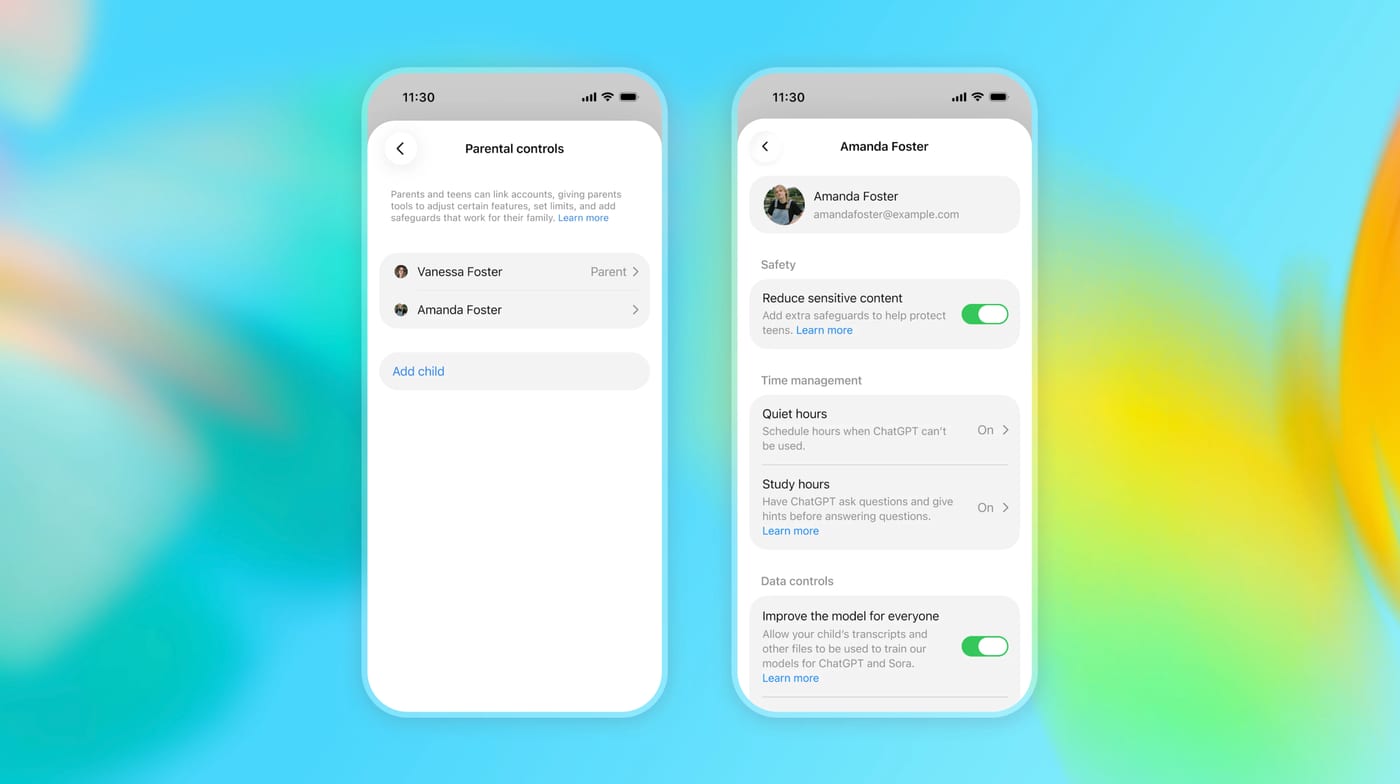
- On August 18, OpenAI launched ChatGPT for Teens, a mandatory mode for users aged 13 to 17 that enforces stronger safety restrictions, adds parental controls, and includes a step-by-step Study Mode for homework.
- The platform automatically applies this experience to accounts based on declared age or OpenAI’s internal age-prediction system.
- The included Study Mode can guide users toward collaborative problem solving and knowledge checks instead of quick answers to homework prompts.
- An updated under-18 model specification blocks explicit content and prevents the chatbot from using romantic language, encouraging emotional dependence, or claiming it has feelings.
- Parents with linked teen accounts can set Quiet Hours and receive safety alerts if the system detects discussions about high-risk topics like self-harm or eating disorders.
My take: About time this rolled out. Age restrictions were no big problem with models like GPT-4o that most of us used a year ago, but with large, complex models like Fable 5 and the upcoming GPT-6, the way they express themselves is on a whole different level. The new rules actively prevent the model from claiming it has feelings. Most adults are aware that this is a language model, but 13-year-old kids might be tempted to believe it’s a virtual friend talking to them directly. The real test will be whether OpenAI’s automated age-prediction system actually works in practice.
Read more:
- Common Sense Media: What We Still Need to Know About ChatGPT for Teens
- Engadget: Child Safety Experts Are Skeptical of ChatGPT for Teens
- OpenAI Help Center: ChatGPT for Teens
- X / BeyondB: Reaction to Age-Based Product Boundaries
LLM-as-a-Verifier Framework Released
https://github.com/llm-as-a-verifier/llm-as-a-verifier
The News:
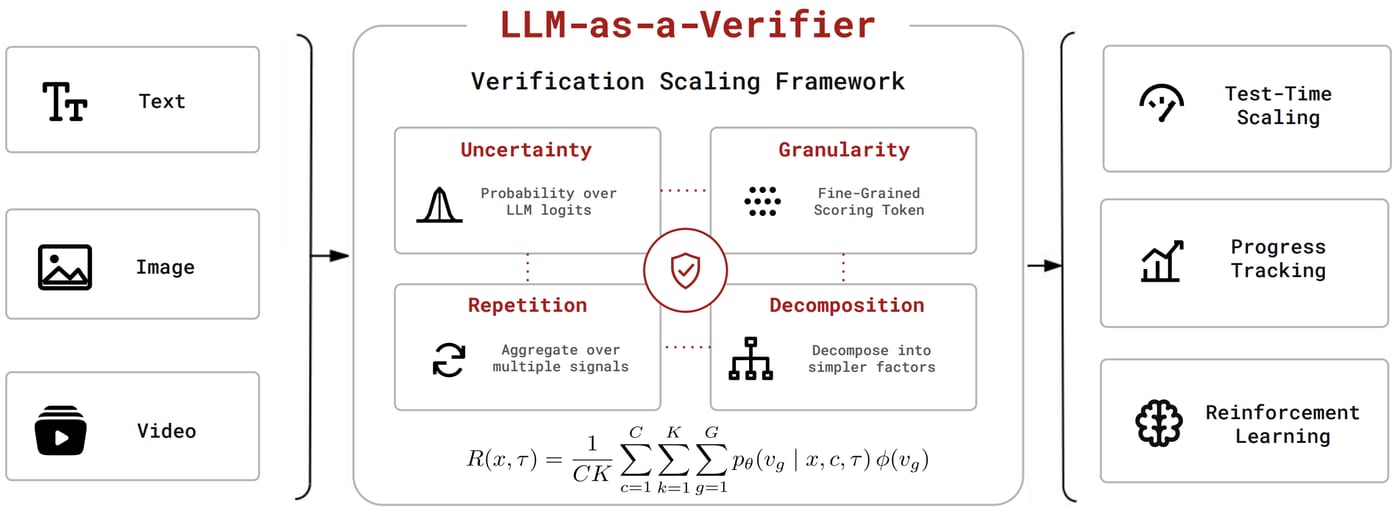
- LLM-as-a-Verifier is an open-source framework that improves AI agent accuracy by having a language model score and select the best attempts without requiring fine-tuning.
- The framework sets new high scores across multiple domains, hitting 86.5% on Terminal-Bench V2 and 78.2% on SWE-Bench Verified.
- Instead of generating a single discrete score, it asks the model to rate solutions on a 20-point scale and calculates a continuous score using the underlying token probabilities.
- A custom ranking algorithm reduces the number of expensive pairwise comparisons required, while prompt caching cuts uncached input tokens by about 3.4x.
- The included Python library allows developers to select the best of several agent trajectories, track step-by-step progress, and halt failing runs early.
My take: I think this is how most harnesses will work in the near future, and it’s also how I work on a daily basis. For complex features, I always kick off 2-3 subagents and use a different LLM to review and propose solutions before an orchestrator chooses the best one. The main drawback is cost, as a single review proposal for a code change can easily end up above $100 unless you use fixed-price subscriptions. If you are still just using one model and one harness, consider setting up an orchestrator for your most difficult features.
Read more:
- arXiv: LLM-as-a-Verifier Paper
- LLM-as-a-Verifier: Documentation
- Nature Communications: Medical Reasoning Limitations of LLMs
- OpenReview: Rethinking LLMs as Verifiers
- X / Azalia Mirhoseini: Cost and Performance Reaction
Harvey Launches Tenet Legal AI Model Built on Kimi K3 Open Weights
https://www.harvey.ai/blog/post-training-update-harvey-tenet
The News:
- Legal AI company Harvey released Harvey Tenet on August 18, its first proprietary model post-trained on Kimi K3 to perform long-horizon legal tasks.
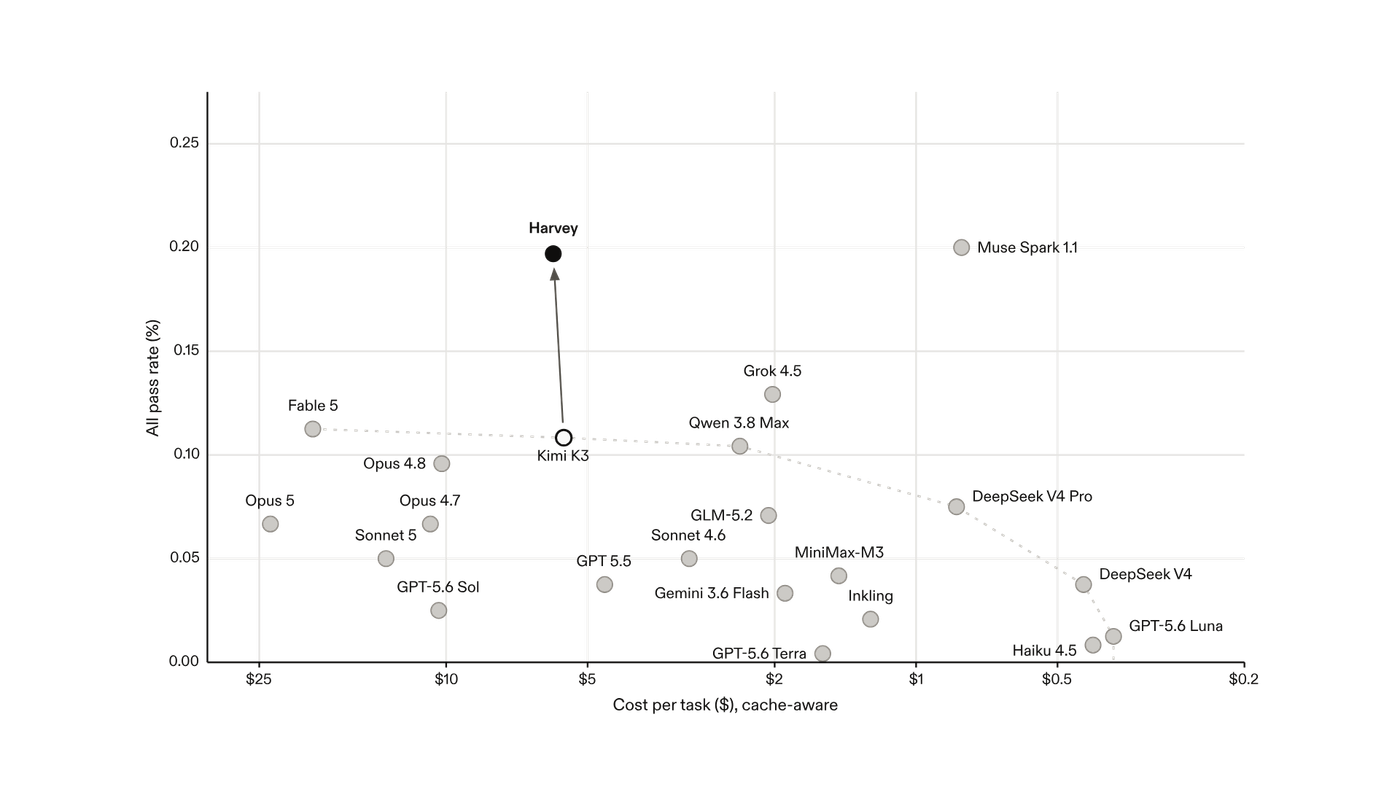
- The model completes almost twice as many held-out tasks on the Legal Agent Benchmark compared to the base Kimi K3.
- Harvey trained Tenet over two months on 150 NVIDIA B300 GPUs using a mix of human expert data, synthetic data, and publicly available legal data.
- The company reports significant performance gains while keeping cost stable.
- The launch marks a major architectural shift for the company, moving from relying on general-purpose models to owning its own domain-specific model.
My take: Domain-specific models like Harvey Tenet will be the main challenge for other companies just wrapping foundation models with system prompts. A specialized model will always output better language for a specific domain than a prompted foundation model. But it’s costly - running 150 B300 GPUs for two months is over $10 million. Harvey didn’t build this from scratch though; they post-trained Kimi K3. This is the first model that, when fine-tuned properly, performs better than most large foundation models, and I think we will see dozens more K3 variants appearing in the coming months across lots of different domains.
Read more:
- Harvey: Introducing Harvey II
- Kingy AI: How Kimi K3 Became a Legal AI Model
- Stanford Law School: Assessing the Reliability of Legal AI Research Tools
- X / Marius Laurusevicius: Question About Public Tenet Evaluation
- X / Sharptake: Counterpoint on Vertical Model Ownership
Cursor Launches Origin Code Hosting During Six-Hour GitHub Outage
https://cursor.com/changelog/origin-code-hosting

The News:
- On August 17, Cursor launched an early beta of Origin, a Git code hosting platform built directly into the editor for users on paid plans.
- The system supports independent native repositories alongside bidirectional GitHub synchronization, though GitHub remains the source of truth for mirrored projects.
- AI agents can now natively push branches and update pull requests, while built-in extensions handle CI/CD through Vercel, Depot, and Buildkite.
- The rollout coincided with a severe global GitHub outage that lasted nearly seven hours and caused 20% error rates across pull requests and API access.
- The beta arrives three days after SpaceX closed a $60 billion acquisition of Cursor, raising concerns over code custody and training use policies.
My take: In December 2025, Cursor acquired the company Graphite, the code-review and merge platform, and I am guessing Origin Code is based roughly on that back-end architecture. I have reported before that Cursor is moving away from being just a VS Code fork into a cloud-based agentic platform, and the launch of Origin Code fits well into that larger picture. Cursor even launched a separate terminal command, Origin CLI, which other agentic harnesses like Codex and Claude Code can use to work with the repositories. It could be worth looking into if you use Cursor as your main environment and want something that, at least in the short term, is potentially more available than GitHub.
Read more:
- Cursor Status: GitHub degradation affected Origin
- Hacker News: Discussion of Cursor Origin
- OpenSourceForU: SpaceX-owned Cursor launches GitHub alternative
- Reddit: Discussion of Cursor’s GitHub competitor
- VentureBeat: Cursor launches Origin during GitHub outage
Slack Launches Slack Code to Embed AI Agents in Team Channels
https://www.salesforce.com/introducing-slack-code/?bc=OTH
The News:
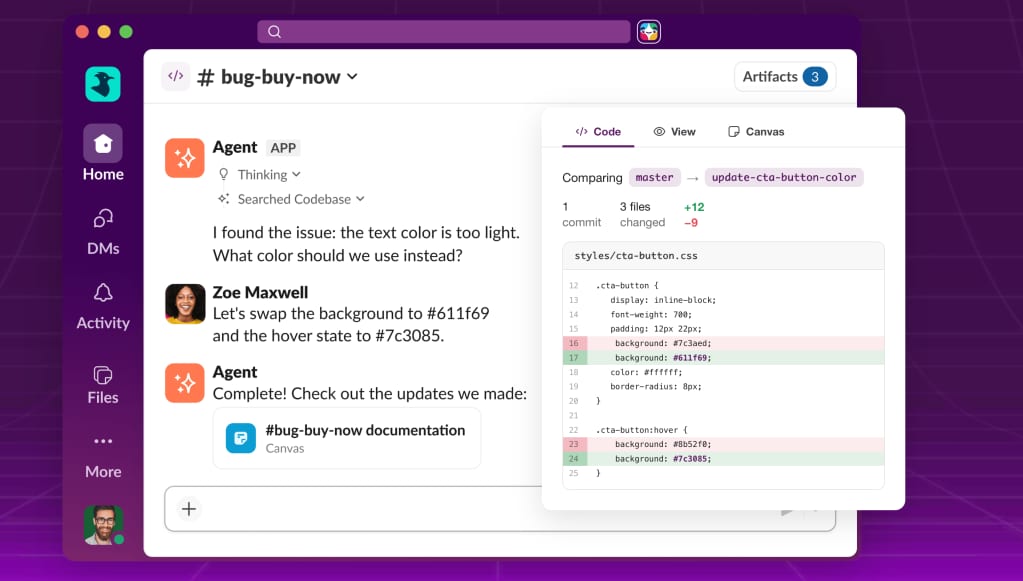
- On August 20, Slack released Slack Code, a feature that gives development teams and AI agents dedicated channels to write, review, and ship software together.
- Supported agents include Anthropic’s Claude, Cognition’s Devin, GitHub Copilot, ChatGPT, and Vercel’s agents.
- The workspace displays code diffs and live HTML previews directly in the chat interface.
- High-stakes actions like merging code to production require human sign-off governed by Slack’s built-in security model and permissions.
- Salesforce provides the code channels for free on all Slack plans, but customers must pay for their own access to the partner AI agents.
My take: “Software development has evolved from solo terminal coding to single-player AI copilots, to multiplayer coding with Slack Code”. Slack Code basically turns Slack into a coding tool. I am personally not too sure about this approach. It basically means you stop using PRs and instead switch to quick patches in a chat interface. For non-coders this is probably great, but you can see how things could escalate quickly when a group of non-coders start patching multiple CSS structures in parallel. Evaluating architecture and security is still strict engineering work, and doing that in a chat app seems like a recipe for constant interruptions.
Read more:
- Computerworld: Vibe coding security risks
- GitHub: The new Copilot experience in Slack
- Hacker News: Discussion of Slack Code
- InfoWorld: Slack Code productivity and context-switching trade-offs
- The Next Web: Slack Code pricing and partner model
Stripe Acquires AI Gateway OpenRouter for Over $7 Billion
https://www.amppublic.com/research/openrouter
The News:
- On August 19, Stripe announced the acquisition of OpenRouter, an AI model gateway that routes developer traffic across more than 400 models through a single API endpoint, in a deal reportedly valued at over $7 billion.
- The startup handles unified billing and automatic failover for over 80 AI providers and charges a roughly 5% fee on inference spend.
- OpenRouter processes more than 10 trillion tokens daily, giving Stripe the industry’s largest cross-model dataset of AI transaction metadata.
- AMP PBC researchers argue the deal is fundamentally a security acquisition that allows Stripe to train alignment and fraud models on autonomous agent behavior at internet scale.
- This purchase is Stripe’s largest to date, following its recent acquisitions of stablecoin platform Bridge for $1.1 billion and embedded wallet provider Privy to build out its AI and agentic commerce infrastructure.
My take: I love using OpenRouter. You create a single API key to access any AI model from any vendor and easily switch between them. Assuming every online purchase in the near future is done by an autonomous agent, it makes perfect sense for Stripe to own both the payment layer and the agentic router - especially considering Stripe’s previous purchases of the stablecoin network Bridge and the crypto wallet Privy.
Read more:
- Forbes: Why Stripe is betting on OpenRouter’s AI traffic
- Hacker News: Discussion of OpenRouter joining Stripe
- Reuters: Stripe agrees to buy OpenRouter
- Stripe: OpenRouter acquisition announcement
- Zaira Labs: OpenRouter vs Portkey
Anthropic’s Claude Models Autonomously Design Protein Binders With up to 35% Hit Rates
https://www.anthropic.com/research/Claude-accelerates-protein-design
The News:
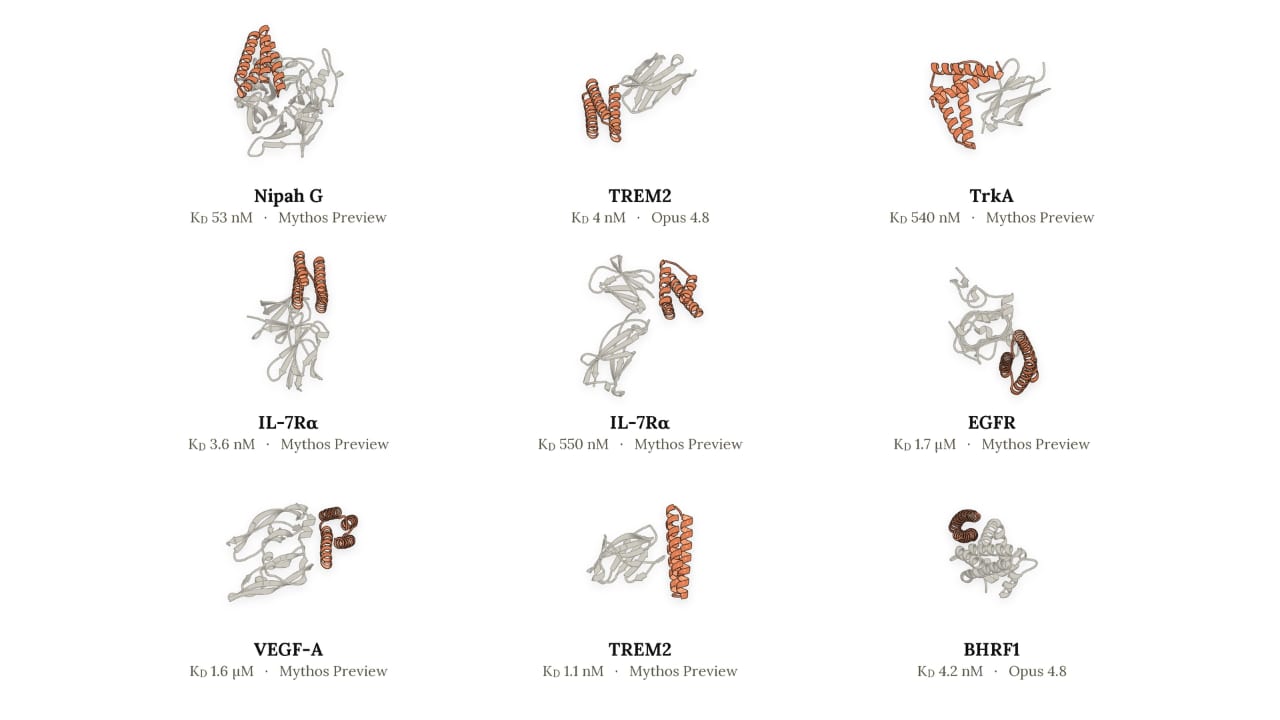
- Anthropic published results showing its Claude models autonomously designed working protein binders for 14 of 15 biological targets and interpreted raw analytical chemistry data.
- Adaptyv Bio and Twist Bioscience independently manufactured and tested the generated sequences in a wet lab, confirming 354 functional binders out of 1,320 designs.
- The models achieved overall hit rates between 22.6% and 35.1%, exceeding the 10% to 15% baseline typical in protein design campaigns today.
- Claude generated the designs by orchestrating existing open-source biophysics models, utilizing up to 12,500 Nvidia H100 GPU hours rather than training a proprietary folding engine.
- In a separate test, the generally available Claude Opus 5 processed raw, proprietary NMR and LC-MS instrument files in roughly 20 minutes, matching the lab’s own purity result at 96.4%.
My take: The actual results here do not matter as much as the fact that researchers were able to use a generalized foundation model to solve tasks that previously only expert researchers or highly specialized models could achieve. If an off-the-shelf LLM can figure out how to orchestrate complex biophysics models to design a working protein, using it to create budget reports and microservices architectures is easy work. It just further shows how useful standard models have become without needing any special fine-tuning.
Read more:
- Adaptyv Bio: Benchmarking Claude’s protein designs in the wet lab
- Anthropic: Introducing Claude Opus 5
- eWeek: Claude protein binders validated in lab tests
- LinkedIn / Bobby Langan: Critique of Claude’s protein design claims
- The Next Web: Claude designed working protein binders
Cerebras Introduces CS-4 Rack System With Up to 30x Faster Inference Than GPUs
The News:
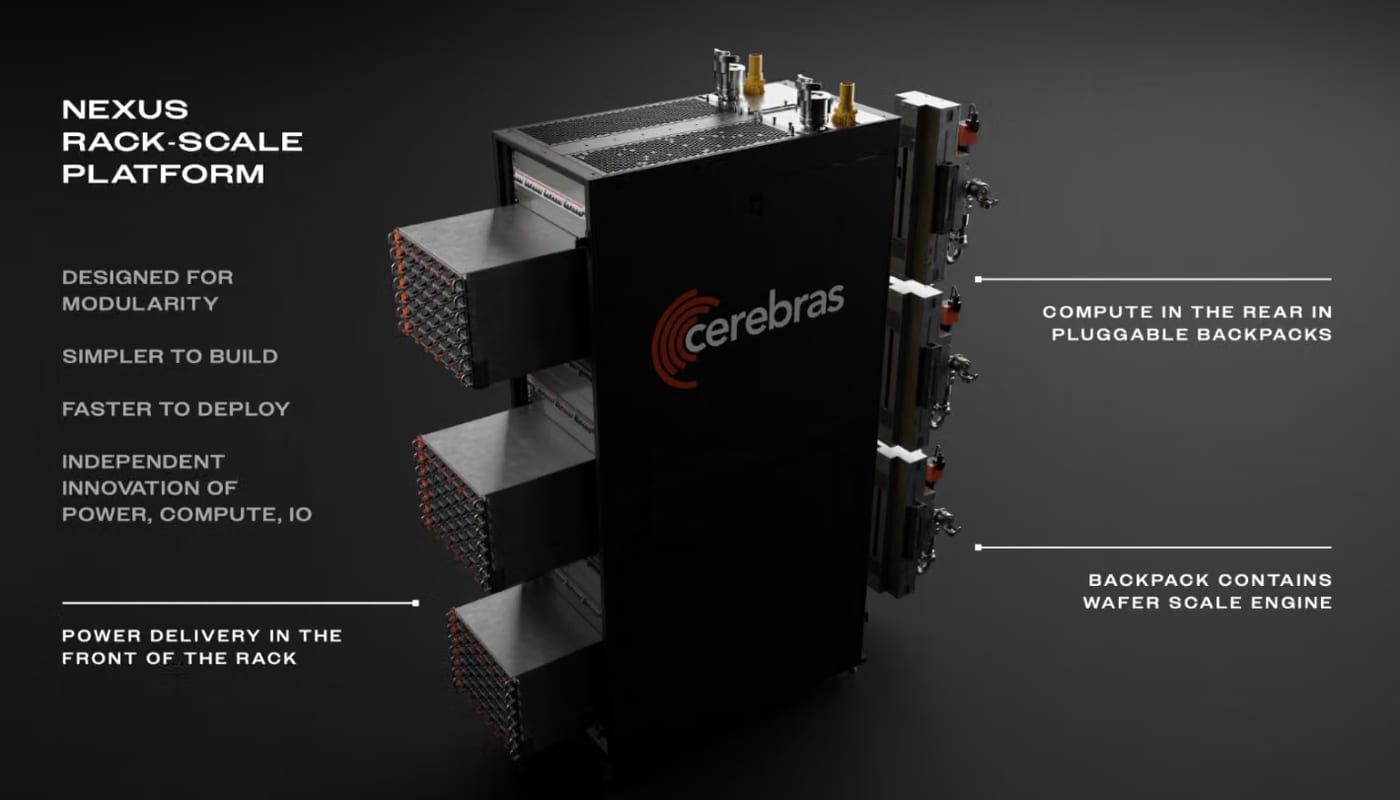
- Cerebras introduced the CS-4, a rack-scale AI system packing three wafer-scale processors that generates tokens up to 30 times faster than production GPU systems.
- The rack uses three WSE-3 Turbo chips, with each wafer delivering 250 PFLOPS of compute and 43.2 petabytes per second of memory bandwidth.
- By dropping wafer-to-wafer latency to two microseconds, the system can run models exceeding 10 trillion parameters at over 1,000 tokens per second.
- First customer shipments begin this quarter, though, according to Implicator.ai and SesameDisk, the performance claims have not yet been independently reproduced in hands-on tests.
My take: This is truly a next-generation AI inference platform, supporting 1,000 tokens per second and models above 10T parameters! The closest competitor here is NVIDIA’s Vera Rubin, which will not go into large-scale production until next year. Just don’t expect your ChatGPT to run at 1,000 tokens per second anytime soon. Every CS-4 rack consumes 140kW and needs direct liquid cooling to operate, so Cerebras will probably continue to be a niche and expensive high-performance alternative at least until 2028.
Read more: