Tech Insights 2026 Week 5
January 26, 2026
Can you tell if a video is real or AI generated? Runway, the company behind the AI video model Gen-4.5 just did a test where they let 1,043 participants watch two five-second clips, where the first frame of the real video was used to create the animated AI-video. In this study, less than 10% could tell the difference between real and AI-generated video. If you have a few minutes to spare, you can do the test yourself, it would be interesting to hear if you succeeded.
A year ago most discussions around AI generated video was around the problem with physics. AI video models cannot possibly understand the laws of physics well enough to render videos, it was argued. Well fast forward a year and 90% of us cannot even see the difference. I believe that in another year no-one will be able to spot the difference between real and AI-generated clips. This just shows how AI again and again proves it’s capable of doing things no-one could anticipate, like rendering videos with complex physical interactions perfectly.
It’s the same with programming. These days I mostly use GPT-5.2 “high” or “extra high” in Codex, and it’s an amazing model. Watching it reason to solve extremely hard programming tasks is a joy, and I very often have to remind myself that this is a next-token language model, not a self-aware robot I am working with. But often times it feels like it. The limitations we see in software development today - that we need to orchestrate agents, that we have to tell them how the code base is structured, and how the code base should mature over time, maybe it will be the same like with AI video generators. What most people think is impossible today, will be very much possible in a year.
Many things will happen already in the coming month when it comes to AI programming, Sam Altman promises “lots of exciting launches related to Codex coming over the next month, starting next week”. And we have just started 2026. Buckle up, because we’re heading at full speed straight into the unknown!
Thank you for being a Tech Insights subscriber!
Listen to Tech Insights on Spotify: Tech Insights 2026 Week 6 on Spotify
THIS WEEK’S NEWS:
- OpenAI Deploys Age Prediction System on ChatGPT
- OpenAI Introduces ChatGPT Advertising and $8 Go Subscription Tier
- xAI Activates Colossus 2 Supercomputer, Claims 1 Gigawatt Milestone
- Claude Code Replaces Todos with Tasks System
- Google DeepMind D4RT: 4D Scene Reconstruction from Video
- Google Launches Personal Intelligence for AI Mode in Search
- Alibaba Open Sources Qwen3-TTS Text-to-Speech Model Family
- Wikipedia Announces Five Major AI Partners for Enterprise Data Access
OpenAI Deploys Age Prediction System on ChatGPT
https://openai.com/index/our-approach-to-age-prediction/

The News:
- OpenAI rolled out age prediction on ChatGPT consumer plans on January 20, 2026, analyzing behavioral and account-level signals to identify users under 18.
- The model examines account duration, typical activity times, usage patterns over time, and stated age without requiring repeated identity verification.
- Accounts flagged as under-18 receive automatic restrictions on graphic violence, viral challenges encouraging risky behavior, sexual or violent roleplay, self-harm depictions, and content promoting extreme beauty standards or unhealthy dieting.
- Users incorrectly categorized as minors can restore full access through selfie verification via Persona, a third-party identity service.
- Parental controls allow setting quiet hours when ChatGPT cannot be accessed, disabling features like memory or voice mode, and receiving notifications if signs of acute distress are detected.
- The EU rollout will occur in coming weeks due to regional compliance requirements.
My take: We are just weeks away from the new “Adult mode” being introduced in ChatGPT so let’s all hope this age prediction system works as good as OpenAI believes it will. This is the first age prediction systems that are fully based on previous activity and usage patterns. Either it works well, or OpenAI will have to rollout Persona with selfie verification in a hurry to all users.
OpenAI Introduces ChatGPT Advertising and $8 Go Subscription Tier
https://openai.com/index/our-approach-to-advertising-and-expanding-access/
The News:
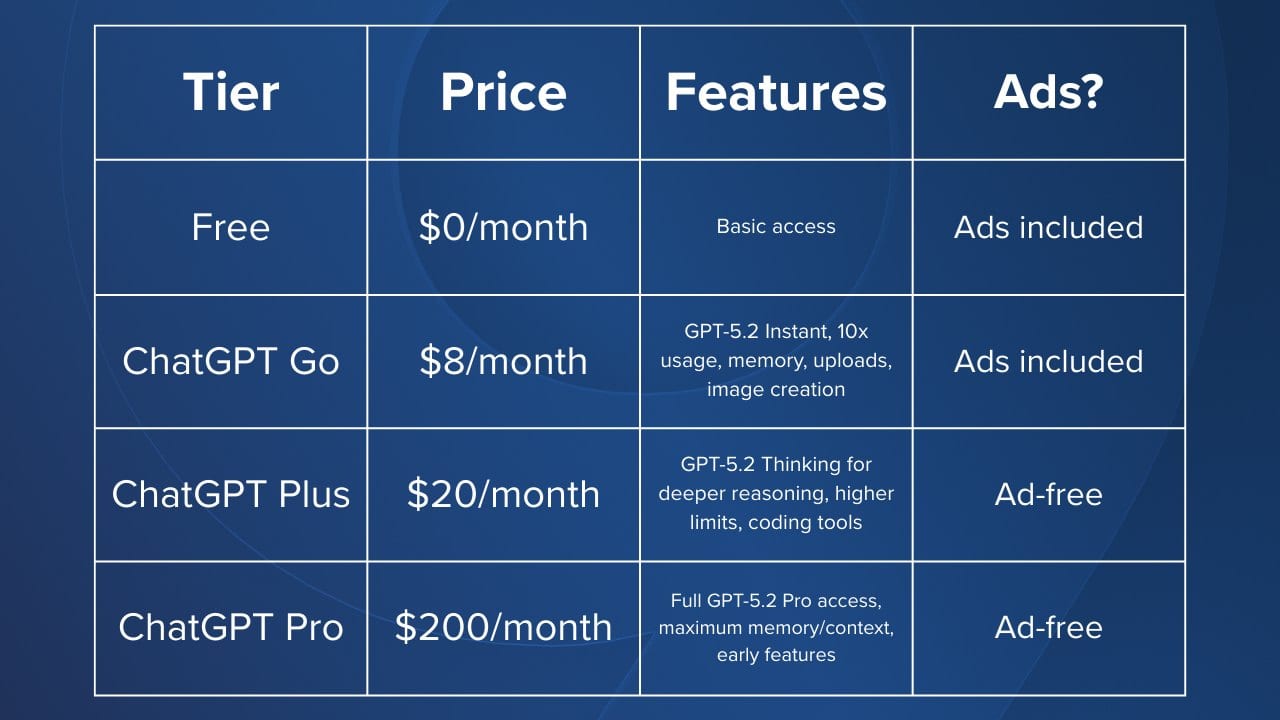
- OpenAI will begin testing advertisements in ChatGPT within the coming weeks for free-tier and Go-tier users in the United States. The $8/month Go tier launched in the U.S. on January 16, 2026, after becoming available in 171 countries since August 2025. Go tier includes expanded messaging, image creation, file uploads, and memory features.
- Ads will appear at the bottom of ChatGPT responses when the system identifies relevant sponsored products or services based on the current conversation. Users can dismiss individual ads, learn why they saw a specific ad, and disable personalization. The company states ads will not appear for users under 18 or near sensitive topics including health, mental health, or politics.
- Plus ($20/month), Pro ($200/month), Business, and Enterprise subscriptions remain ad-free. OpenAI published five principles governing its ad approach: mission alignment, answer independence, conversation privacy, choice and control, and long-term value.
- The company states that ads “do not influence the answers ChatGPT gives you” and that it will “never sell your data to advertisers”. CEO Sam Altman wrote on X that OpenAI will not “accept money” to influence ChatGPT responses, noting “a lot of people want to use a lot of AI and don’t want to pay”.
- ChatGPT had 800 million weekly active users as of October 2025. This represents OpenAI’s first implementation of advertising after CEO Sam Altman described ads in May 2024 as “like a last resort for us for a business model” and “ads plus AI is sort of uniquely unsettling”.
My take: Most people I talk to say they don’t want ads, but most people I talk to also seem to prefer to not pay $20 for services like YouTube Premium. Having to choose, they seem to prefer watching ads compared to paying for a service. Most Internet-connected people use ChatGPT at least on a weekly basis today, so adding ads to the service makes sense to keep the subscription cost low. I believe most people will prefer to not see ads, but I also believe most people will rather see ads than paying a higher monthly fee to OpenAI.
xAI Activates Colossus 2 Supercomputer, Claims 1 Gigawatt Milestone
https://x.com/elonmusk/status/2012500968571637891
The News:
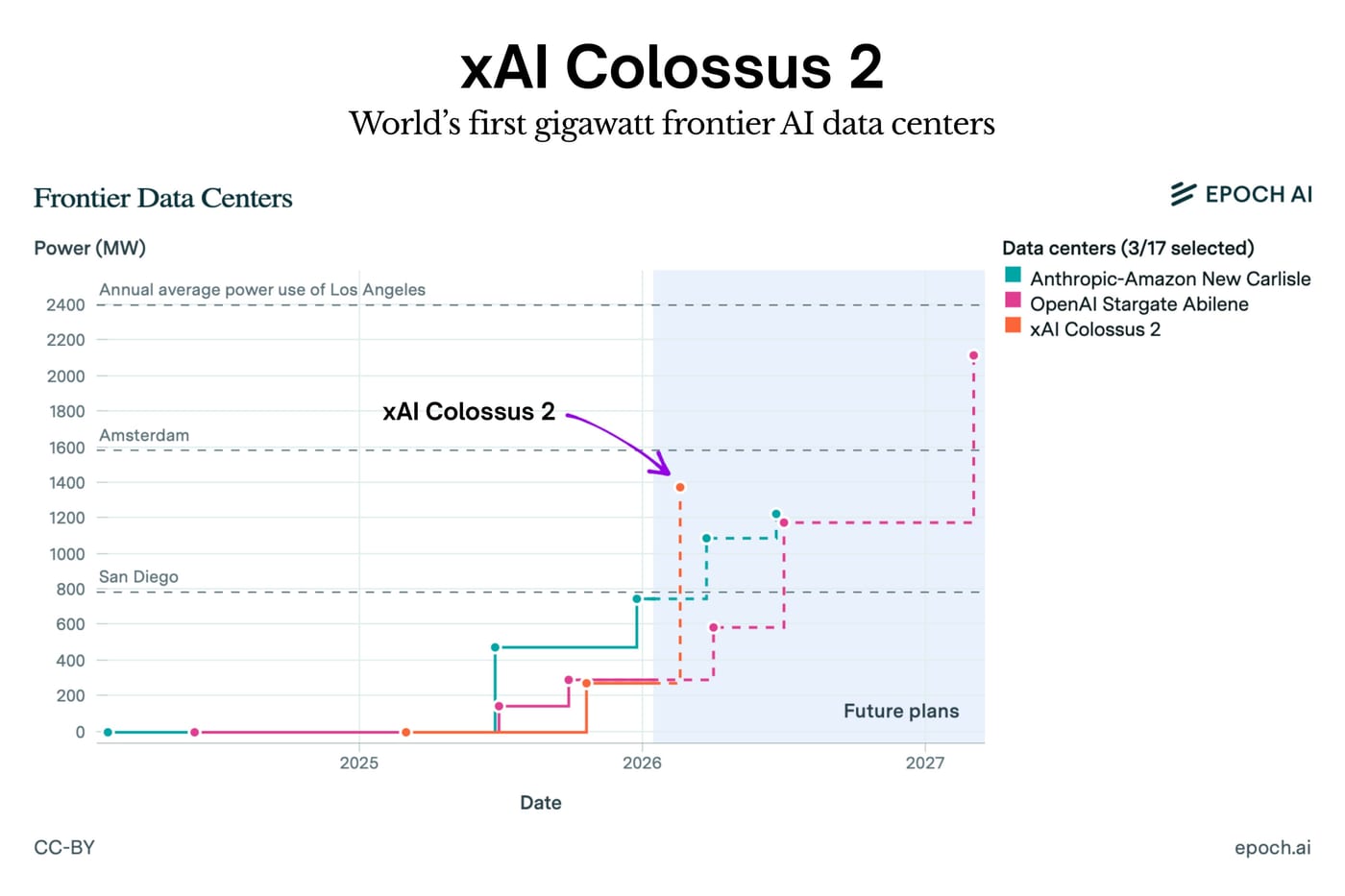
- Elon Musk announcedthat xAI’s Colossus 2 supercomputer is operational, describing it as the first gigawatt training cluster in the world.
- The facility contains approximately 550,000 NVIDIA GB200 and GB300 Blackwell GPUs and aims to train xAI’s Grok large language model.
- Satellite imagery from Epoch AI reveals the data center currently has only 350 MW of cooling capacity, insufficient for 550,000 GPUs at full power.
- Researchers project the system will reach 1 GW by May 2026, contradicting Musk’s claim of current gigawatt operation.
- The facility consumes power exceeding San Francisco’s peak electricity demand and plans to upgrade to 1.5 GW in April.
- xAI recently closed a $20 billion Series E funding round, exceeding its initial $15 billion goal, with participation from Valor Partners, Fidelity, Qatar Investment Authority, and strategic partners NVIDIA and Cisco.
- Combined with Colossus 1, xAI now operates systems representing over one million H100 GPU equivalents at its Memphis data center.
My take: Say what you want about Elon Musk, but he does have a way to get things happen. Launching rockets into space, creating self-driving cars or building megawatt supercomputers, again and again he manages to push things further than any other company has done before. The scale xAI has grown since the start in early 2025 is almost ridiculous, going from almost nothing to a massive 1 GW data center. The bigger an AI model becomes the better it will be at understanding the world and tasks at hand, and the bigger the data center there is the bigger models it can train. The main challenge for xAI however is not technical but sociological - let’s say Grok next generation is significantly better than any other AI model out there, would you consider using after everything you know of the current Grok?
Claude Code Replaces Todos with Tasks System
https://x.com/trq212/status/2014480496013803643
The News:
- Anthropic released a task management system for Claude Code on January 22, 2026, replacing the previous Todos feature with Tasks that includes dependency tracking and multi-session collaboration.
- The system uses four specialized tools: TaskCreate for creating tasks with subject and description, TaskGet for retrieving task details including dependencies, TaskUpdate for modifying status and blockers, and TaskList for viewing all tasks.
- Tasks persist to the file system at ~/.claude/tasks, allowing multiple Claude Code sessions to coordinate on the same task list across different terminals or days.
- Dependencies link tasks together through addBlockedBy and addBlocks parameters, preventing parallel work from colliding when one task must complete before another can start.
- Multi-session collaboration works through the CLAUDE_CODE_TASK_LIST_ID environment variable, which syncs task state in real time across different Claude Code instances.
My take: Claude Code is changing so rapidly now so if you blink, you miss. A few weeks ago Anthropic removed the ‘ultrathink’ keyword from Claude Code, which previously was used to maximize the thinking budget to 32k tokens. Now Claude Code always uses a 32k thinking budget by default, so every request you make will be like having ‘ultrathink’ enabled. Anthropic is pushing forward quickly with new features like swarms and tasks, basically multiplying the power of Claude Opus 4.5 by having multiple instances running in parallel against a shared goal. Tasks is a key feature in accomplishing this - it’s a shared todo list that is used by all parallel workers on your system.
If you are using Claude Code today, here’s a tip to double the thinking budget up to 64k tokens, twice the old ‘ultrathink’ limit. And in my tests this makes a real substantial difference in the way Opus approaches problems. Just add export MAX_THINKING_TOKENS=63999 to your ~/.zshrc or ~/.bashrc terminal configuration file, and restart the terminal and Claude code. Let me know if you also noticed a significant improvement after this change.
Read more:
- UltraThink is Dead. Long Live Extended Thinking. — Decode Claude
- ultrathink is now deprecated and thinking mode is enabled by default; the docs are updated to reflect this. · anthropics/claude-code
Google DeepMind D4RT: 4D Scene Reconstruction from Video
https://deepmind.google/blog/d4rt-teaching-ai-to-see-the-world-in-four-dimensions/
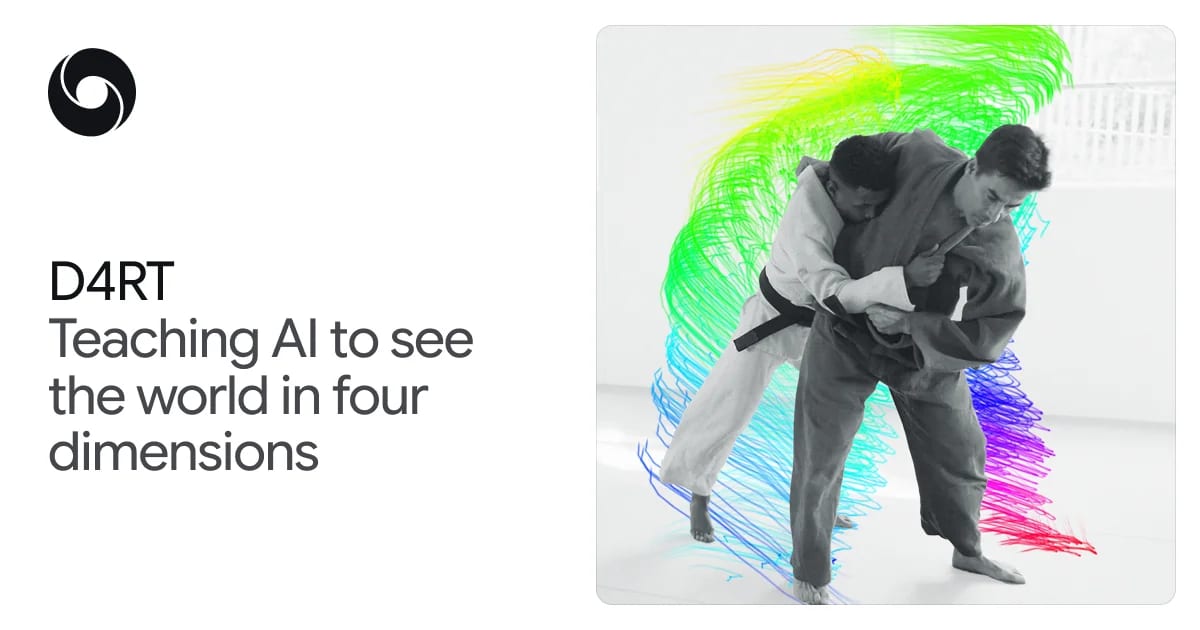
The News:
- D4RT (Dynamic 4D Reconstruction and Tracking) reconstructs dynamic 3D scenes from 2D video by processing both spatial geometry and temporal motion in a single unified model.
- The model uses a query-based transformer architecture where a lightweight decoder asks “Where is a given pixel from the video located in 3D space at an arbitrary time, as viewed from a chosen camera”.
- D4RT processes a one-minute video in approximately five seconds on a single TPU chip, compared to ten minutes for previous state-of-the-art methods, representing a 120x improvement.
- The system achieves 18x to 300x speedup over prior methods while maintaining superior accuracy on dynamic objects.
- Camera pose estimation runs at over 200 frames per second, nine times faster than VGGT and one hundred times faster than MegaSaM.
- The model handles point tracking across frames even when objects move out of view, generates complete 3D point clouds without iterative optimization, and estimates camera trajectories by aligning 3D snapshots from different viewpoints.
- Target applications include robotics navigation in dynamic environments, low-latency augmented reality scene understanding, and world models for AI systems.
“Where is a given pixel from the video located in 3D space at an arbitrary time, as viewed from a chosen camera?”
My take: This is a significant step towards making an AI fully understand our world and what’s happening within it. Using just a video stream, D4RT is able to reconstruct everything that’s happening into a format that can be used by an AI for world interaction. Use cases include robotics (where robots need to navigate in environments with moving people or objects), augmented reality (pixel-perfect overlays) and of course AGI - real world understanding by a generalized artificial intelligence.
Google Launches Personal Intelligence for AI Mode in Search
https://blog.google/products-and-platforms/products/search/personal-intelligence-ai-mode-search/
The News:
- Google released Personal Intelligence for AI Mode on January 21, 2026, connecting Gmail and Google Photos to search queries for Google AI Pro and Ultra subscribers. The feature processes personal data to reference hotel bookings, flight confirmations, shopping history, and photo memories when generating search responses.
- Personal Intelligence runs on Gemini 3. The system does not train directly on Gmail inboxes or Google Photos libraries, limiting training to specific AI Mode prompts and model responses.
- Users must opt in through Search personalization settings by connecting Gmail and Google Photos. The feature remains a Labs experiment available only for personal Google accounts in the US, excluding Workspace business, enterprise, and education users.
- Example use cases include trip planning where AI Mode references hotel bookings in Gmail and travel photos to suggest activities like “an interactive museum perfect for the kids or an old-timey ice cream parlor” based on ice cream photos. For shopping, the system considers preferred brands and flight confirmations to suggest “windproof, versatile coats” matching destination weather and personal style.
- The announcement notes that “mistakes can happen” where systems “might incorrectly make connections between unrelated topics or not fully understand the context”. Users can provide corrections through follow-up responses or thumbs-down feedback.
My take: TLDR: Google Search can now use data in your Gmail and Google Photos to improve quality of your Google searches. The selling point is that you can now ask Google questions like “what should we do when we arrive on Tuesday?”, or “what coffee shop did we visit the last day on our vacation in Norway?” and since it has access to your geotagged photos and emails, it knows the context about your question and location well enough to give you a quick answer. I personally think this is great, but I can also understand why people would like to not enable it. Apple is definitely going to add this to next generation of Siri that is powered by Gemini 3 Pro, but then it will be running in a private cloud. For the first time in years I am very much looking forward to next generation of Siri by Apple (powered by Google).
Alibaba Open Sources Qwen3-TTS Text-to-Speech Model Family
https://qwen.ai/blog?id=qwen3tts-0115
The News:
- Alibaba’s Qwen team released Qwen3-TTS, an open-source text-to-speech model family under Apache 2.0 license on January 21, 2026. The release includes five models ranging from 0.6B to 1.7B parameters, eliminating per-character API fees.
- The models support 10 languages including Chinese, English, Japanese, Korean, German, French, Russian, Portuguese, Spanish, and Italian. Voice cloning requires 3 seconds of reference audio.
- Qwen3-TTS-Tokenizer-12Hz achieves 97ms first-packet latency through a 12.5 Hz, 16-layer multi-codebook design. End-to-end synthesis latency reaches 97ms for the 0.6B variant and 101ms for the 1.7B variant.
- The 1.7B VoiceDesign model generates voices from text descriptions, while the CustomVoice variant provides style control over nine preset timbres covering gender, age, language, and dialect combinations. Base models support fine-tuning.
- Training used over 5 million hours of speech data. On the Seed-TTS benchmark, Qwen3-TTS-12Hz-1.7B achieved 1.24 word error rate on English tests.
“It provides developers and users with the most extensive set of speech generation features available”
My take: There are several reasons why Qwen3-TTS is an interesting model. It sounds great, you an try it at Hugging face yourself here, it can run on a standard GeForce 16GB VRAM card like the 4080, and it’s released under an Apache 2.0 license. The main drawback is the performance when running on standard consumer-based GPUs, where early testers report that even simple messages like “Hello, how are you?” takes several seconds to generate.
Read more:
- Qwen3-TTS, a series of powerful speech generation capabilities : r/StableDiffusion
- Qwen3-TTS Demo - a Hugging Face Space by Qwen
Wikipedia Announces Five Major AI Partners for Enterprise Data Access
https://enterprise.wikimedia.com/blog/wikipedia-25-enterprise-partners/
The News:
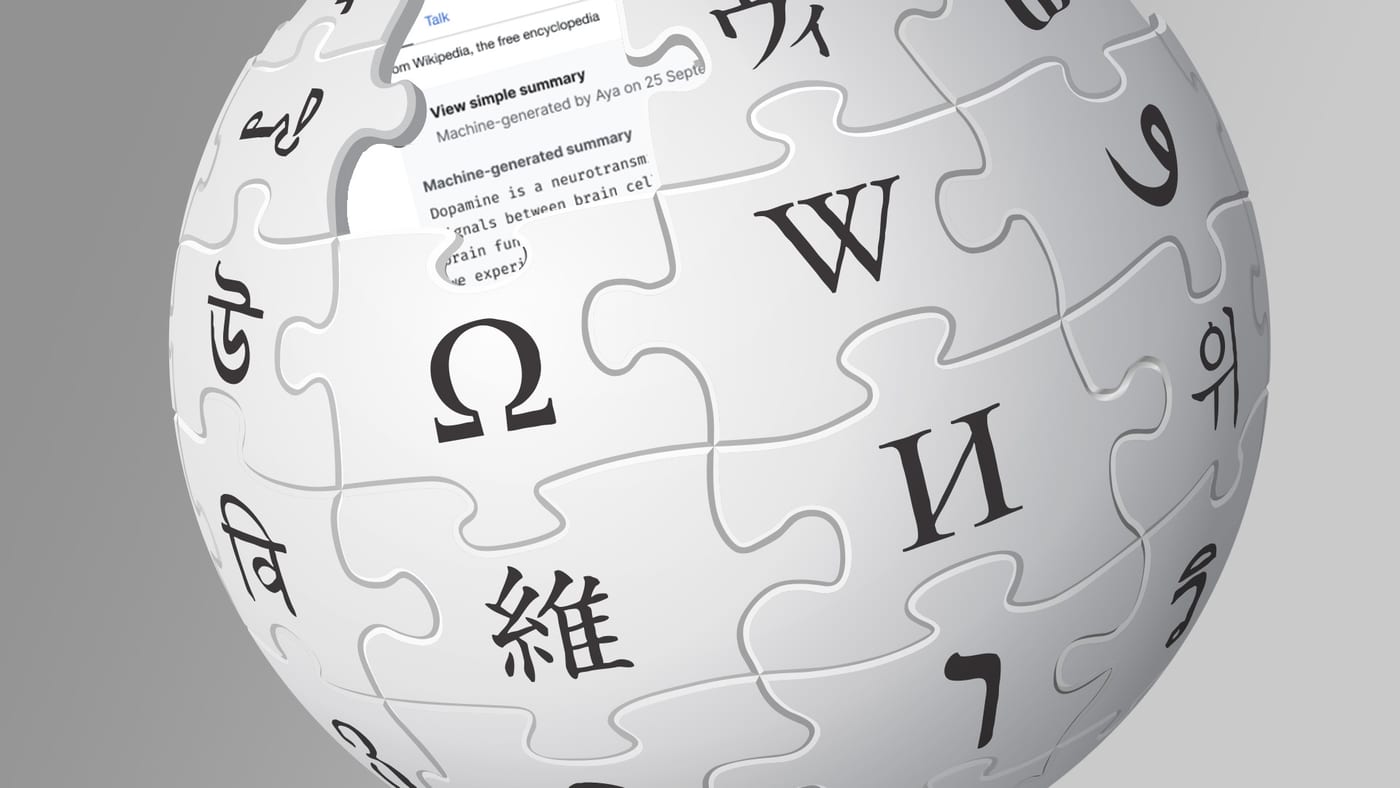
- Wikimedia Foundation announced Amazon, Meta, Microsoft, Mistral AI, and Perplexity as new Enterprise partners on January 15, 2026, marking Wikipedia’s 25th anniversary.
- These companies join existing partners Google (since 2022), Ecosia, Nomic, Pleias, ProRata, and Reef Media in paying for API access to Wikipedia’s 65 million articles across 300+ languages.
- Wikimedia Enterprise provides three API options: On-demand API (requests specific articles), Snapshot API (downloadable files updated hourly), and Realtime API (streams updates as they occur).
- The free tier includes up to 5,000 monthly requests for the On-demand API and twice-monthly snapshots, while paid tiers offer unlimited requests, daily snapshots, real-time streaming, and 99% SLA.
- Wikipedia receives nearly 15 billion page views monthly and serves as a training dataset for large language models, chatbots, search engines, and voice assistants.
- Co-founder Jimmy Wales stated “all of the AI bots scraping Wikipedia are actually costing us a lot of money” and that donors “aren’t donating to subsidize Sam Altman”.
My take: OpenAI is not on this list, but as you already know all web searches from OpenAI is going through Bing, and Microsoft is one of the partners that are now paying for Wikipedia access. As for model training, companies like OpenAI or Anthropic can download a full Wikimedia dump and use that locally, it’s much more efficient than scraping. It’s great to finally see companies paying for Wikipedia access, and hopefully this is enough to keep Wikimedia alive for a few decades more.