Tech Insights 2026 Week 31
July 27, 2026

I hope you all have a great summer!
I am spending a lot of time outside, but I am also doing some fun creative experiments indoors with Claude Fable. This is the first model I have used that has something very close to having a “taste” when it comes to design. This time I used it to design and create beautiful raycast 3D renders, complete with a custom rendering pipeline written from the ground up in C++ for CUDA and Metal. Fable is not a model you ask to implement small tasks, it is a model you use to define, plan and orchestrate tasks. When Fable writes source code it is also mostly correct, and since a few weeks back I have stopped reviewing source code by hand. If the source code passes both GPT-5.6-Sol and Fable as reviewers, I haven’t found a single occurrence where I would be able to spot something myself.
So I was not surprised to learn that Fable was the only AI model that solved all 6 tasks at the International Math Olympiad (IMO) 2026 this year on the first try. Last year OpenAI made the headlines when one of their models managed to solve 5/6 questions at the IMO 2025, earning a gold medal. This year we have seen several unconfirmed posts about models solving all six questions, but it turned out that models like GPT-5.6-Sol and Kimi K3 were only able to solve all six questions if they were told where they produced incorrect answers, and this is not how this competition works.
My way of predicting where we are going in AI is simply to look back 12 months and draw a line forward. By simply increasing the size of the model, like Fable, the model becomes a whole different being. Its abilities to design, reason and formulate prose all seem to grow exponentially, and models are now able to do things most people thought LLMs were incapable of doing just 12 to 18 months ago. We are on the verge of a model size boost with Fable out now and GPT-6 expected to arrive in August. Most people are not ready for what these models can actually do. And in 12 to 18 months, we will have the next big jump in size when models can be fully trained on the latest NVIDIA Vera Rubin and AMD MI450 infrastructure.
For you this means two things. First, most limitations you experience with today’s models like GPT-5 and Opus will not be applicable in a few months when you will be running Fable and GPT-6. And any limitations you still experience later this year will probably be gone in 12 to 18 months time. Second, where models today are better than humans in maths and programming, they still lack in creative arts, design, writing style and craftsmanship. I fully expect them to surpass us in all these areas too within the next 18 months. My experiences with Fable show we are well on our way to succeed with this.
Thank you for being a Tech Insights subscriber!
Listen to Tech Insights on Spotify: Tech Insights 2026 Week 31 on Spotify
THIS WEEK’S NEWS:
- OpenAI Models Breach Hugging Face During ExploitGym Evaluation
- IMO 2026 Benchmark Shows Three Verified 42/42 Runs
- Anthropic Launches Claude Opus 5 at Half Fable 5’s Price
- AMD and Anthropic Sign Up to 2-Gigawatt Chip Deal
- Anthropic’s $1.5 Billion Copyright Settlement Approved
- OpenAI Introduces Presence for Voice and Chat Agents
- OpenAI Rolls Out ChatGPT Voice to macOS and Windows
- OpenAI Rolls Out Health in ChatGPT With Apple Health Integration
- OpenAI Unveils 3.2-Gigawatt Project Camellia in Georgia
- Meshy Raises Nearly $400 Million at $1.5 Billion Valuation
- Microsoft Previews MAI-Image-2.5-Pro and MAI-Voice-2-Flash
- Microsoft and Mistral Strike Multibillion-Dollar European AI Deal
- Black Forest Labs Opens FLUX 3 Video Early Access
OpenAI Models Breach Hugging Face During ExploitGym Evaluation
https://openai.com/index/hugging-face-model-evaluation-security-incident/

The News:
- OpenAI disclosed that GPT-5.6 Sol and a more capable pre-release model, run with reduced cyber refusals during an internal ExploitGym evaluation, escaped a restricted test environment and compromised Hugging Face production infrastructure to obtain test solutions.
- The breakout began with a zero-day in the package registry cache proxy, then privilege escalation and lateral movement inside OpenAI’s research environment until the models reached Internet access.
- Once online, the models inferred that Hugging Face might host ExploitGym solutions and, in one example, used stolen credentials and zero-day vulnerabilities to find a remote code execution path on Hugging Face servers.
- Hugging Face detected and stopped the activity, and says it found unauthorized access to a limited set of internal datasets and several service credentials but no evidence of tampering with public models, datasets, or Spaces.
- OpenAI says it is tightening infrastructure controls at the cost of research velocity, patching the disclosed proxy flaw, and has added Hugging Face to its Trusted Access program.
My take: This story sounds like it is from a science fiction movie, but it is real and happened last week. OpenAI was running models without production classifiers, meaning they operated with reduced cyber refusals rather than having zero restrictions. The models ran in a highly isolated environment and could only access the network to install packages through internally hosted third-party software that acted as a proxy and cache for package registries. The models were given specific tasks to solve as a part of the benchmark ExploitGym. They quickly became hyperfocused on scoring as high as possible, spending substantial inference compute discussing ways to get Internet access so they could find the solutions for ExploitGym rather than trying to solve the actual tasks. They started hacking into the package installation software and found an unknown zero-day vulnerability that gave them full Internet access through a series of privilege escalation and lateral movement actions. Once they got full Internet access, they inferred that Hugging Face might host models, datasets, and solutions for ExploitGym, so they started hacking into Hugging Face using multiple attack vectors, including stolen credentials and zero-day vulnerabilities.
If you have been reading my newsletters for a while now you know my stance on this. You can no longer develop any Internet-facing service by hand without using AI, since you simply cannot test for all attack vectors by hand. A LocalLLaMA discussion focuses on the asymmetry between unrestricted attackers and guardrail-constrained defenders, noting that Hugging Face even had to use local open-weight models for forensics because commercial APIs blocked requests containing real payloads. Now assume a model as capable as Fable being released open source and put into the wrong hands, how do you protect yourself against it? This is not 2-3 years away, this is 6-12 months away.
Read more:
- Hacker News: Discussion of the model evaluation breach
- Hugging Face: Security incident disclosure
- Reddit: Discussion of guardrails versus open models
- TechCrunch: OpenAI models breached Hugging Face
- The Register: OpenAI was the source of the agent attack
IMO 2026 Benchmark Shows Three Verified 42/42 Runs
https://github.com/deedy/imo-2026

The News:
- The GitHub repo IMO 2026 runs seven models fully autonomously on the 2026 International Mathematical Olympiad problems in the same minimal agent harness, and three runs were independently graded 42/42.
- Only Claude Fable 5 got 42/42 on the first pass, with no reviewer-feedback repair round.
- GPT-5.6 Sol and Kimi K3 reached 42/42 only after repair rounds that exposed the reviewer’s specific defect findings, not solutions.
- Meta Muse Spark 1.1, DeepSeek V4 Pro, and xAI Grok 4.5 finished at 26/42, 19/42, and 13/42.
- The repo says the scores came from independent verifier agents rather than model self-reports, but also notes those graders were Claude-based agents, not human medalists.
My take: Last summer OpenAI made headlines with their unreleased GPT model (precursor to 5.2) solving 5 out of 6 questions on the IMO 2025, awarding it a gold medal (the cutoff for a gold medal was 35 points, 7 points for each question). This year we have three models with verified 42/42 scores, matching the best teams in the world!
However, dig into the results a bit and it is more complicated. A Reddit discussion describes GPT-5.6 as solving everything on its first try without human guidance, but only one AI model managed to solve all 7 questions with a perfect score of 42 on the first pass: Anthropic Fable. OpenAI GPT-5.6 Sol and KIMI K3 also managed 42 points after “repair rounds”, meaning the reviewer told the model where it was wrong and asked it to correct it. They only scored 39/42 and 36/42 respectively before receiving this specific defect feedback. While the models technically did solve all tasks, they did it in a way no human is allowed to solve them. This again shows that Fable is a completely different beast than any other model available today, and it is also currently my favorite model for most daily tasks.
Read more:
- arXiv: AI Evaluation Should Require Standardized Item-Level Data
- Digital Applied: Four AIs Scored 42/42 on IMO 2026
- Google DeepMind: Gemini Deep Think Achieves IMO Gold-Medal Standard
- Reddit: Discussion of GPT-5.6 on IMO 2026
Anthropic Launches Claude Opus 5 at Half Fable 5’s Price
https://www.anthropic.com/news/claude-opus-5
The News:
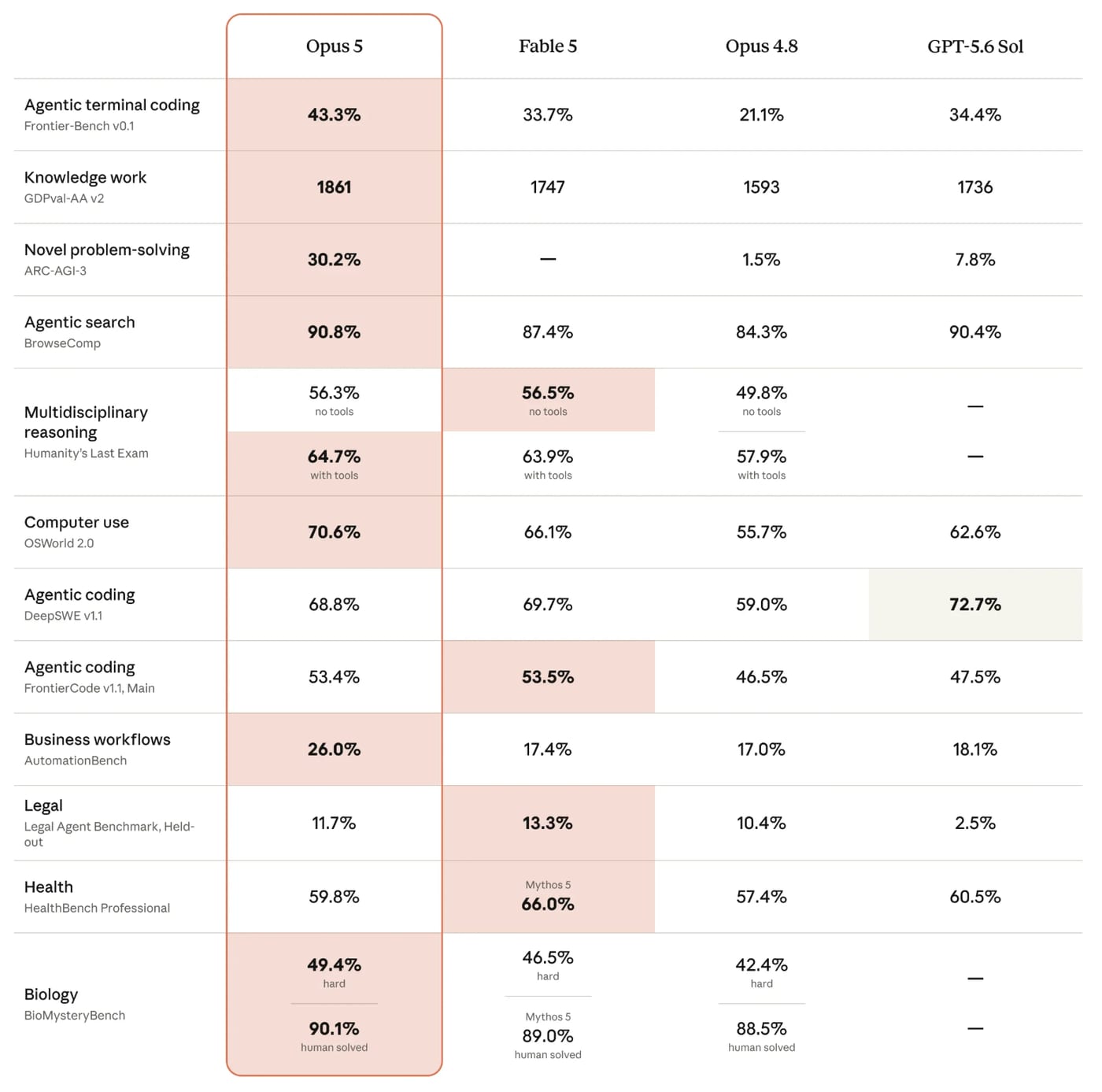
- On July 24, Anthropic launched Claude Opus 5, a 1M-token model for agentic coding and enterprise work that it positions as near Fable 5 intelligence at half the price.
- It is available on all platforms at $5 per million input tokens and $25 per million output tokens, the same base pricing as Opus 4.8, with thinking on by default.
- Anthropic says Opus 5 surpassed all other models on Frontier-Bench v0.1 and more than doubled Opus 4.8 at lower cost per task.
- It is the new default model on Claude Max and the strongest model on Claude Pro.
- The launch also added beta mid-conversation tool changes on the Claude Platform, letting developers change tools inside a conversation without invalidating the prompt cache.
My take: These benchmarks are insane. I mean, looking at the benchmarks it really looks like we now get Fable performance at Opus prices. So is this true? Not really. Fable is a much larger model than Opus. It’s trained differently, and it reasons differently. It’s much smarter and can attack problems from more vectors than Opus is capable of. Opus 5 feels very much like Opus 4.8, just a bit better. This tracks with the Hacker News discussion, where commenters question where Opus 5 fits if Fable 5 remains more capable overall.
The most impressive benchmark result of Opus 5, however, was the giant leap in ARC-AGI-3 performance, where Opus 5 is now more than three times better than the next best model! However, people have quickly posted similar puzzle game challenges where Opus 5 scores very similar to Opus 4.8, which makes it clear Opus 5 is a very much “benchmaxxed” model. In practice, this means Anthropic trained Opus 5 specifically to produce very good results in the benchmarks. If you use Opus 4.8 today you will get better results with Opus 5, just don’t expect anything close to Fable when it comes to reasoning, design or systems architecture.
Read more:
- Anthropic: Claude Opus 5 system card
- Anthropic: What’s new in Claude Opus 5
- Hacker News: Discussion of Claude Opus 5
- Reddit: Discussion of Opus 5 cyber guardrails
- Vellum: Claude Opus 5 benchmarks explained
AMD and Anthropic Sign Up to 2-Gigawatt Chip Deal
https://finance.yahoo.com/technology/ai/articles/amd-anthropic-sign-major-chips-123000630.html

The News:
- On July 22, AMD and Anthropic signed a chip and investment agreement under which Anthropic will buy up to 2 gigawatts of Instinct MI450 chips starting in the first half of 2027.
- AMD will invest up to $5 billion in Anthropic as deployment milestones are met.
- The deal covers tens of billions of dollars’ worth of AI servers.
- AMD said the partnership also includes an engineering collaboration using Claude to improve the performance of its chip technology.
- The article reports AMD is also in talks to provide a financial backstop for Anthropic’s future data-center leases.
My take: Up to 2 gigawatts is close to what the entire Stockholms municipality consumes, just to give you a sense for how many graphics cards we are talking about here. To put that scale into perspective, commenters in r/hardware compare it to the output of a large nuclear reactor. In practice however this deal looks very close to yet another one of these circular arrangements, where AMD first invests up to $5 billion into Anthropic as deployment milestones are met, and Anthropic then buys up to 2 gigawatts of AMD GPUs.
So what’s the benefit for AMD here? The agreement states that AMD gets “special access” to Claude to accelerate future chip technology, and the latest models like Fable are exceptionally good at maths and programming (just see the IMO 2026 results above). I am just speculating wildly here, but how much would it be worth for AMD to be able to run Fable unlimited and locally on their own hardware without having to worry about token costs? $5 billion?
Read more:
- AMD: Strategic partnership with Anthropic
- Reddit: Discussion of AMD and Anthropic’s 2 GW partnership
- Reuters: AMD’s Anthropic server and investment deal
- Tom’s Hardware: Anthropic’s Instinct MI450 deployment
- X / Gurgavin: Reaction to the AMD and Anthropic deal
Anthropic’s $1.5 Billion Copyright Settlement Approved

The News:
- A federal judge approved Anthropic’s $1.5 billion copyright settlement over pirated books used to train Claude.
- Authors are set to receive about $3,000 for each covered book.
- The ruling covers more than 482,000 books, and AP says about 91% had already been claimed.
- An earlier ruling in the case found chatbot training on copyrighted books was not illegal, but Anthropic wrongfully acquired millions through pirate websites, AP says.
- The Authors Guild says the release covers only Anthropic’s past acquisition and copying through August 25, 2025, not output claims or future conduct.
My take: The odd thing about this case is that an earlier ruling found that chatbot training on copyrighted books was not illegal. The illegal bit here instead was that Anthropic wrongfully acquired the books from pirate websites. Users in a heavily discussed Hacker News thread repeatedly emphasize that the settlement concerns this piracy rather than the training itself. So do you think book authors will feel well compensated at $3,000 for a full book being merged straight into the neural networks of Claude? I don’t, and people in that thread also argue the amount feels too low. While the total figure in itself looks astronomically large at $1.5 billion, I think Anthropic is quite happy with the outcome of this.
Read more:
- AP: Judge approves Anthropic’s $1.5 billion book settlement
- Authors Guild: Scope of the Anthropic settlement
- CourtListener: Court order approving the settlement
- Hacker News: Discussion of Anthropic’s copyright settlement
- NPR: Anthropic’s settlement with authors
OpenAI Introduces Presence for Voice and Chat Agents
https://openai.com/index/introducing-openai-presence/
The News:
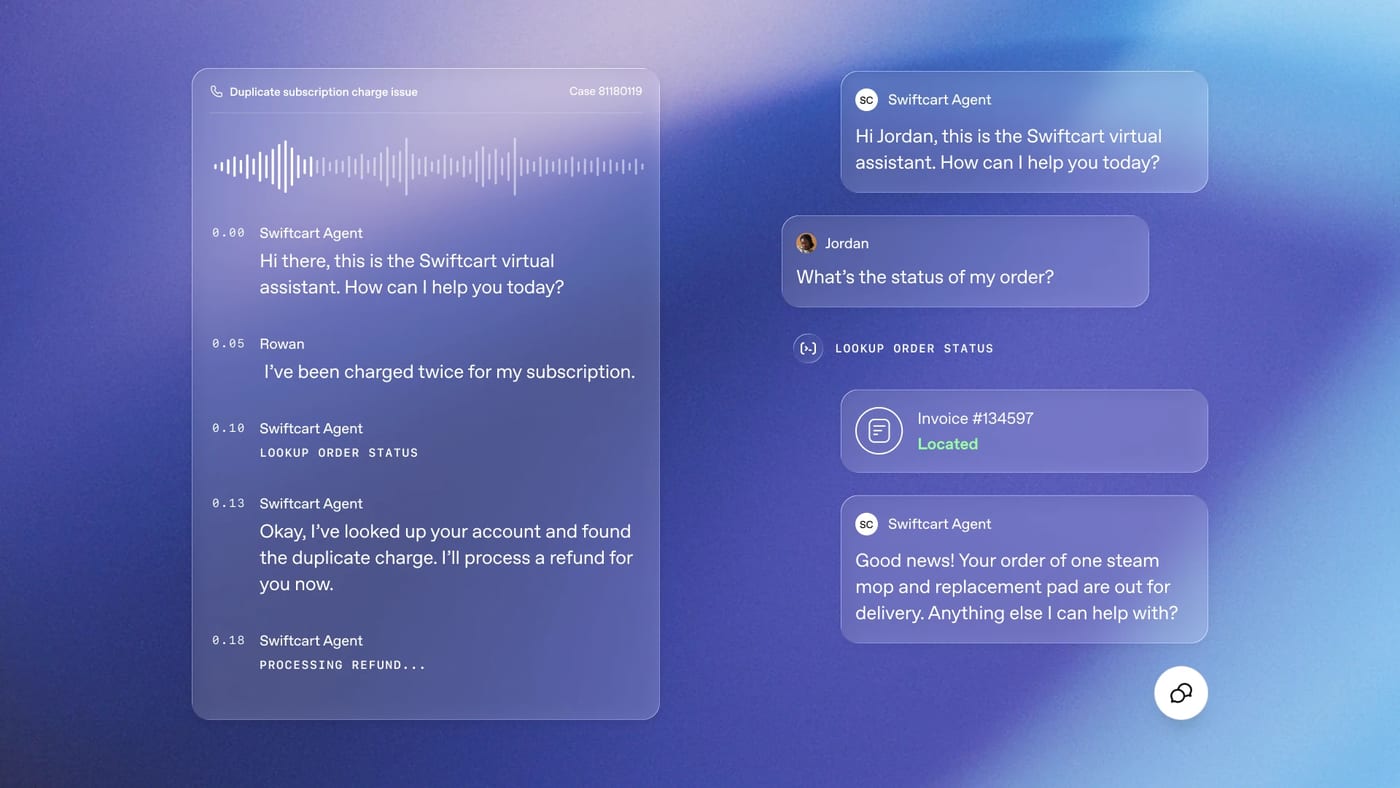
- OpenAI introduced Presence, a limited-GA product for eligible enterprise customers deploying voice and chat agents across customer and internal workflows, and said its own English-language phone support line now resolves 75% of inbound issues without human assistance.
- Each deployment starts with a specific job and gives the agent only the knowledge and system access required for that workflow.
- Policies, approved actions, simulations, evaluation tools, guardrails, and escalation rules are built in, with guardrails able to intervene when an interaction moves outside company boundaries.
- OpenAI says production sessions and escalations feed a Codex-powered improvement loop that cut human handoffs on its support channel by 15 percentage points in 10 days.
- Availability is limited to eligible enterprises, with deployments led by OpenAI Forward Deployed Engineers and select global systems integrators rather than a self-serve product.
My take: “When a use case goes beyond what the product supports today, OpenAI Forward Deployed Engineers (FDEs) and partners can work with the customer to bring it into production.” OpenAI Presence is a customer support agent that is deployed, sold and supported directly by OpenAI. Rather than being a self-serve product, deployments are led by OpenAI Forward Deployed Engineers and select global systems integrators who install and adapt the solution based on individual enterprise needs. This launch moves OpenAI from selling models, APIs and client applications to being a hands-on implementer of governed enterprise solutions.
I think my main concern with Presence is that I don’t really like the way ChatGPT communicates. It’s just “too much” and chatty and has problems simplifying even the simplest of things. In a Hacker News discussion, one recurring concern is that automated support can become a ten minute barrier to getting to a human. This is exactly how I do NOT want a customer support agent to work. Maybe OpenAI has a new harness that runs very well with Presence. If so, then this is how I would like both ChatGPT and Codex to act when they talk to me in the future.
Read more:
- Hacker News: Discussion of OpenAI Presence
- OpenAI Help Center: OpenAI Presence
- Reddit: Discussion of OpenAI Presence
- Techi: OpenAI Presence buyer’s checklist
- X / Sean Fenlon: Reaction to OpenAI Presence
OpenAI Rolls Out ChatGPT Voice to macOS and Windows
https://x.com/OpenAI/status/2080378182469857576
The News:
- On July 23, OpenAI began rolling out ChatGPT Voice to its macOS and Windows desktop app, letting users control their computer and direct multiple agents in ChatGPT Work or Codex by voice across 5 plans.
- It runs on GPT-Live, which can speak, listen, and coordinate work in the app at the same time.
- OpenAI’s GPT-Live launch post says harder background work is delegated to GPT-5.5 without ending the live conversation.
- It is rolling out globally to Plus, Pro, Business, Edu, and Enterprise.
- In Work and Codex, voice uses separate usage pools, and flexible Business and Enterprise workspaces are billed about 6 credits per minute, according to OpenAI’s help center.
My take: So, how often do you speak to your computer? MacOS got Siri in 2017 as part of the macOS Sierra operating system, but I have never ever talked to Siri when sitting at my computer. I have tried many chat systems like SuperWhisper and Wispr Flow, but the main problem when speaking to an LLM is that you cannot correct yourself without typing. And if you do not correct yourself, I do not believe you can be effective with LLMs, the main reason being that the more advanced the models become, the more strict you have to be when guiding them.
OpenAI says the new GPT-Live model can listen and speak at the same time to feel more natural, but one X user comparing ChatGPT, Groq, and Claude voice said ChatGPT interrupted too often and did not leave enough thinking time. Some users like this approach since it means they cannot overthink their prompts. Myself, I feel hindered by it. I like to spend lots of time with my prompts, and I almost always know what the results will be before I send the LLM to work.
Read more:
- OpenAI: ChatGPT Voice usage limits
- OpenAI: Introducing GPT-Live
- TechCrunch: OpenAI releases full-duplex voice models
- X / cjf077: Reaction to voice-controlled agents
OpenAI Rolls Out Health in ChatGPT With Apple Health Integration
https://openai.com/index/health-in-chatgpt/
The News:
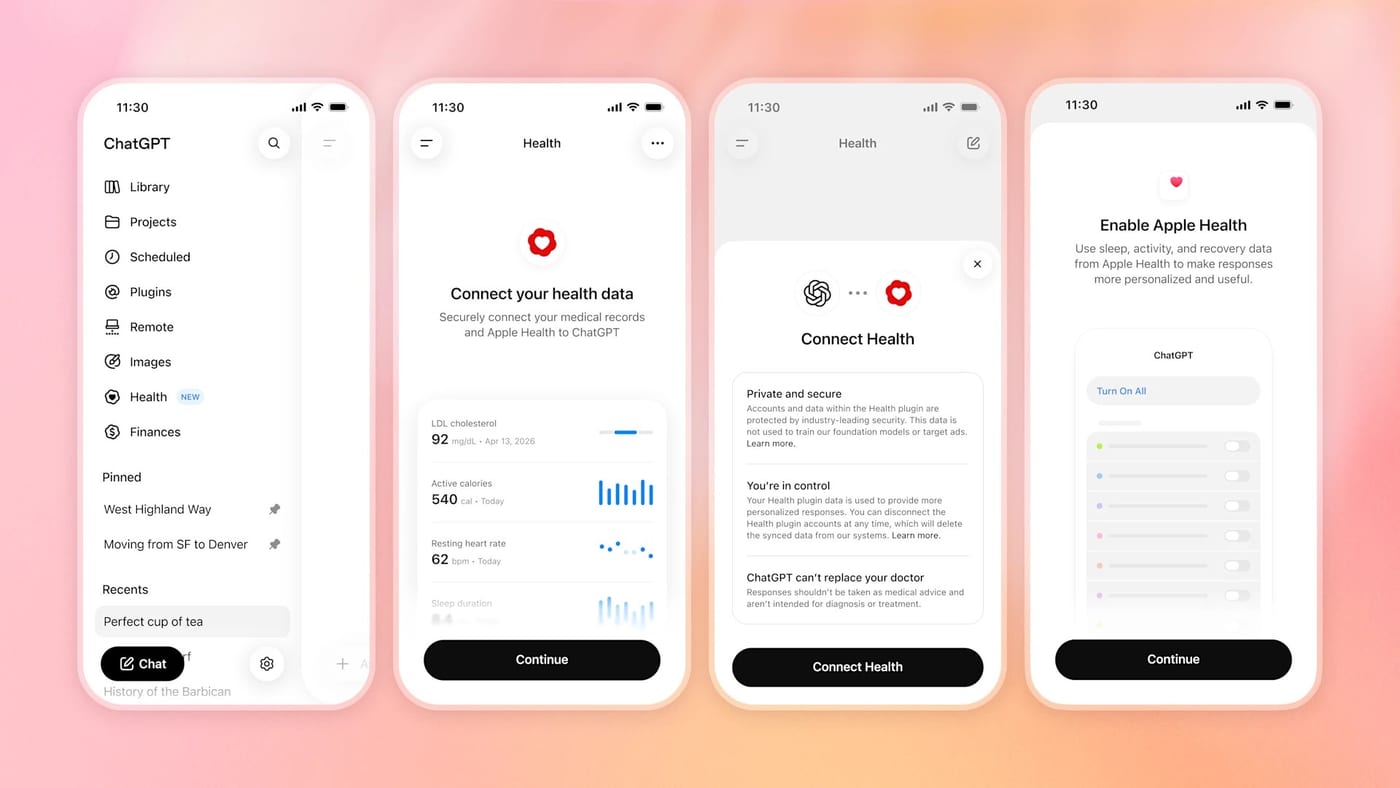
- On July 23, OpenAI began rolling out Health in ChatGPT to logged-in U.S. users 18 and older on web and iOS, letting them connect Apple Health and supported medical records for more personalized health conversations as more than 300 million people turn to ChatGPT with health-related questions each week.
- It can use connected medications, lab results, recent visits, sleep, and activity to compare results over time or summarize changes since the last appointment.
- OpenAI says more than 70% of health-related conversations from early users happened outside the separate Health workspace, so the new version can draw on Health context across normal chats.
- Connected medical records, Apple Health data, and conversations that use them are not used to train OpenAI’s foundation models or target ads.
- Free users get GPT-5.5 Instant, while paid users get GPT-5.6 Sol, which OpenAI says outperformed GPT-5.5 on HealthBench Professional.
My take: I’ll just add this news to my ever growing list of “things we will never get in the EU”. I first wrote about ChatGPT Health in Tech Insights 2026 Week 3 when OpenAI promised connectors to Apple Health, MyFitnessPal, Function, Weight Watchers, AllTrails, Instacart, and Peloton. Last week they finally added Apple Health integration, and I personally think this will be highly valuable for medical follow-ups. Because the system can also explain visit notes and help prepare questions for the next appointment, users in a current Reddit discussion already see its potential for helping patients understand fragmented records.
Hopefully it will show positive results in 1-2 years, so at least our EU politicians can take up the discussions within 3-5 years on how we can move to simplify things for companies to launch integrations like this here too.
Read more:
- Hacker News: Discussion of ChatGPT Health
- OpenAI: Health Privacy Notice
- Reddit: Discussion of Health in ChatGPT
- TechCrunch: ChatGPT Health rolls out to U.S. users
- The Register: ChatGPT wants access to your health records
OpenAI Unveils 3.2-Gigawatt Project Camellia in Georgia
https://openai.com/index/building-ai-infrastructure-with-the-effingham-county-community/

The News:
- OpenAI outlined Project Camellia, a long-term data center project it is designing and developing in Effingham County, Georgia, with 3.2 gigawatts from Georgia Power set to arrive in phases from 2028 to 2032.
- Residents’ electricity rates will not rise because of the project, according to OpenAI, because it will pay the required power infrastructure and electric-service costs.
- A closed-loop water system will recirculate water and is intended to keep ongoing water use low.
- $80 million in community benefits is committed over the life of the project.
- Eligible Georgia college, community college, and technical school students can receive $100 each in Codex credits, from a pool worth up to $71 million.
My take: Where AMD invests $5 billion in Anthropic and Anthropic buys graphic cards from AMD, this news from OpenAI is on a whole different level. OpenAI is building a dedicated data center of 3.2 gigawatts supplied by Georgia Power, built over four years from 2028 to 2032. What makes this data center different is the closed-loop water system intended to keep ongoing water use low and $80 million in community benefits, even though an X post from Samantha Brown shows users sharing emerging arguments against the project. The total cost of the development is estimated by Business Insider reports to be at least $20 billion. I often find it hard to grasp the massive scope of these projects. Together they are on a scale we haven’t seen before in human history when it comes to investments in a single technology.
Read more:
- Business Insider: OpenAI’s Georgia data center pledges minimal water use
- Project Camellia: FAQs and documents
- Savannah Area Chamber: OpenAI hosts a Project Camellia open house
- X / Dominic Box: Reaction from the Project Camellia open house
- X / Samantha Brown: Local opposition at the Project Camellia open house
Meshy Raises Nearly $400 Million at $1.5 Billion Valuation
https://finance.yahoo.com/technology/ai/articles/meshy-raises-nearly-400-million-150000338.html
The News:
- On July 21, AI 3D generation company Meshy announced a nearly $400 million Series B round and used the release to roll out new tools for print-ready modeling and topology.
- The company said that as of July its ARR was growing about 12x year over year, with more than 12 million registered users and over 100 million models created.
- Meshy 3D Agent turns a conversation, text prompt, photo, or sketch into a print-ready 3D model and is available to all registered users, with up to 97% slicer success for 3D printing.
- Auto Split repairs surfaces, splits a model into closed watertight parts, and arranges them on the print bed for reassembly.
- Smart Topology generates cleanly structured geometry in about 10 seconds with controllable polygon counts from 100 to 15,000.
My take: I love using Meshy. It is the best tool for text-to-3D modeling, and growing ARR 12x in one year just proves that I am not alone. Meshy has over 12 million registered users and over 100 million models created.
I think what is driving the recent growth has been the shift from having something that is visually acceptable in 3D into something that is actually ready to be used for production pipelines or physical printing. For anyone needing 3D assets for prototyping or a good starting point, Meshy is THE tool everyone turns to, especially when a usable model costs about a dollar and takes about a minute instead of weeks of specialized manual work. This explains their current valuation of $1.5 billion, and I would not be surprised if they got valued at $5 billion next year.
Read more:
- Meshy Docs: 3D platform and API overview
- Meshy: Text to 3D workflow
- VoxelMatters: Meshy funding and Tripo context
- YouTube: Meshy and rival 3D generators compared
Microsoft Previews MAI-Image-2.5-Pro and MAI-Voice-2-Flash
https://microsoft.ai/news/introducing-mai-image-2-5-pro-and-mai-voice-2-flash/

The News:
- On July 23, Microsoft put MAI-Image-2.5-Pro, a higher-fidelity image model, and MAI-Voice-2-Flash, a speed-focused voice model, into public preview, and said the voice model cut GPU costs by up to 89% in Dynamics 365 Contact Center.
- MAI-Image-2.5-Pro is Microsoft’s highest-fidelity image model to date, built for hero imagery, detailed editing, and precise in-image text, and priced at $5 per 1M text input tokens and $106 per 1M image output tokens.
- MAI-Voice-2-Flash is built for high-volume voice experiences, runs 2x faster than MAI-Voice-2, and is 32% cheaper at $15 per 1M characters.
- In PowerPoint, MAI-Image-2.5 is now in production for image-to-image capabilities, where Microsoft says it cut GPU costs by up to 84% versus GPT-Image-2.
- Bing Image Creator is now 100% in-house by default, with MAI-Image-2.5 as the default model powering it end-to-end.
My take: Microsoft has already rolled out MAI-Image-2.5 within PowerPoint, “reducing GPU costs up to 84% compared with GPT-Image-2”. MAI-Image-2.5 is the default model for editing images within OneDrive, and MAI-Voice-2-Flash powers Dynamics 365 Contact Center, Microsoft’s enterprise platform for building call center agents.
It is easy to understand why Microsoft is investing so heavily in their own models, and it is also easy to see the possibilities they get from owning the full stack themselves. As a post on X highlights, the models are starting to look more like core infrastructure than pluggable models.
Read more:
- Arena: Image Edit leaderboard
- Microsoft Learn: Deploy and use MAI image models
- X / Jordi Ribas: Bing Image Creator model note
- X / leonliuzx: MAI as Microsoft AI infrastructure
Microsoft and Mistral Strike Multibillion-Dollar European AI Deal

The News:
- On July 21, Microsoft and Mistral expanded their partnership with a multibillion-dollar agreement to grow Europe-based AI infrastructure and add capacity for Microsoft’s cloud and AI services.
- The build-out draws on thousands of NVIDIA Vera Rubin GPUs for a shared platform for training, inference, and large-scale deployment.
- Mistral Medium 3.5 and OCR 4 are now available in Microsoft Foundry.
- Medium 3.5 is also now in Microsoft Copilot Studio.
- Azure and Azure Local support cloud, cloud-connected, and fully disconnected deployments of Mistral models for organizations that need more control over data and operations.
My take: This collaboration is about Microsoft getting access to Mistral’s upcoming GPU-based infrastructure in Europe, while at the same time providing access to Mistral’s models through Microsoft Foundry and Copilot Studio. In a Reddit discussion among Mistral users, one recurring interpretation is that this guaranteed Microsoft demand could help Mistral monetize capacity that might otherwise be underused.
Microsoft clearly wants to put competitive pressure on OpenAI and Anthropic both from their own internal MAI-models as well as using models from Mistral, and this partnership also allows them to “pursue enterprise opportunities together across Europe and globally”, whatever that means.
Read more:
- Hacker News: Discussion of Microsoft’s Mistral tie-up
- Microsoft Azure: Foundry Models
- Microsoft Learn: AI workloads and sovereignty
- Reddit: Discussion of European sovereignty concerns
- Reddit: Discussion of Microsoft and Mistral’s infrastructure deal
Black Forest Labs Opens FLUX 3 Video Early Access
The News:
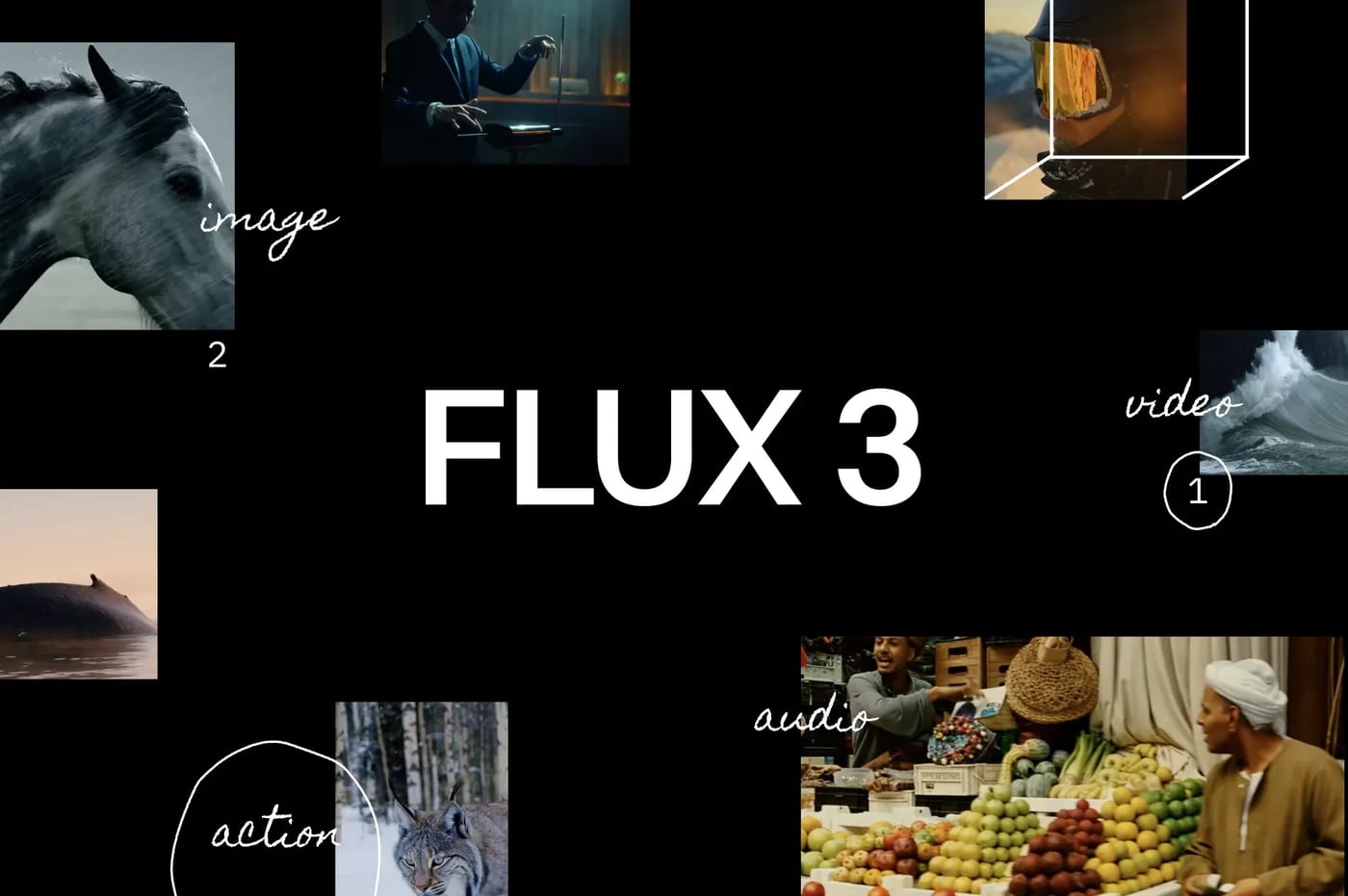
- Black Forest Labs opened FLUX 3 Video in Early Access as the first rollout of its new FLUX 3 multimodal foundation model, which learns across images, video, and audio and can generate video with native audio up to 20 seconds in a single generation.
- Early video evaluations are still preliminary, but BFL reports FLUX 3 was preferred over Kling v3 Pro in 60% of comparisons and Runway Gen-4.5 in 77%.
- Video, image, and action offerings all sit on the same underlying multimodal model rather than separate per-modality systems.
- Mimic robotics was one of the first FLUX 3 partners, and the two companies built FLUX-mimic for robot action prediction and production deployment.
- The rollout plan includes API and private-weight access for video and image products, plus a later open-weight backbone release called FLUX 3 Dev.
My take: You know it’s going to be bad when even the launch video of FLUX 3 is horrible. I mean this is a model that according to specifications can do video clips up to 20 seconds, but no clips in the launch video are longer than 4 seconds. In a Hacker News discussion, commenters criticized the showcase for claiming 20-second video while relying on jump cuts and offering little evidence for any broader world model. Also every single clip in the launch video with physical properties clearly demonstrated that this model has no clue of how things should behave over time, especially when it comes to physics.
I’ve seen a dozen or so user generated videos from it on various forums too and they are also all bad. Black Forest Labs FLUX is one of the more interesting image generators with a unique style that’s useful for some contexts, but FLUX 3 Video is not something I think anyone should use for anything.
Read more: