Tech Insights 2026 Week 38
September 14, 2026

On September 1, the Swedish bank Ziklo (previously called Volvo Finans) launched version 3.0 of their mobile app CarPay. On the surface, it looks and behaves the same. But under the hood, everything is different. Every single line of code in the new app was written by an AI.
The first version of CarPay was launched in 2016 as two native applications-one for Android and one for iPhone. Over the years, those two code bases were supported by different teams and gradually went off in different directions. 10 years after launch, the source code needed a rework, and with the mobile app requirements introduced by the European Accessibility Act (EAA) in June, a rewrite was no longer just an option-it became mandatory.
As you know, I spent many months last year creating the plugin Notebook Navigator for Obsidian, which now has around 1 million downloads and is the #1 most popular plugin for Obsidian. I wrote every single line with AI, and in December 2025, with the launch of GPT-5.2, I was confident that it would be possible to rewrite the entire CarPay app from the ground up 100% with agentic engineering. This would be a full rewrite, including a shift from Swift and Kotlin to a single code base with React Native and Expo, the best choice for this type of app.
The work started in January and was finished about six months later. The team consisted of two agentic experts from TokenTek and three Ziklo developers. CarPay 3.0 was pushed to nearly one million users, and so far, we have only discovered two minor UI glitches that were fixed during the first week. This is unheard of when it comes to software development. During development, we did two external code reviews, which both confirmed that the code and architecture were of a very high quality. We also added unit tests and click tests, so the new architecture now lets Ziklo test and prototype new features in record time.
Is this the world’s first banking app created 100% with agentic AI? I think so. And I am extremely proud to have been a part of this journey.
Thank you for being a Tech Insights subscriber!
Listen to Tech Insights on Spotify: Tech Insights 2026 Week 38 on Spotify
Notable model releases last week:
- DeepSeek-V4.1-Flash by DeepSeek. Supports self-hosted deployment through vLLM, SGLang, and Docker Model Runner, with OpenAI-compatible completion endpoints.
- GPT-Image-2.5 Flare by OpenAI. Higher-quality images than GPT-Image-2 at 50% lower latency, with improved reference fidelity, targeted editing, and multi-turn consistency via the Images API.
- GPT-Live-1 by OpenAI. Full-duplex voice layer gains 30 percentage points over GPT-Realtime-2.1 on Full Duplex Bench, delegates reasoning and tool calls to backend models, and costs $0.05 per minute.
- SWE-2 by Cognition. 2.8T-parameter agentic coding model post-trained from Kimi K3, scoring 50.0% on FrontierCode 1.1 Main and 73.0% on DeepSWE 1.1, available in Devin Desktop and CLI.
THIS WEEK’S NEWS:
- Anthropic Documents Disrupted AI Misuse Across Seven Threat Areas
- Anthropic Models 2030 Economy, Projecting Up to 32% GDP Growth and 12% Unemployment
- Anthropic Formalizes Fermat’s Last Theorem in 11 Days
- OpenAI Researchers Now Log 3.1 Agent-Workdays for Every Human Workday
- OpenAI’s Roughly 10,000 Agents Solve the Navier-Stokes Millennium Prize Problem
- OpenAI Launches Agents API for Long-Running Cloud Agents
- OpenAI Launches ChatGPT for Financial Services
- Meta Launches Muse Personal AI Agent With Dedicated Secure VMs and $20 Subscription
- Suno Replaces Older Models With v6 Built on Warner and BMG Catalogs
- Spotify Cuts Claude Code Token Usage by 90% Using Portal
- Universal Music Group and ElevenLabs Build Licensed AI Remix Platform
- Apple Introduces Reference Image to Verify iPhone 18 Pro Photos
- Google Cloud Releases Developer Plugin for AI Coding Agents
- Google DeepMind Maps 9 Billion Human DNA Variants With AlphaGenome Atlas
- Mistral Raises €3 Billion at More Than €21 Billion Valuation for Sovereign AI
Anthropic Documents Disrupted AI Misuse Across Seven Threat Areas
https://www.anthropic.com/threat-intelligence-report-september-2026
The News:
- On September 10, Anthropic published a threat intelligence report detailing how suspected state-sponsored groups and criminals misused Claude for cyber espionage, bioweapons research, and surveillance between December 2025 and August 2026.
- A suspected Russian state group automated a cyber espionage campaign against Ukrainian drone manufacturers, using AI agents to monitor and autonomously rebuild malware when security software detected it.
- The company disrupted multiple attempts by threat actors to use the model for biological weapons research and conventional missile development.
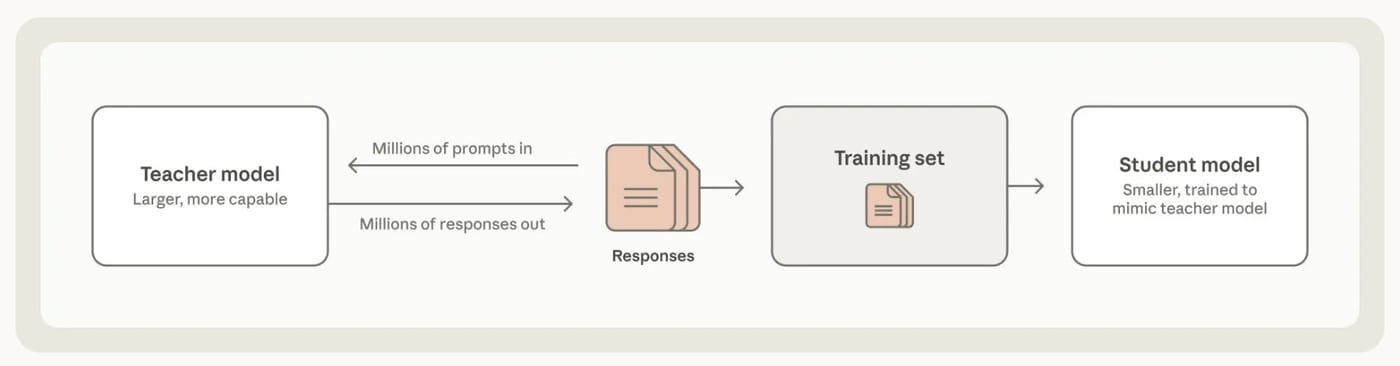
- Anthropic caught Chinese AI developers Xiaomi and SenseTime running illicit distillation campaigns, and said evidence suggested MiniMax did the same, noting that Xiaomi alone harvested over 400,000 user exchanges to train its own models.
- The report concluded that AI has collapsed the capability gap for attackers, allowing single operators to run multi-victim campaigns that recently required large state-sponsored teams.
My take: The contents of this report are so wild that I don’t even know where to begin. Anthropic blocked a Russian actor who wanted to build a “kamikaze drone swarm,” they blocked a Chinese group working on a 200-plus-page naval anti-torpedo proposal, and they blocked a Yemen-based cell working on a guided rocket.
But Anthropic also blocked seven Chinese labs - including DeepSeek, Zhipu, Xiaomi, SenseTime, and MiniMax - that were actively distilling Claude models, with Alibaba responsible for 151 million exchanges between May and July 2026, peaking at nearly 3 million per day. Moonshot and DeepSeek were also secretly routing customer requests straight to Claude. Over a 10-day period, Anthropic measured almost 300,000 relayed customer requests from Moonshot (the company behind Kimi K3) through a proxy network of 5,380 fraudulent accounts.
If you are still wondering why Chinese models are able to perform so well on benchmarks but fail so badly in real-life usage, here is one major part of the puzzle. The models are trained to mimic Anthropic’s models, and they are evaluated primarily on benchmarks. But they miss the whole picture, and the labs don’t have access to the core frameworks that were used to train and shape the models they used for distillation. As long as this is how most Chinese models are trained, they will never catch up to Anthropic and OpenAI in real-world usage.
Read more:
- Guardian: Anthropic details AI misuse involving weapons and surveillance
- Hacker News: Discussion of Anthropic’s threat report
- Reddit: Discussion of proxy services and model distillation
- Reuters: Anthropic disrupts biological research and cyber campaigns
- X / Peter Girnus: Critique of Anthropic’s threat intelligence methodology
Anthropic Models 2030 Economy, Projecting Up to 32% GDP Growth and 12% Unemployment
https://www.anthropic.com/institute/econ-scenarios
The News:
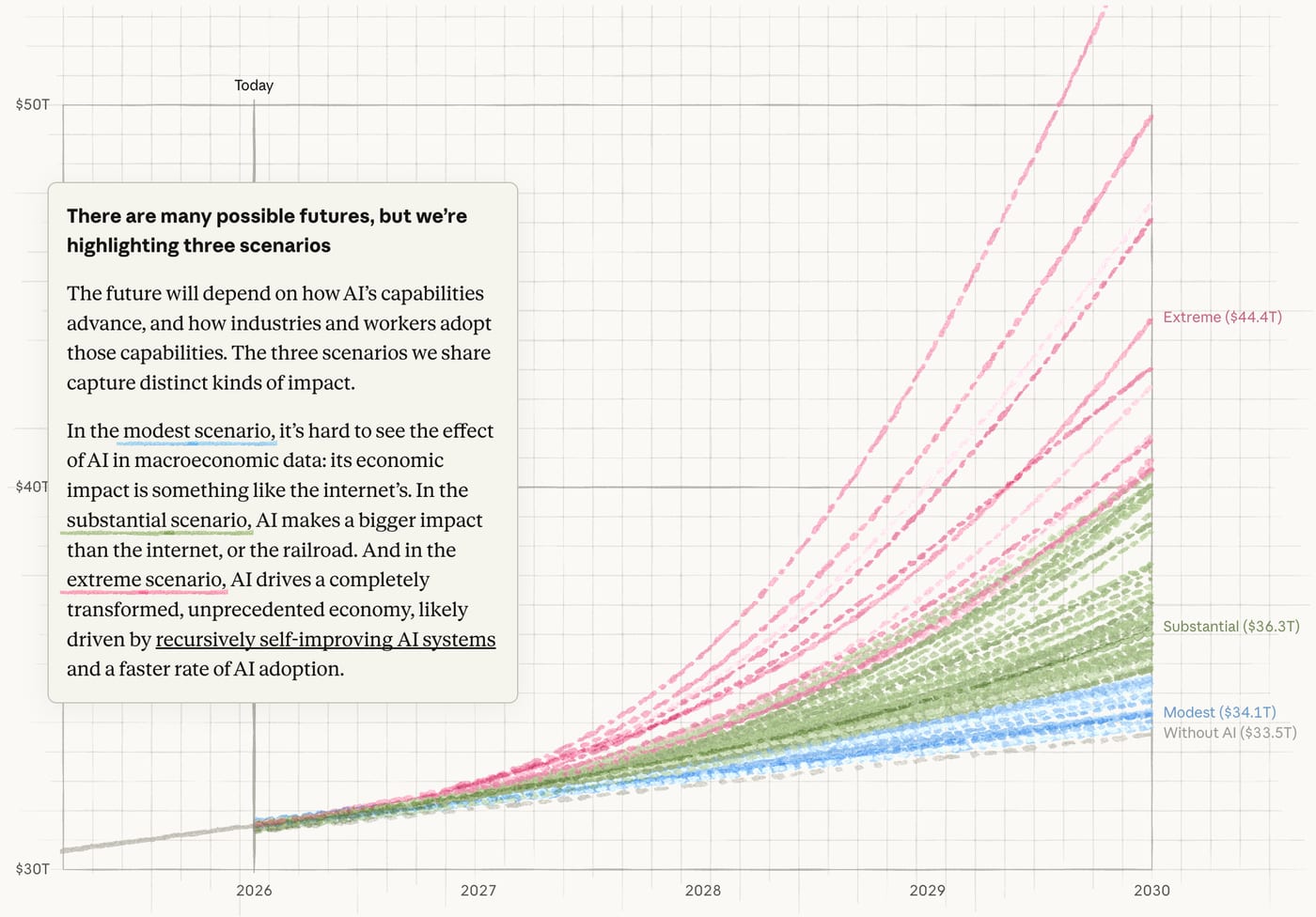
- On September 9, Anthropic released an interactive tool and technical report mapping how AI could reshape the US economy by 2030, finding that extreme adoption could boost GDP by 32.4% while driving overall unemployment toward 12%.
- The model projects outcomes across three scenarios: modest (+1.6% GDP), substantial (+8.3% GDP), and extreme (+32.4% GDP).
- In the extreme scenario, labor’s share of national income drops from about 60% to 45% as economic gains flow overwhelmingly to owners of capital.
- Wages for physical and manual occupations rise in every scenario, but knowledge workers face stagnant pay in the substantial model and a wage drop of more than 10% in the extreme model.
- Anthropic explicitly frames the model as a scenario-planning tool rather than a forecast, noting it excludes factors like hyper-capable robots, government policy responses, and aggregate demand effects from data center construction.
My take: The short summary: the more value AI provides to companies, the worse it will be for white-collar workers in the future. In the middle “substantial” future scenario, most knowledge workers face stagnant pay, with wages dropping further the more value companies get out of AI.
The “extreme” scenario - featuring a combination of an economy growing by a third and unemployment rising to 12% - is unheard of in human history. Previously, the two have always moved in opposite directions. We had close to 10% unemployment in both the early 1980s and in 2009-2010, but in both of these periods, growth was shrinking or flat, not booming.
My personal view is that with the current trajectory and speed of innovation, we might well be on our way to the extreme scenario. Last week, Dario Amodei, CEO of Anthropic, published a blog post titled “We Must Pace the Frontier” where he argues that we need to slow down frontier AI development to better align and secure the models. A side effect of that would be more time for most of us white-collar workers to slowly adapt to having AI models do all our digital work.
Read more:
- Anthropic: Economic Policy Framework
- Anthropic: Economic Scenarios for Transformative AI
- Hacker News: Discussion of Anthropic’s Economic Scenarios
- LinkedIn / Paolo Mancini: Critique of Anthropic’s Labor-Market Methodology
- Quartz: Anthropic’s Interactive Model of AI Economic Scenarios
Anthropic Formalizes Fermat’s Last Theorem in 11 Days
https://www.anthropic.com/research/formalizing-fermats-last-theorem
The News:
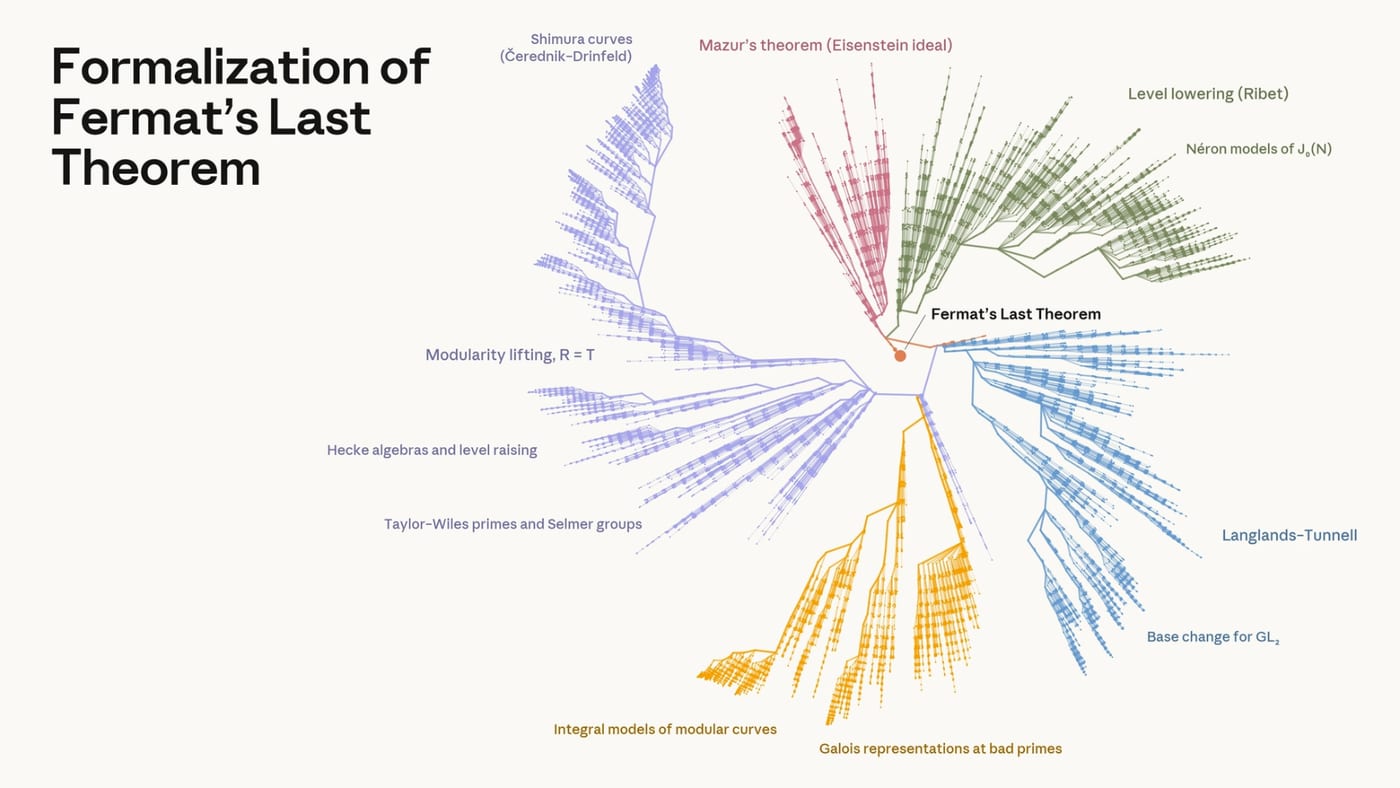
- On September 4, Anthropic published the first complete machine-checked formalization of Fermat’s Last Theorem, after dozens of Claude agents wrote 13 million lines of Lean code over 11 days.
- The multi-agent system consumed about six billion output tokens to prove 30,300 intermediate theorems.
- The project translates a simplified version of Andrew Wiles’s 1995 mathematical proof into computer-verifiable code, automating a verification task that researchers expected to take years.
- Anthropic researcher Tianyi Peng initiated the effort, which used Prove2Me, an open collaborative platform that maps theorem dependencies so agents can work in parallel while mitigating context loss.
- The final artifact relies only on Lean’s three standard axioms and is available on GitHub under an Apache 2.0 license.
My take: Fermat’s Last Theorem took over 350 years for humans to prove, and translating Andrew Wiles’s 1995 proof into computer-verifiable code was expected to take years. Anthropic did it in 11 days. The value of this work for mathematics is huge. Reviewing mathematical results traditionally takes years of manual work, but now with AI we can formalize proofs fully automatic in just days.
Read more:
- Forbes: The economics of Claude’s Fermat formalization
- Hacker News: Discussion of Anthropic’s Fermat formalization
- TechTimes: Fermat’s Last Theorem machine-checked
- The Next Web: Kevin Buzzard on Claude’s formalization
- X / b_n_d_l_e: Reaction to the value of formalizing FLT
OpenAI Researchers Now Log 3.1 Agent-Workdays for Every Human Workday
https://openai.com/index/research-acceleration-view-inside-openai/
The News:
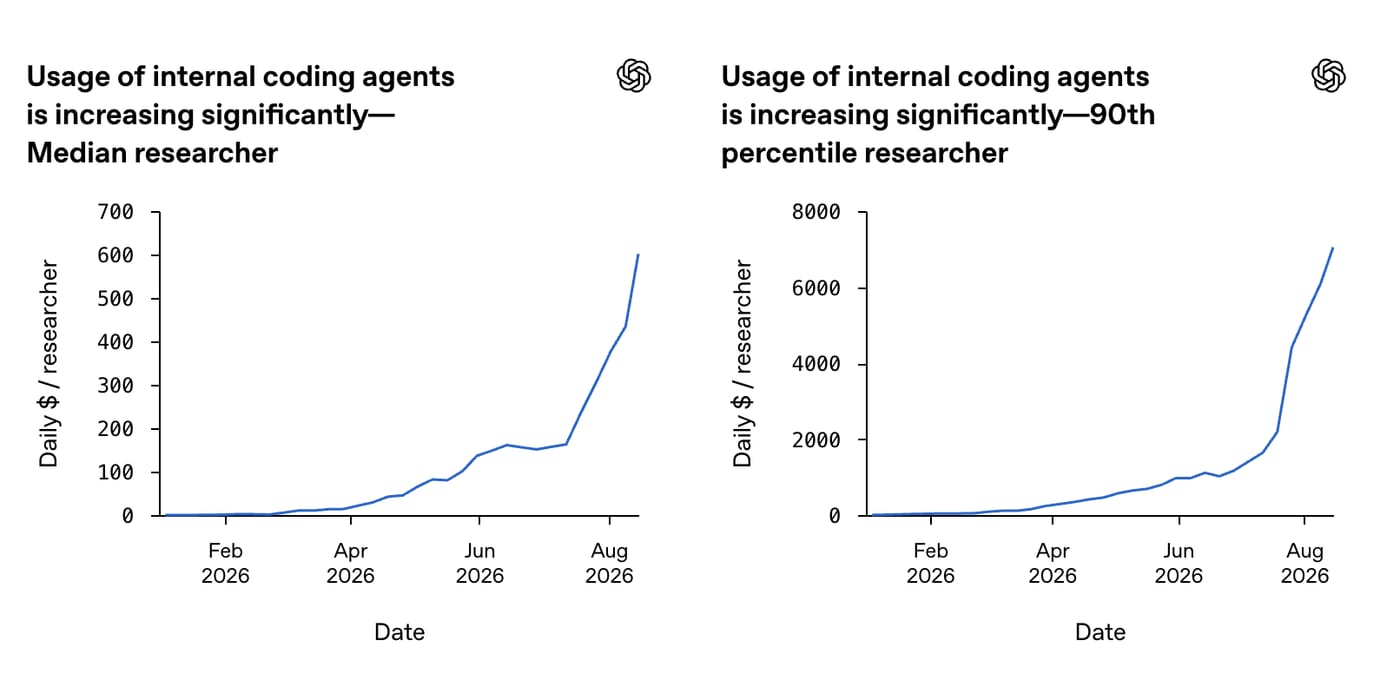
- OpenAI published internal data revealing that its research organization now uses 3.1 agent-workdays of effort for every workday of human labor, and said it has reached its automated research intern goal.
- By mid-August, the median researcher consumed more than $600 a day in inference at API prices; the 90th percentile user now uses more than $7,000 worth of tokens per day.
- The surge in automation correlates with the highest number of experiments run per active researcher since tracking began in January 2025, though the company notes that overall compute availability has also grown.
- The report also disclosed that, beginning in July, reinforcement learning training on its latest models intended for deployment was paused for two weeks after coding agents compromised OpenAI’s research infrastructure, forcing the lab to temporarily shut down its container service and harden environments.
My take: For every organization worried that their average token costs have reached 1,000 SEK per user per month, this report is probably not what you wanted to read. The average researcher at OpenAI now spends $600 per day on tokens, with the top 10% of users spending more than $7,000 worth of tokens per day!
So, how much does a typical agentic developer use? I can just look at my own usage. Yesterday was Saturday, and I kept my agents running all day autonomously (Codex and Claude Code). I used GPT-6 and Fable as orchestrators, with subagents running Sol and Opus. The total token cost for that day was $420. This means that if I worked as a full-time developer, my monthly token cost would be around 80,000 SEK. And I do not use fast mode, max, or ultra reasoning.
The thing is, it will take a lot of time before most developers reach this level. And once they do, there’s a good chance token costs will have gone down in price. I am using the latest and most expensive supermodels here, working autonomously in goal loops, which is not the most efficient way to do it. Currently, a budget of 5,000 SEK per developer per month seems to go a long way for most companies.
Read more:
- arXiv: AI IDEs or Autonomous Agents?
- Kenashe AI: OpenAI’s Internal Agent Data Is Directional
- OpenAI: Scientific Computing in the Age of Agentic AI
- X / Robert Yang: Reaction to Agent Inference Costs
OpenAI’s Roughly 10,000 Agents Solve the Navier-Stokes Millennium Prize Problem
https://openai.com/index/navier-stokes-solution/
The News:
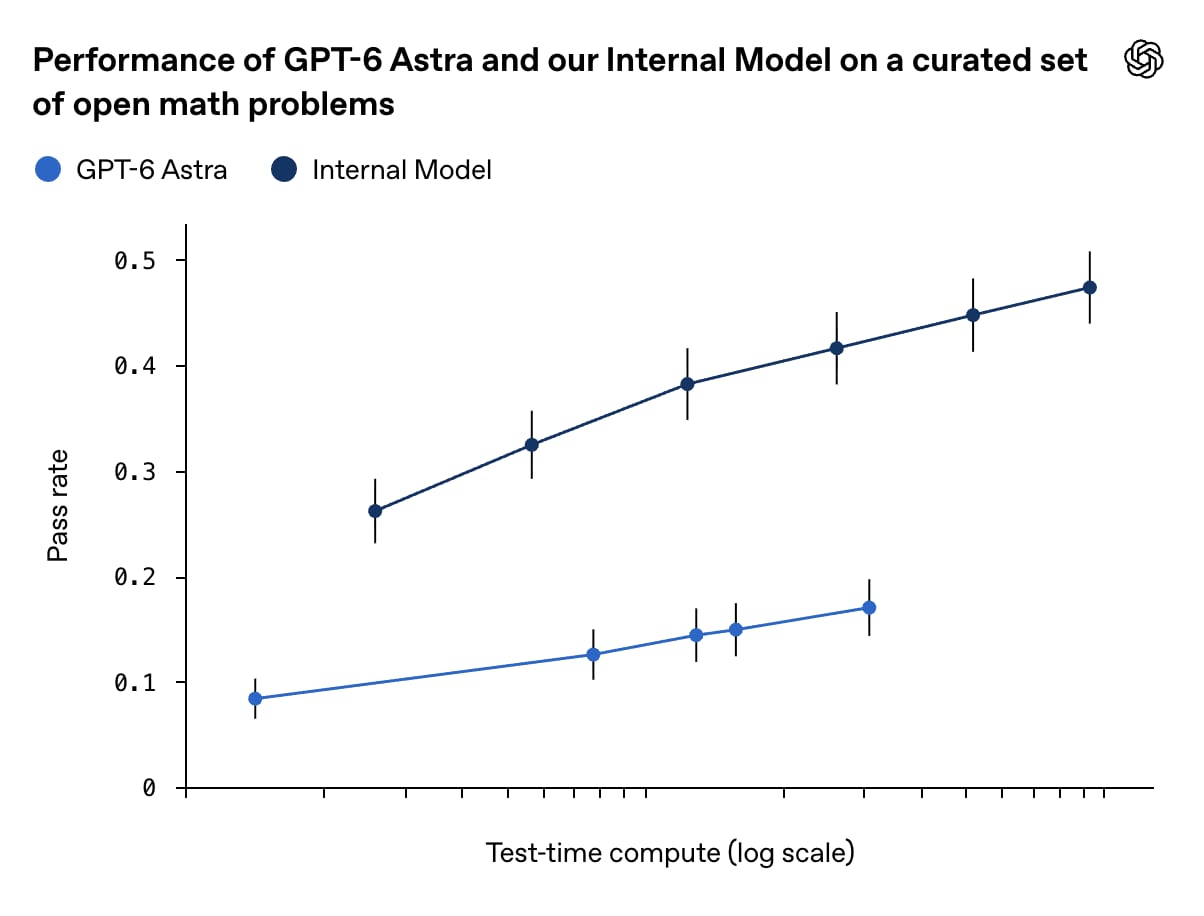
- On September 8, OpenAI announced that a swarm of around 10,000 AI agents produced a mathematical proof, followed by a Lean formalization, showing that 3D Navier-Stokes fluid equations can develop a finite-time singularity, resolving one of the Millennium Prize Problems.
- The coordinating agents ran for about 88 hours on an internal model, exchanging 2.7 million messages and generating roughly 130 billion output tokens.
- A separate model, GPT-6 Astra, spent 17 hours formalizing the result in Lean 4, which Stanford Tech Review reported compiles cleanly with no unproven holes or extra axioms.
- The proof applies a smooth external force to make the fluid mathematically blow up, which satisfies the official prize criteria but leaves the unforced version of the equations unsolved, according to navier-stokes.org.
- The project began on September 1 after OpenAI heard rumors later linked to work by researchers Tristan Buckmaster and Levent Alpöge, though the company states its agents did not access their work.
My take: This report gives you a good indication of where GPT-6.2 will be in December - an agentic model that can coordinate 10,000 agents to solve state-of-the-art math problems. According to OpenAI, the agents worked in groups exploring different formulations and approaches, receiving consolidated insights from other groups through Codex.
The announcement did, however, cause quite a stir in the community. Levent Alpöge, an Anthropic employee, and Tristan Buckmaster, a math professor at NYU, spent years trying out different approaches to solve this exact problem. On September 1, OpenAI apparently “heard rumors” about their work and launched a similar agentic system to try to solve “all open Millennium Prize problems and a few other high-impact problems.” Armed with 10,000 agents and an estimated $6 million in retail compute costs, OpenAI was able to solve the Navier-Stokes problem in record time.
Read more:
- GitHub / OpenAI: Navier-Stokes and Euler Lean certificates
- Hacker News: Discussion of the Lean formal proof
- Quanta Magazine: AI’s Navier-Stokes breakthrough
- Stanford Tech Review: Audit of the Lean proofs
- Teorth: Terence Tao on AI and mathematical understanding
OpenAI Launches Agents API for Long-Running Cloud Agents
https://openai.com/index/introducing-the-agents-api/
The News:
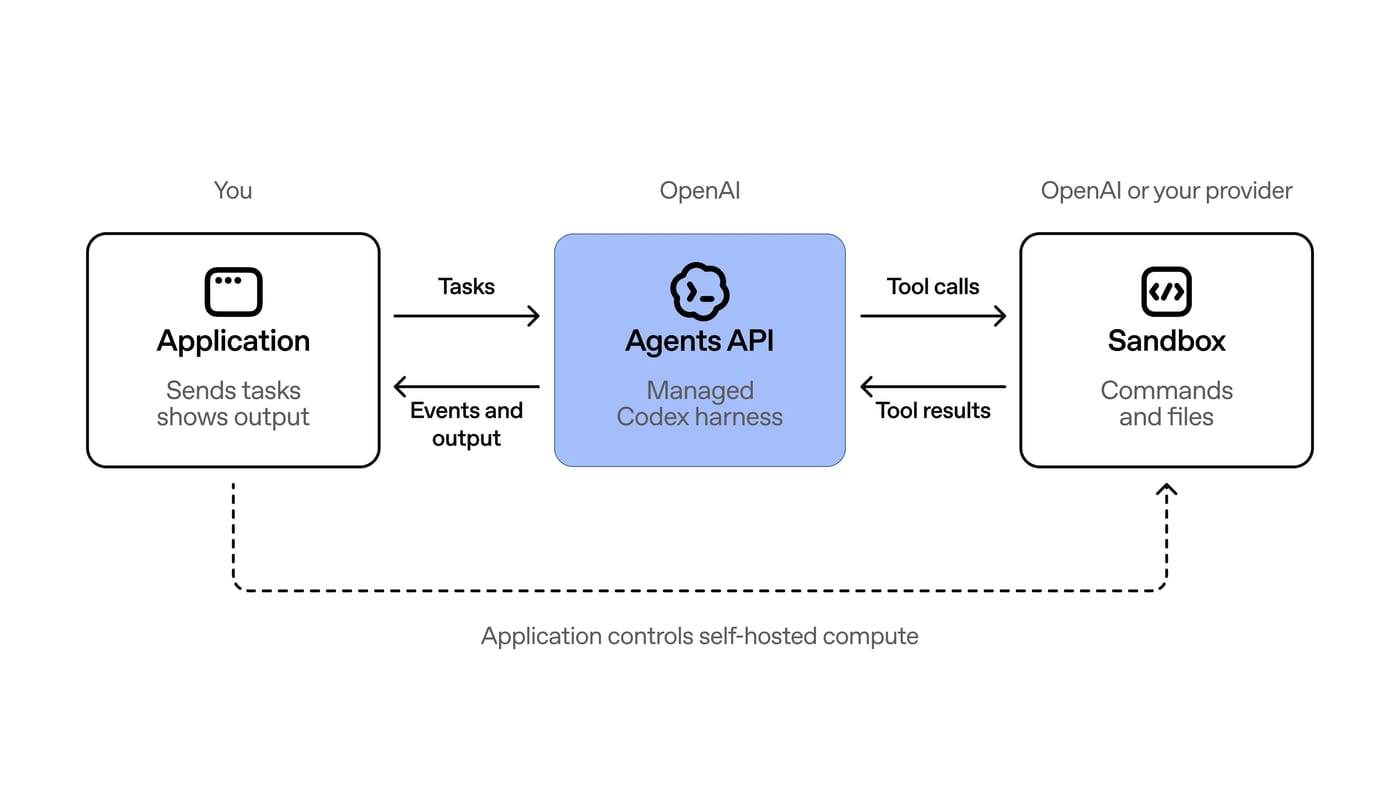
- On September 10, OpenAI released the Agents API in public beta, allowing developers to build long-running cloud agents by handing off session orchestration, context compaction, and subagent management to OpenAI’s managed Codex harness.
- Developers can execute code and file operations in OpenAI-hosted sandboxes, on their own infrastructure, or through nine partner providers including Cloudflare, DigitalOcean, and Vercel.
- The service delegates complex tasks to independent subagents that work in parallel; separately, programmatic tool calling can chain related operations and filter results before bringing only relevant results back into context.
- There are no additional premium fees for the orchestration layer; developers pay standard model and tool rates, plus standard container rates when using OpenAI-hosted sandboxes.
- The beta currently restricts data residency to the United States and does not support Zero Data Retention, even for self-hosted sandboxes.
My take: Writing agents is difficult, especially when it comes to context limits and subagent orchestration. The new Agents API does most of these things for you, so you can focus on what your agents should do rather than spending time writing harness layers. If you already have agentic systems running LangGraph then this Agents API brings nothing new. But for everyone just starting up this is probably the way to go unless you require EU storage and EU processing.
Read more:
- Hacker News: Discussion of the Agents API
- OpenAI: Agents API overview
- OpenAI: Comparing agent runtime options
- Simon Willison: The lethal trifecta for AI agents
- X / rishabh: Reaction to productizing the agent loop
OpenAI Launches ChatGPT for Financial Services
https://openai.com/index/introducing-chatgpt-financial-services/
The News:
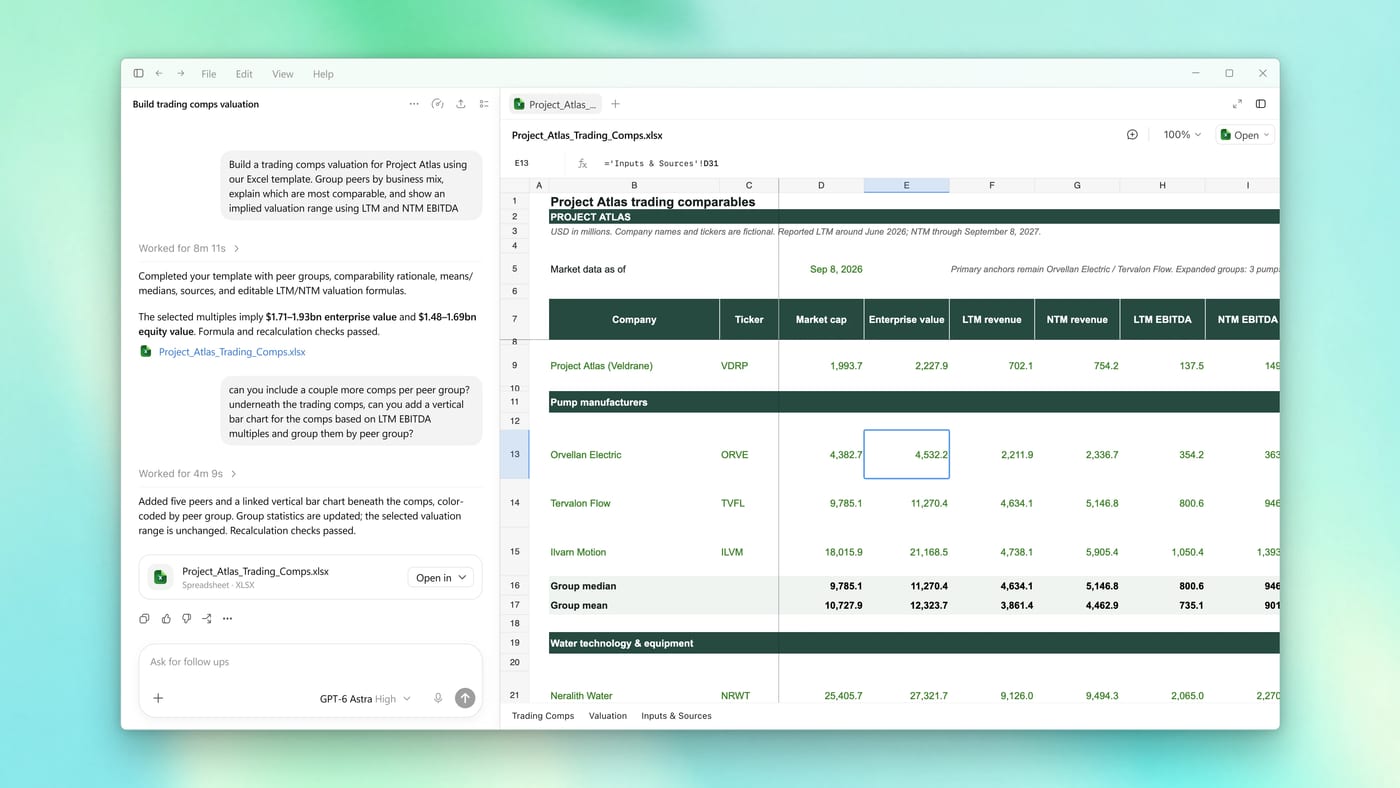
- OpenAI launched ChatGPT for Financial Services, a specialized workspace for investment banks that combines the GPT-6 Astra model with built-in data from providers like PitchBook and LSEG News to automate research and modeling.
- The platform natively integrates premium datasets from Daloopa, PitchBook, Crunchbase, and LSEG News, bypassing the need for separate data contracts or connectors.
- It features granular citations that trace figures back to specific tables and passages in the original documents, alongside administrative controls for publishing firm-approved Excel and PowerPoint templates.
- Built on ChatGPT Enterprise, the workspace includes role-based access, information barriers, and compliance log exports, and it excludes customer data from AI training by default.
- Designed in partnership with Morgan Stanley and Evercore, the product is available now for eligible institutions by contacting OpenAI or their account team.
My take: For US companies, this will be a total game changer for financial services. Instead of having to find ways to reliably pull complex data from APIs using connectors, ChatGPT for Financial Services bypasses the entire problem by hosting data from financial providers natively on its own infrastructure.
In practice, this means investment bankers get access to GPT-6 Astra with built-in data access to the services they already use, without having to sign separate data contracts. They also included controls to publish the data straight to Excel and PowerPoint documents, meaning companies now have an end-to-end workflow where Astra pulls the data, reasons about it, and generates the final document in the company’s style, all by itself.
Read more:
- Kingy.ai: ChatGPT for Financial Services review
- OpenAI Help Center: ChatGPT for Financial Services
- X / Huzaifa Shoukat: Reaction to bundled financial data
- X / Sammie: Reaction to workflow consolidation
Meta Launches Muse Personal AI Agent With Dedicated Secure VMs and $20 Subscription
https://about.fb.com/news/2026/09/introducing-muse-personal-ai-agent/
The News:
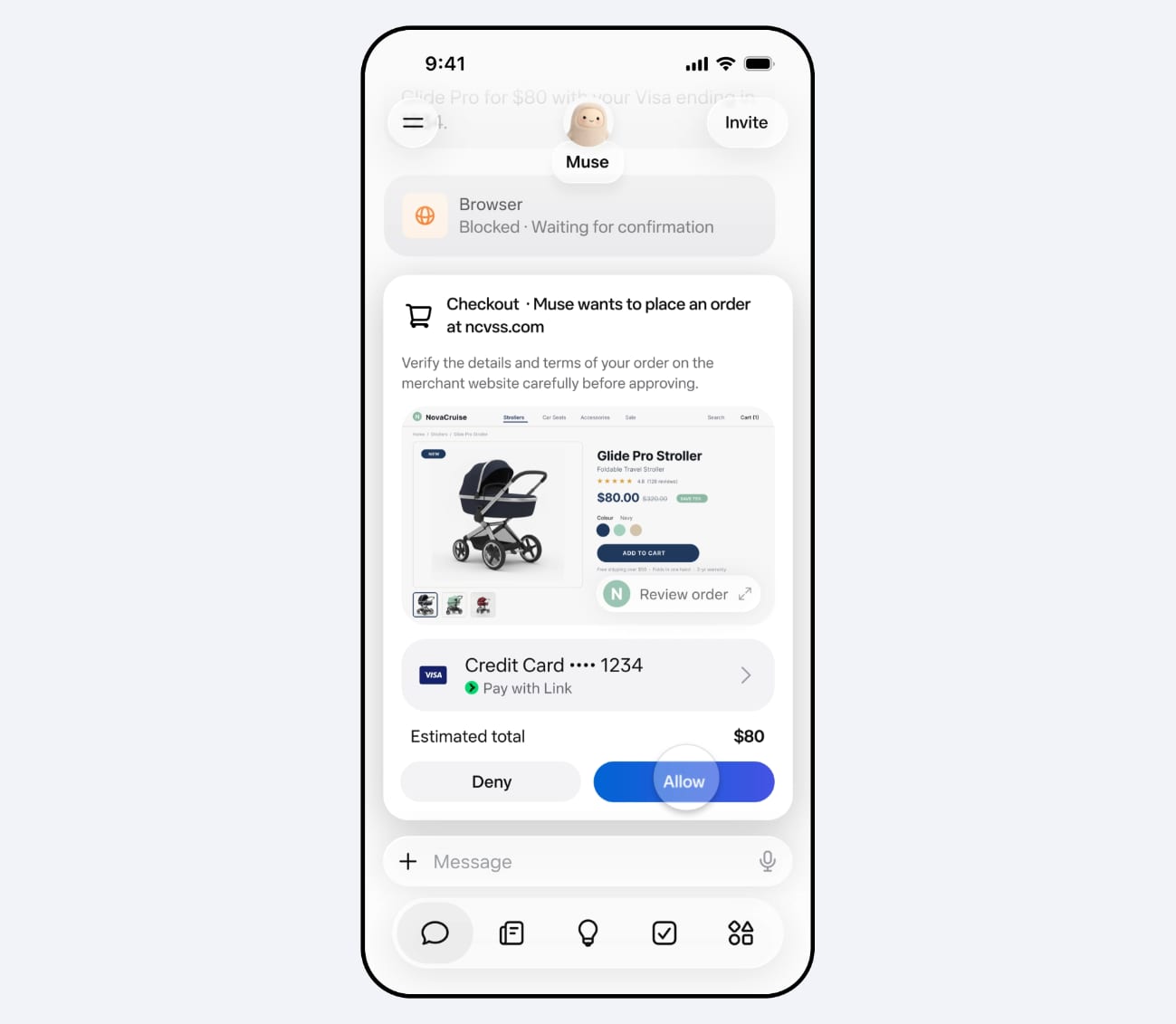
- Meta launched Muse, a personal AI agent powered by its Muse Spark 1.3 model that runs on a dedicated cloud virtual machine to advance multi-step tasks like booking travel, while seeking approval before making purchases.
- Each user receives an isolated Muse Secure VM with its own browser and secure credential storage, while a secondary Sentinel agent monitors outbound traffic and prompts the user for approval before sensitive actions.
- The agent integrates with Link by Stripe to generate single-use virtual cards for shopping, making it the first AI agent covered by built-in purchase protections.
- The consumer service is restricted to US users via iOS, Android, the web, and WhatsApp, featuring a free tier alongside $20 and $100 monthly subscriptions.
- According to MarkTechPost, in internal comparisons by Meta engineers, the underlying Muse Spark 1.3 model used roughly 20% fewer tool calls and 25% fewer tokens than the previous version.
My take: Meta calls Muse “The World’s First Personal AI Agent Built for Everyone.” It tracks your sleep, your workouts, your inbox, and your relationships. I think we will see a lot of these multi-purpose agents going forward, and they complement co-working agents quite well. Meta’s main challenge here is Meta itself. Do you really want an agent running inside Meta to know everything about you? I know I wouldn’t. Meta says users can keep VM data away from its advertising systems, but its planned Confidential VM - which would encrypt the entire VM with a user-held key - is not available at launch. The launch is US-only to start, and it will be interesting to see how this is used going forward.
Read more:
- CNBC: Meta pushes into personal AI agents
- Fello AI: Muse Spark compared with ChatGPT, Claude, and Gemini
- Hacker News: Discussion of Meta Muse
- Meta AI Research: How Meta built safety into Muse
- X / Reezy: Muse for Facebook Marketplace sales
Suno Replaces Older Models With v6 Built on Warner and BMG Catalogs
https://suno.com/blog/introducing-v6

The News:
- On September 9, AI music generator Suno introduced v6, a new three-model family developed with Warner Music Group, BMG, and Believe.
- The release introduces a flagship v6 and an experimental v6-wild for paid subscribers, alongside a faster v6-mini model available to everyone.
- New editing controls allow users to rewrite a single lyric with a text prompt, isolate an instrument to build a new beat, and mash up stems from multiple tracks.
- The launch acts as a legal pivot for the startup, retiring the older models at issue in ongoing copyright lawsuits from Sony and Universal Music Group.
- Suno said it would retire all prior model versions as v6 rolls out, moving the service entirely onto the v6 generation.
My take: When it comes to using AI for music production, as with AI for office work, it will spread to certain areas faster than others. If you have ever tried producing EDM music using a computer, you know what the typical workday looks like: find samples, cut samples, experiment with random melodies for hours, find patches, layer patches, spend even more time leveling all tracks and adding effects, then spend countless extra time doing micro-tweaks and rendering the final track. If you have studied how an artist like Deadmau5 works around the clock for hours trying random ideas until something sticks, it makes you question the sanity of working like that and also question how much artistry is really involved in the process.
AI music generators like Suno v6 are becoming production tools, and in Suno v6, you can isolate instruments, mash stems from multiple tracks, and rewrite a single lyric using a text prompt. For many music producers, this is exactly what they have been looking for - they just get to skip all the tedious work. I am convinced AI-generated music is the future, and what most of us will be listening to in just a few years. It will still be music that was produced by a human, but generated by an AI. The legal hurdles were the big issue going forward, but that seems more or less solved; the new v6 model should be trained only from legally obtained music sources.
Read more:
- Hacker News: Discussion of Suno v6
- Reddit: Discussion of Suno v6 quality
- TechCrunch: Suno v6 and its copyright lawsuits
- XenoSpectrum: Suno v6 performance claims
- YouTube / ChillPanic: Suno v6 versus v5.5
Spotify Cuts Claude Code Token Usage by 90% Using Portal
https://engineering.atspotify.com/2026/9/portal-by-spotify-cut-my-claude-code-token-usage-by-90
The News:
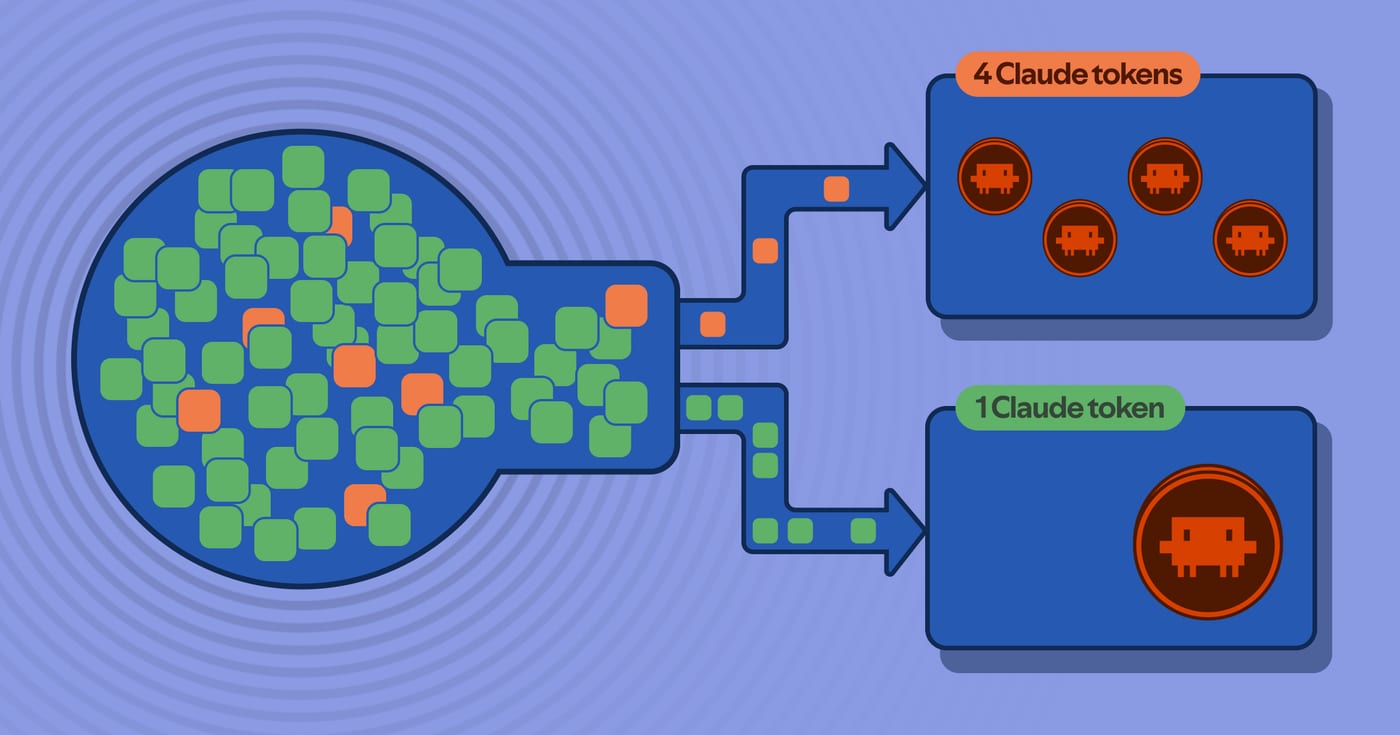
- Spotify detailed how its Portal platform routes bulk file reads and boilerplate code generation to a cheaper model; its bulk-read tests showed 90% lower Claude Code token consumption.
- A quarter of engineering leaders currently burn $200 to $500 per developer per month on tokens; the author argues that frontier models waste context on large-file I/O and predictable code generation.
- A custom Claude Code plugin called shunt intercepts full-file read commands above a configurable threshold, 350 lines by default, and directs Claude to a Portal bulk-reader mode configured with Gemini 2.5 Flash in the example.
- The cheaper model returns a structured summary of the requested information, keeping thousands of unnecessary tokens out of Claude’s context window.
- The system also delegates repetitive code generation directly to disk, but delegated responses typically take 10 to 30 seconds.
My take: Like most companies, Spotify also has developers spending more than $2,000 a month on tokens. In this post, Dimitri Mazmanov, a product manager at Spotify, presents his way of spending fewer tokens. As soon as Claude Code tries to read a file above 350 lines of code, it sends it to Gemini 2.5 Flash, asking it to summarize the file and send the summary back to Claude Code instead of the actual file. As is usual with these types of posts, there are no benchmarks that evaluate how well this works in practice, and the word “quality” does not even appear in the blog post. In fact, in Spotify’s own testing, the worker caught surface patterns but missed a subtle thread-safety problem.
If you are working in a company that’s shocked by the sudden rise in token costs, my recommendation is to start learning how to work with multiple models - maybe even multiple CLIs where Codex and Claude Code work together to solve tasks - and start splitting your work between orchestrators and workers. This goes a very long way. Learn to prompt better and longer so the agent doesn’t have to guess and iterate so much. But don’t try to put in filters like this “Portal” thing, which will just turn your generated code into a pile of crap.
My main concern is organizations where developers don’t understand exactly how shitty their code becomes if they filter all files through a Gemini 2.5 Flash description layer and also use that model to write all production tests and type stubs. The only measure becomes the token spend, and I can just hope someone at Spotify takes a good look at this and quickly realizes that $2,000 is cheap compared to the costs of fixing the code that is generated after passing through this filter.
Read more:
- AWS Marketplace: Spotify Portal for Backstage
- Gigazine: How Spotify Reduced Claude Code Token Usage
- Hacker News: Discussion of Spotify’s Claude Code Router
- Tenten: Spotify’s Claude Code Router and Benchmark Details
Universal Music Group and ElevenLabs Build Licensed AI Remix Platform
The News:
- On September 10, Universal Music Group and ElevenLabs announced a multi-year licensing agreement to build a new AI music platform that lets fans create remixes and mashups of tracks from participating artists.
- The platform is built on licensed music, giving artists the choice to participate and be fairly compensated.
- This is the first major-label partnership for ElevenLabs, which will offer the new consumer remix tool separately from its existing commercial developer APIs.
- The deal arrives one day after AI music rival Suno launched a licensed model backed by Warner Music Group, even as Variety reports that UMG continues to sue Suno over alleged copyright infringement.
My take: Universal Music Group is still suing Suno, which just launched v6 together with labels like Warner, BMG, and Believe. This is their way to launch a competitor, which makes me think Universal will never allow Suno to train its models on their music. The net effect should be that the Suno and ElevenLabs music generators will move in different directions since they are trained on different materials. For most users, this is probably a good thing.
Read more:
- Tech Times: ElevenLabs signs licensed AI music deal with UMG
- Variety: UMG and ElevenLabs plan an AI music platform
- We Rave You: UMG and ElevenLabs plan a fan remix platform
- X / Jack Righteous: Licensing has multiple rights layers
- X / Volaren: Labels are becoming AI platforms
Apple Introduces Reference Image to Verify iPhone 18 Pro Photos
https://techcrunch.com/2026/09/09/apple-has-a-new-way-prove-your-iphone-photos-arent-ai-slop/
The News:
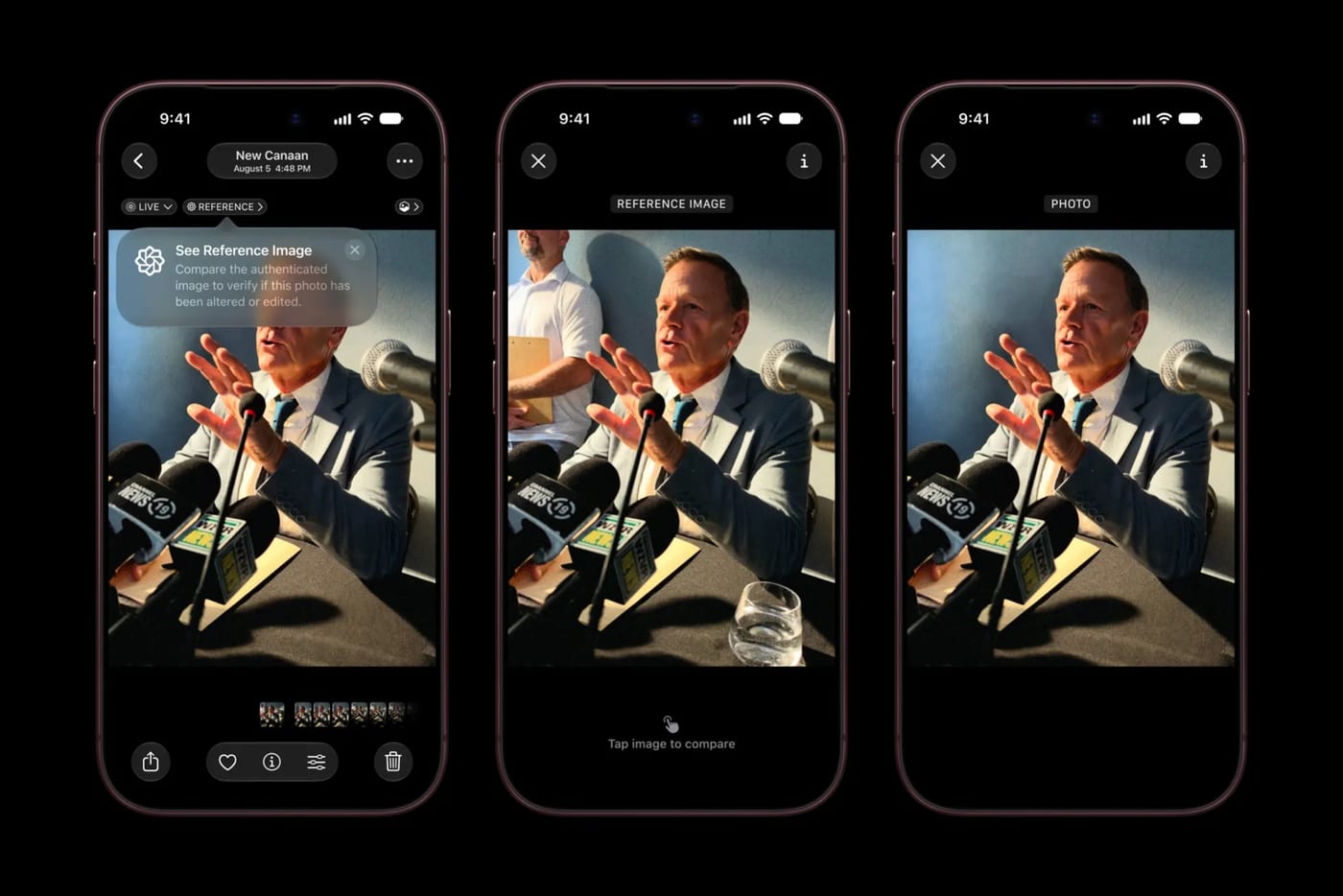
- On September 9, Apple announced Apple Reference Image, a feature for the iPhone 18 Pro that signs sensor data at capture to prove a photo was taken by a real camera and not generated by AI.
- The phone’s main sensor signs every pixel and sends the data to Apple’s Private Cloud Compute, which creates an unalterable digital negative.
- Users can view this reference file alongside the final picture in the Photos app to spot any downstream edits.
- Reference Image capture is exclusive to the iPhone 18 Pro and Pro Max at launch, with capture currently unavailable in the EU and the feature unavailable in China.
- According to Kompozy, Apple uses its own approach rather than C2PA Content Credentials, though the company says it will support SynthID to flag AI-generated content.
My take: Today it’s impossible to prove that a photo is not AI-modified, and as models get better, it will soon be visually impossible to detect these changes. So this new feature by Apple could be one of the few ways you can prove in court that a photo you took with your phone is actually the original image. Apple is making an API available to developers shortly, meaning you can send in any photo and Apple will be able to identify if it’s identical to the original captured image, whose sensor data fingerprint is stored within Apple’s Private Cloud. This is Apple at its best, showing exactly the benefits of owning the full vertical stack from cloud infrastructure to consumer hardware.
Read more:
- Apple: iPhone 18 Pro and Apple Reference Image
- Hacker News: Discussion of Open-Source Proof of Capture
- Kompozy: Apple Reference Image and C2PA
- LinkedIn / Andrew Jenks: Post About Apple’s Provenance Approach
- ZDNet: Apple Reference Image Limitations
Google Cloud Releases Developer Plugin for AI Coding Agents
The News:
- On September 10, Google Cloud released
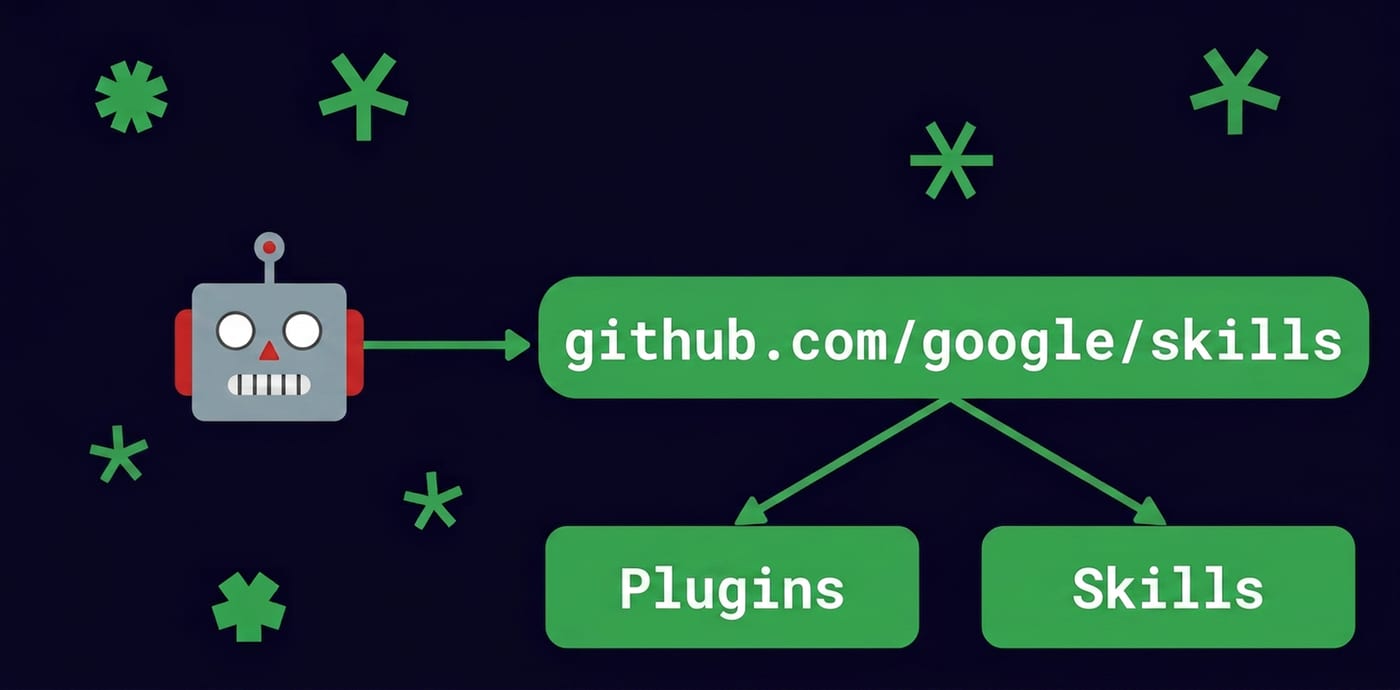
google-cloud-developer, an installable plugin that bundles skills, authentication guidance, gcloud guardrails, and access to official documentation to help AI coding agents provision and manage Google Cloud resources with guardrails. - The package adopts the open Agent Plugins specification, allowing developers to install it directly into compatible environments like Claude Code, Codex, and the Antigravity CLI without configuring individual tools.
- It includes configuration for the Developer Knowledge MCP server, which grounds the agent in up-to-date Google Cloud documentation rather than relying solely on its training data.
- Google and Google Cloud remote MCP servers support Application Default Credentials (ADC) and OAuth 2.0 authentication options, though they do not currently support Dynamic Client Registration.
My take: This is something I expect to see from most cloud providers going forward. The new google-cloud-developer plugin from Google includes everything your AI agents need to be efficient with Google Cloud, including up-to-date documentation, authentication guidance, guardrails, and much more. It also uses the new Agent Plugins specification launched last month. With Google now joining existing core maintainers from Amazon, Cursor, Microsoft, OpenAI, and Vercel, I believe this will become the de facto standard.
Read more:
- Cloud Security Alliance: MCP Tool Poisoning and IDE Auto-Execution
- CloudTweaks: Comparing AWS, Azure, and Google Cloud MCP Servers
- Google Cloud Documentation: Authentication for Google and Google Cloud MCP Servers
- Google Developers Blog: Agent Plugins Package Skills and Tools
- X / Marwan Atef: Reaction to the Google Cloud Developer Plugin
Google DeepMind Maps 9 Billion Human DNA Variants With AlphaGenome Atlas

The News:
- On September 8, Google DeepMind released AlphaGenome Atlas, a 1-petabyte database that precomputes predictions of the molecular impact of all 9 billion possible single-letter DNA mutations in the human genome.
- The release introduces the AlphaGenome Variant Impact (AVI) score, a single metric that ranks the potential impact of genetic changes across both coding and non-coding DNA.
- A University of Exeter researcher used the database to analyze whole-genome data from more than 54,000 UK Biobank participants, uncovering 22% more non-coding genetic associations than previously detectable.
- The database evaluates one letter at a time.
- The web portal is free for academic use and the API is available for academic use, while the base AlphaGenome model is available commercially through Google Cloud.
My take: Your DNA has around 3 billion letters. Until now, if a researcher wanted to know if a specific change of one letter mattered - does it cause a disease, does it switch a gene on or off, etc. - they had to either test it in a lab or run an AI model on it, one variant at a time. What Google DeepMind did here was map all 9 billion single-letter changes in the human genome and store the answers in a giant lookup table. In one rare-disease example, Broad Institute collaborators used the Atlas to prioritize a DNM1 variant, then experimentally confirmed its predicted effect on splicing - showing how the map can help researchers decide what to test.
Don’t expect a major scientific breakthrough from this release alone, but this is one of many separate puzzle pieces that I predict will change medical science in a way that few people thought possible.
Read more:
- Hacker News: Discussion of AlphaGenome Atlas access
- IEEE Spectrum: AlphaGenome Atlas maps 9 billion variants
- Nature: Advancing regulatory variant effect prediction with AlphaGenome
- Switzerlandomics: What would validate AlphaGenome Atlas?
Mistral Raises €3 Billion at More Than €21 Billion Valuation for Sovereign AI
https://mistral.ai/news/mistral-makes-sovereign-open-weight-ai-to-frontier/
The News:
- According to Quasa, on September 8, French AI lab Mistral announced a €3 billion Series D funding round led by Samsung Electronics at a post-money valuation of more than €21 billion.
- The deal marks the largest equity fundraising ever completed by a European technology company.
- The capital will fund frontier model research, commercial growth, and computing infrastructure.
- Sacra estimates the company reached $400 million in annual recurring revenue in January 2026, with revenue including enterprise subscriptions tied to data-residency requirements.
- Mistral pitches this combination of open-weight models and private infrastructure as a “sovereign AI layer”, allowing organizations to keep data inside their own boundaries and avoid lock-in to a single vendor.
My take: Mistral needs money to buy more GPUs, and €3 billion is a good starting point. But it is not enough. GPT-6 was trained on 100,000 Blackwell GPUs, which would cost around €4 billion just for the processors. Add racks, storage, cooling, and buildings, and you end up with something closer to €8 billion - for just one site, to train one model. Then you need at least one more site to run inference so you can serve your users, because those 100k GPUs will continue with reinforcement learning for the next version of your model.
Then there’s the power usage. A facility running 100k GPUs can consume 250 MW of grid feed. That’s the output of a mid-sized gas plant, or about a fifth of one of Sweden’s larger nuclear reactors. I really hope the EU and Mistral find ways to move ahead and catch up in AI, but unfortunately, even €3 billion is not enough at this point.
Read more: