Tech Insights 2026 Week 42
October 12, 2026

Can you finally create complex software applications with AI without knowing how to write code?
Last week the company “Artcraft” made headlines by announcing they have rewritten all of Adobe’s flagship apps in Rust. In just a few hours the internet exploded with posts from people writing that software development is dead, and that this could cause the demise of big companies like Adobe. If you are active on LinkedIn or X, you probably saw it there too.
“Just cancelled my decade-old $15/mo Adobe sub. Nothing missing for my use, your mileage may differ.” Ryan K. Rigney, Marketing Director at Discord
The reality, however, does not really match this. First, the “Adobe-like” apps produced by Artcraft are bleak vibe-coded copies of the real Adobe apps, and lack key features that most users expect. The simple reason for this is that writing software requires a lot of text. And you need to work iteratively, rewriting and polishing the same bit of code multiple times, which requires lots of tokens and reasoning. And all this takes time.
Let’s say you use a model like Claude Opus 5.5 that works 24 hours a day, 7 days a week, only producing source code. It is strictly limited by the number of tokens it can produce, which is around 100 tokens per second (TPS). Translated into high-quality polished source code, that means at most around 200,000 new lines of source code per month, assuming you managed to properly setup Opus to work in loops - polishing and iteratively refining the code before committing. Models like GPT-6.1-Sol are even slower at around 35 TPS, with an optional 1.5x fast mode that consumes 2x more credits. The TPS restricts the thinking speed of the model, which is the main bottleneck when producing source code today.
So, even if you successfully setup an agentic AI working every day of the week, and you are able to control it to make the right decisions all the time, it would still take about 3-6 months to build something that even starts to resemble Photoshop. It’s just that much code. The only option to increase that speed is to run multiple agents at the same time that collaborate with each other. This is what I am experimenting with myself, and I have been running four Claude models on the same project for weeks now with very good results. I will report more on this next week.
The main drawback running parallel agents is cost. If you pay using API, Opus 5.5 running 7 days a week is around $10,000 per month. Multiply that by four and you quickly see that the only way this works for vibe-coded free applications like Artcraft is because they have a few Max 20x subscriptions that are 98% cheaper than using AI through the API.
So no, we are not yet at the point where an AI can build any software in weeks all by itself. It needs careful guidance and coordination, and at current token limits around 100 TPS it still takes months to build finished applications, even for an AI.
Thank you for being a Tech Insights subscriber!
Listen to Tech Insights on Spotify: Tech Insights 2026 Week 42 on Spotify
Notable model releases last week:
- Beam by Reflection AI. Open-source model for coding and agent tasks, aimed at Western companies and governments that won’t use Chinese models. It is the startup’s first model and nears Alibaba’s top Qwen model while using less computing power.
- Claude Haiku 5.5 by Anthropic. Anthropic’s fastest small model yet, built for high-volume work such as summaries, classification, coding subagents, and browser use. It costs about 75% less to run than Haiku 4.5 while scoring far higher on benchmarks.
- EmbeddingGemma 2 by Google DeepMind. Embedding model for on-device search and RAG that now handles images, audio, and video, not just text. It is free for commercial use and runs on a phone in under 600 MB of RAM.
- Microsoft-Decision-1 by Microsoft. Model that picks between fixed answer options and scores its confidence in each, for routing, classification, and controlling agents and workflows. It runs about 35 times faster than GPT-6 Sol and is available through Microsoft Foundry and OpenRouter.
- Mistral Large 4 by Mistral. Mistral’s largest model yet, a 1 trillion-parameter multimodal model for coding, agents, and cybersecurity work. It is in API preview now, with open weights due by the end of the month.
- Nano Banana 2.1 by Google DeepMind. Update to Google’s image generation and editing model, now built on Gemini 3.6 Flash. Human raters prefer it over Nano Banana 2 and Nano Banana Pro, and its infographics are nearly three times as factually accurate as Nano Banana 2’s.
THIS WEEK’S NEWS:
- SemiAnalysis Limit Tests Find Claude Subscriptions Offer 5x ChatGPT’s API Value
- Google Cloud Introduces Gemini Agent With Multi-Model Routing and Workspace Identities
- Anthropic Launches Claude Dashboards and Motion in Beta
- Anthropic Launches Cyber Mission for Critical Infrastructure and Open Source
- OpenAI Releases Decisions API for Bounded Classification
- OpenAI Adds Invisible Text Watermarks to ChatGPT and Codex in the EU
SemiAnalysis Limit Tests Find Claude Subscriptions Offer 5x ChatGPT’s API Value
https://newsletter.semianalysis.com/p/anthropic-subscriptions-offer-5x
The News:
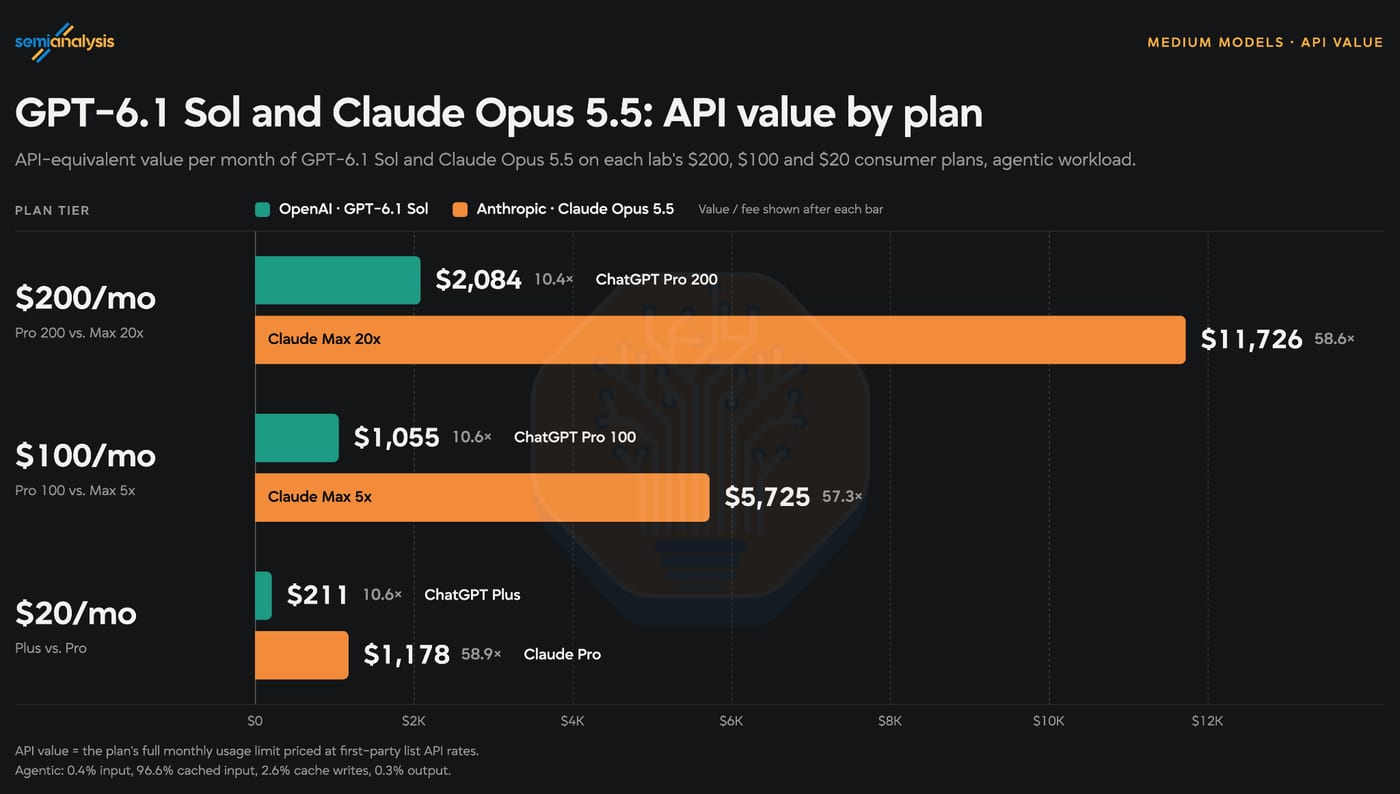
- On October 5, SemiAnalysis published a limit test of major AI subscriptions, finding that Anthropic’s Claude plans provide about five times the API-equivalent value of comparable OpenAI ChatGPT plans under an agentic workload.
- Maxing out a $200 Claude Max 20x plan yields $11,726 of Opus 5.5 API value, compared to $2,084 of GPT-6.1 Sol on a $200 ChatGPT Pro plan.
- The value gap scales across pricing tiers, with the $20 Claude Pro plan granting $1,178 of API value versus $211 for ChatGPT Plus, and the $100 Claude Max 5x yielding $5,725 against $1,055 for ChatGPT Pro 100.
- The report confirmed OpenAI halved the token allowances on its $200 plan for new subscribers and launched a $500 tier that adds a 300 tokens-per-second Ultrafast mode but only 21% more Astra volume than the old $200 plan.
- To calculate these figures, SemiAnalysis ran single-token-type prompts to measure how each provider’s usage meter moved per million tokens, then priced the inferred capacity at public API rates.
My take: I am building a new software application that I will launch for free next week, and I have Claude Opus 5.5 running 24 hours a day, every day. And it can keep going seven days a week with a Max 20x plan. Measuring my token usage and what it would have cost me to pay for this with API pricing, I would end up at around $10,000 for my monthly usage, so these figures seem to be quite on point.
Not only does OpenAI give you much less usage for their monthly subscriptions, but their current models are unfortunately not built well for long-running tasks. So even if you could run GPT-6.1-Sol 24/7, you would not want to. All GPT-6.1 models overcomplicate things ad absurdum, and they have very poor skills in usability and design. To me, it looks like the GPT-6.x models are built exclusively for creating the source code for the next big OpenAI model, which is why they are trained to consider all possible cases of failure. For that, they are probably great. For general use as a coding tool, my current recommendation is to use the GPT-6.1 models only as code reviewers. Stick to Claude Opus 5.5 as your main model and ask it to launch GPT-6.1-Sol as a code reviewer, but let Opus know that the GPT model likes to overcomplicate everything.
Read more:
- Folkfox: AI subscription value and what the meter really measures
- LinkedIn / Fabian Wesner: Post about whether AI subscriptions are really subsidized
- Reddit: Discussion of ChatGPT Pro 100 vs Claude Max 5x for coding
- The Register: Claude subscription provides more value than OpenAI’s, study says
- X / Chetaslua: Reaction to the $200 ChatGPT Pro vs Claude Max numbers
Google Cloud Introduces Gemini Agent With Multi-Model Routing and Workspace Identities
https://cloud.google.com/blog/products/ai-machine-learning/welcome-to-gemini-at-work-2026
The News:
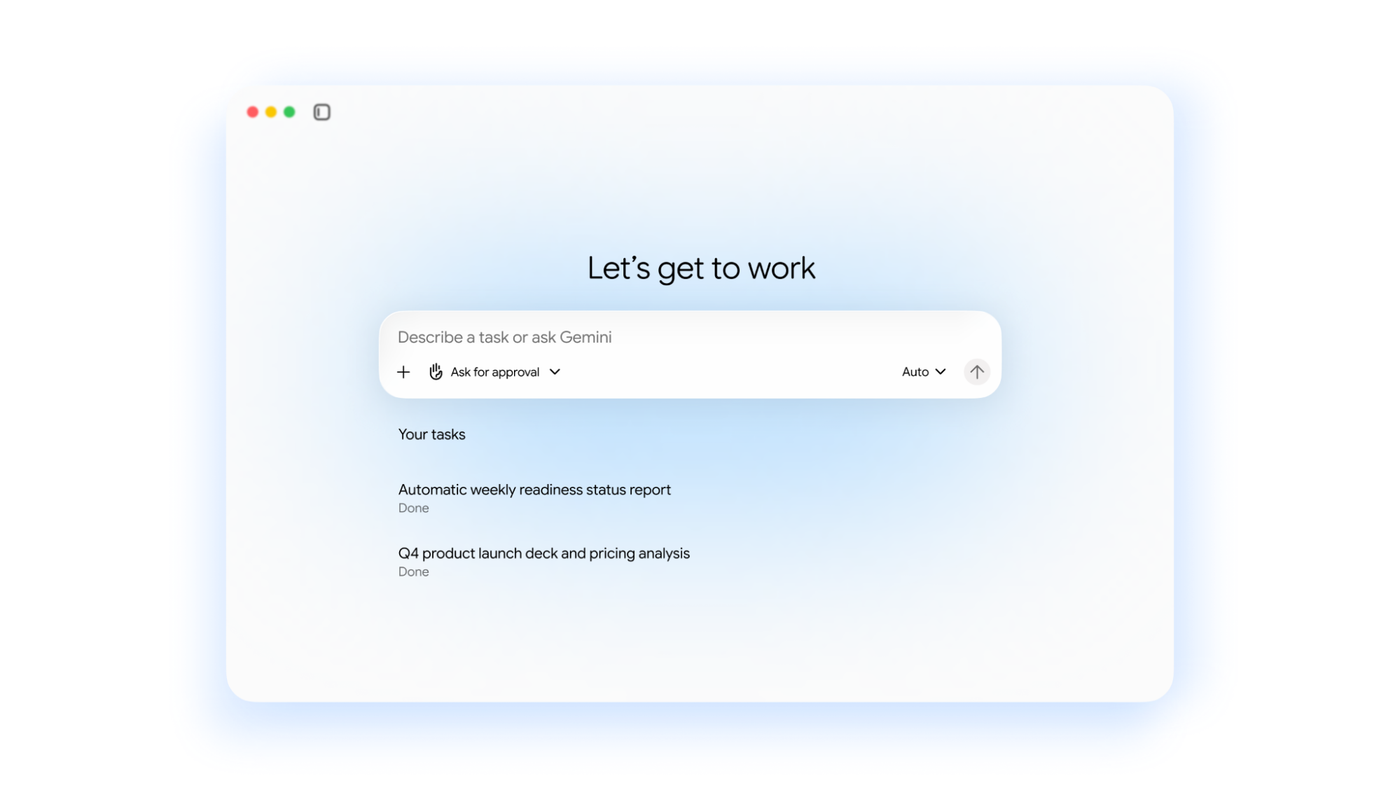
- On October 8, Google Cloud launched the Gemini agent, a single enterprise assistant integrated across Google Workspace and third-party apps that executes complex workflows and routes tasks between Google’s Gemini models and Anthropic’s Claude models.
- The platform lets teams create persistent coworker agents that receive their own Google Workspace identities, complete with dedicated email addresses, calendars, and file storage.
- Administrators can enforce real-time spending caps per project and use Smart Routing to automatically shift simpler tasks to cheaper models.
- A borderless lakehouse feature allows the agent to query external data platforms like Amazon S3, Azure Data Lake, and Salesforce Data 360 without paying egress fees or copying data.
- Google says existing Gemini Enterprise customers include Commerzbank, which cut document review times from 20 hours to one hour, and SOMPO, which deployed over 10,000 custom agents across its workforce.
My take: What I like about this setup compared to agents from Anthropic and OpenAI is that the Google agent gets its own Workspace account with its own @agents.company.com email, calendar, and Drive. It’s just like any other coworker working in the Workspace. And every action the agent takes is logged under its own name rather than yours. It’s very similar to the Microsoft Entra Agent ID, indicating that both Microsoft and Google are treating agents with their own IDs as the default model for AI at work.
This model also means AI agents reuse the governance policies the company already has, and you don’t need a new permission system specifically for agents. The main question is the pricing model - how it will be based on the model, reasoning level, and task complexity - but that is still not announced.
Read more:
- CIO Dive: Google unifies fragmented AI agents into a single hub
- Futurum: Gemini agent puts the agent ahead of the model
- Futurum: Google collapses enterprise AI into a single Gemini agent
- Google Cloud: Agents overview for Gemini Enterprise Agent Platform
- Hacker News: Discussion of the Gemini agent
Anthropic Launches Claude Dashboards and Motion in Beta
https://claude.com/resources/articles/dashboards-and-motion
The News:
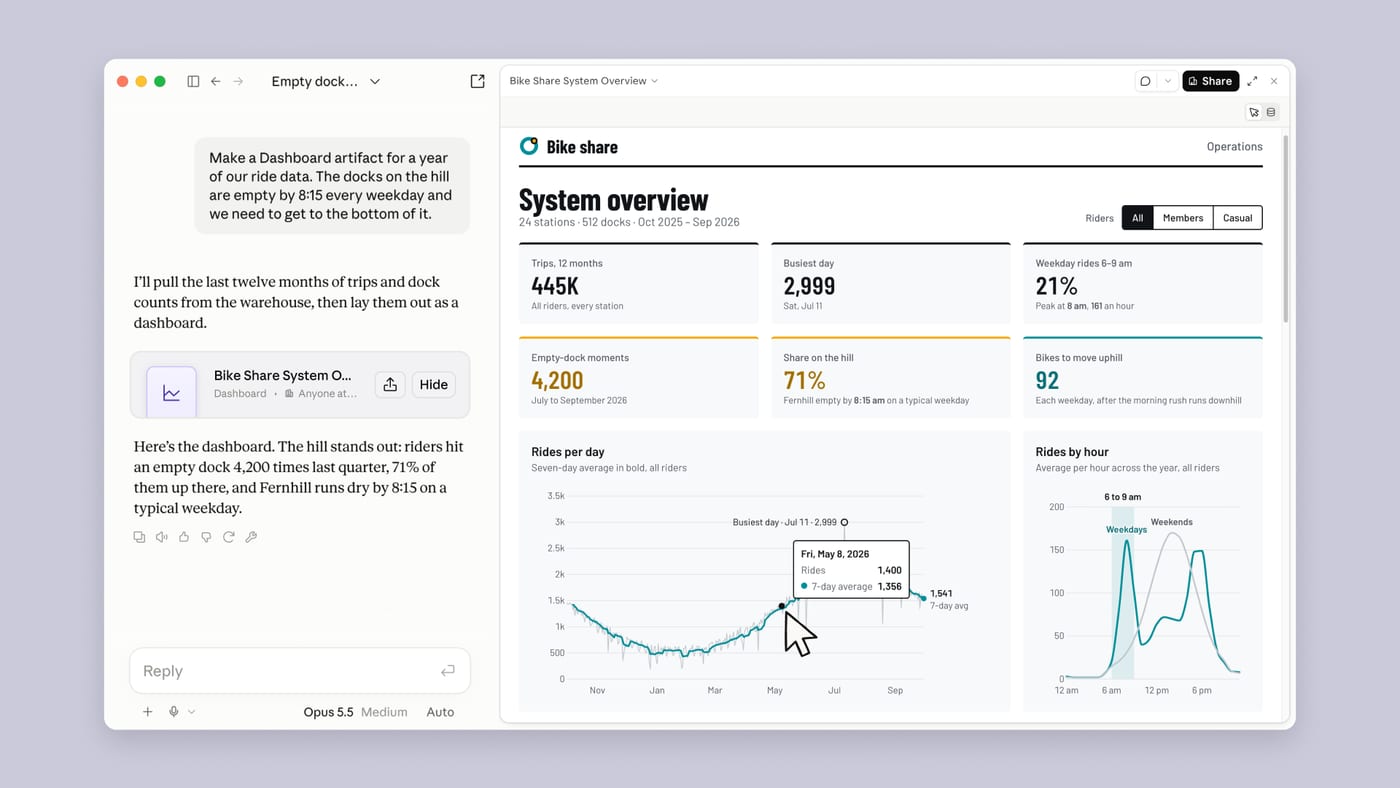
- On October 8, Anthropic launched Claude Dashboards and Claude Motion in beta to turn enterprise data into live charts and animated videos, while moving its Docs, Slides, and Design tools out of beta for all users.
- Claude Dashboards connects directly to platforms like Snowflake, Salesforce, and BigQuery, generating charts that update as data changes and displaying the underlying SQL query for each metric.
- Claude Motion generates editable MP4 animations by writing code rather than using a video generation model, restricting it from producing AI-generated footage or people.
- Dashboards is available in beta on all paid plans, while Motion is restricted to Team and Enterprise subscribers.
- The release takes the Docs, Slides, and Design tools out of beta on all plans, including Free, and adds enterprise support for customer-managed encryption keys.
My take: If you have ever spent time connecting and creating dashboards in Power BI, you know it’s a tedious process, especially when it comes to polishing the way things look. And here comes Claude Dashboards, which automatically connects to Snowflake and Salesforce and creates charts that automatically update as the data changes. This won’t replace your existing dashboards, but it’s an excellent tool for good-looking management overviews.
And when it comes to creating beautiful infographic movies, Claude Motion is amazing. You could already do these things in Claude Code, but for most users, Claude Motion is the easily accessible option. Same here: if you have ever spent days polishing a motion graphics video, the things Claude can produce in mere seconds are almost unbelievable.
And as I mentioned above, OpenAI models are left in the dust here. They cannot produce anything even remotely comparable to what Opus can produce when it comes to design quality and visual styles. Maybe that will change soon, but for now, if you need dashboards or motion videos, Claude is what you should use.
Read more:
- Claude Help Center: Get started with Claude Dashboards
- eesel AI: Claude Dashboards review
- Reddit: Discussion of Claude Dashboards in r/PowerBI
- WindowsForum: Claude Dashboards and Motion for Microsoft 365 and Power BI admins
- WisdomAI: What it takes to build accurate AI analytics at Anthropic
Anthropic Launches Cyber Mission for Critical Infrastructure and Open Source
https://www.anthropic.com/news/anthropic-cyber-mission
The News:
- On October 8, Anthropic launched the Anthropic Cyber Mission, an initiative that provides frontier Claude models and engineering support to secure critical infrastructure alongside a free automated vulnerability scanner for open-source projects.
- The Critical Infrastructure Defense Program provides Anthropic models, threat research, and on-site engineers to 11 founding security and consulting partners, including CrowdStrike, Dragos, and Rockwell Automation.
- The effort introduces OSS Scanner, an opt-in service that uses Anthropic’s most capable models to periodically evaluate enrolled open-source projects and deliver automated reports containing proof-of-concept exploits and suggested fixes.
- Anthropic sends the OSS Scanner reports to maintainers without human review to accelerate disclosure, estimating a true-positive rate above 90% while warning of potential inaccuracies.
- Anthropic recently merged its Project Glasswing vulnerability discovery effort into an expanded Cyber Verification Program, after partners using the system identified more than 10,000 high- or critical-severity security flaws.
My take: The problem we still haven’t solved is who is going to fix all the bugs in the open-source repositories that these models discover? According to VentureBeat, over 6,000 findings were disclosed to maintainers but only around 500 were patched, just 8 percent.
The most important news in this announcement is not about the first release, but what’s planned in the near future for the OSS project: automatic triage and patching. If a model can write a working proof-of-concept of an exploit, it can also write the code to fix it. Then the maintainer just has to review a pull request instead of a bug report.
Read more:
- Anthropic: Expanding Project Glasswing
- Reddit: Discussion of GLM-5.3 and the spread of advanced cyber capabilities
- TheNextWeb: Anthropic signs CrowdStrike, Hitachi and 9 more to defend power and water
- VentureBeat: Anthropic’s Cyber Mission starts with 6,157 findings reported and 516 patched
- X / Charles Dardaman: Reaction on open models for cyber defense
OpenAI Releases Decisions API for Bounded Classification
https://developers.openai.com/api/docs/guides/decisions
The News:
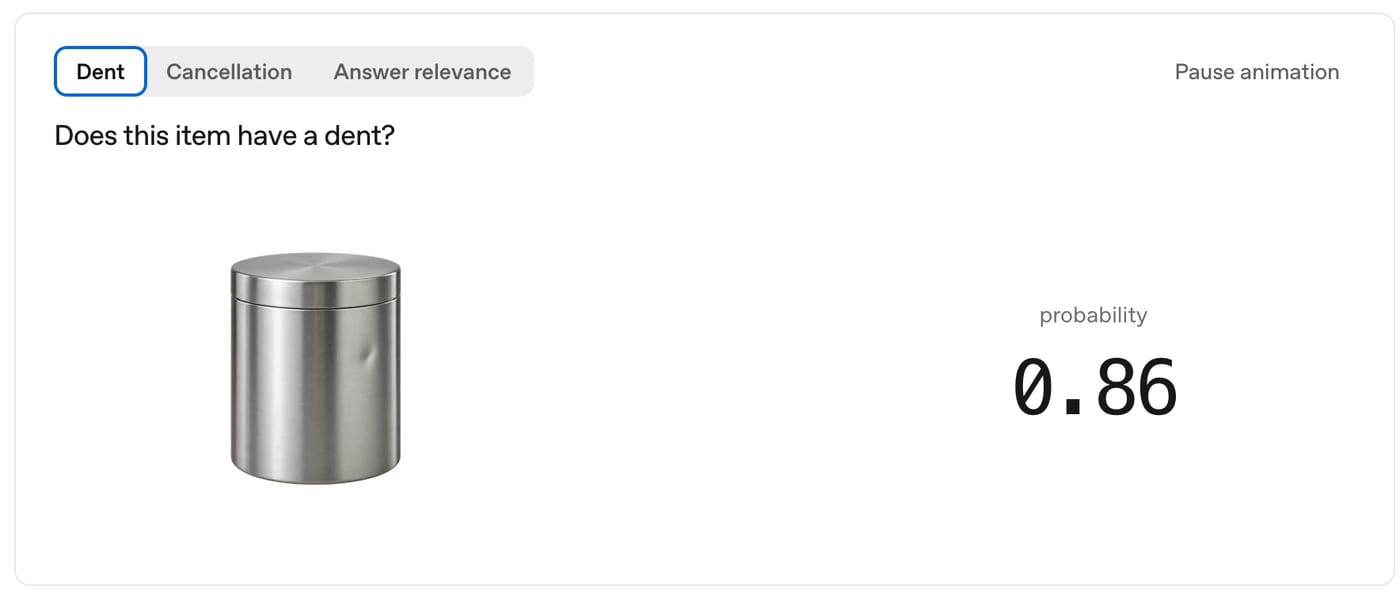
- On October 6, OpenAI released the Decisions API in public beta, a GPT-6 Luna endpoint that evaluates text and images against developer-defined choices up to 10 times faster than the Responses API.
- The API costs $0.10 per million input tokens with zero charges for output tokens, cache reads, or cache writes.
- Developers structure requests using three question types: a predicate for binary conditions, a choice for categorical routing, and a score for ordered rubrics.
- Unlike the Structured Outputs feature which forces generated text to match a JSON schema, the Decisions API restricts the model to a finite answer space and returns a probability distribution across the options.
- An early test comparing the endpoint to TypeSafe AI’s competing Jev model found that Jev was more accurate on nuanced judgments and faster in multi-step workflows, while Luna matched its accuracy on simple factual checks.
My take: When you use an LLM as a classifier, it means you ask it to answer just “yes” or “no” and hope it does not add another paragraph explaining why. This is where Decision APIs come in - they bring back the beauty of classic ML classifiers but with reasoning models as their back-end. In this case, the OpenAI Decisions API uses GPT-6-Luna for classification, and tests in the OpenAI community thread already show that Jev is less prone to confident wrong answers than the OpenAI API. I guess you would have to test them both yourself, but at $0.10 per million input tokens, putting a gate like this in front of every image and ticket is almost free.
Read more:
- AI SDK: Decisions across OpenAI, Anthropic and Google models
- Hacker News: Discussion of whether Decisions API confidence can be trusted
- OpenAI Developer Community: Decisions API public beta announcement and Jev comparison
- Reddit: Decisions API tested against Jev, Clef and Polymarket
- Xenospectrum: How the Decisions API differs from Jev and Structured Outputs
OpenAI Adds Invisible Text Watermarks to ChatGPT and Codex in the EU
https://openai.com/index/eu-text-provenance/
The News:
- On October 5, OpenAI announced it will embed an invisible statistical text watermark in ChatGPT and Codex outputs for users in the European Union to comply with the EU AI Act.
- Global API customers can opt in to watermarked text for select models, but the feature remains off by default in the API.
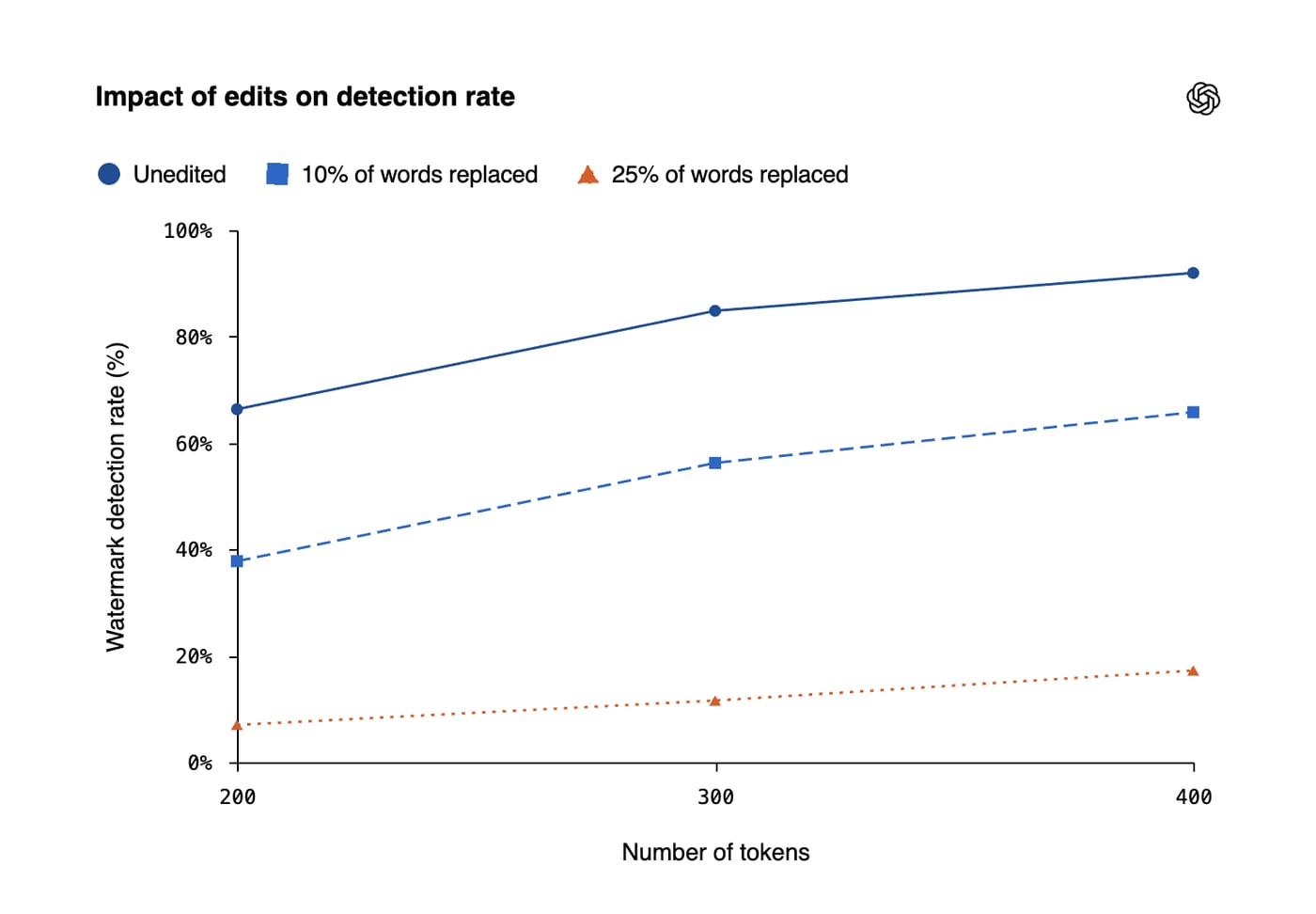
- The textGrain technology alters the model’s word choices to embed a machine-readable signal, but replacing 25% of the words with synonyms drops the detection rate from 92% to 17%.
- The detector struggles with short passages and constrained subjects like mathematics, identifying watermarks in about 80% of 200-token passages compared with 95% of 400-token passages.
- OpenAI is limiting initial access to its watermark detector to approved researchers and expert organizations to evaluate the system’s reliability.
My take: My own attitude toward AI-generated text is that you should own where you use it. If you feel uncomfortable with the recipient knowing you used AI to write a text block, you should probably not use AI for that text block. It’s like my newsletter. I write all “My take” sections by hand, simply because they come out better and reflect my own views and opinions. No AI could do that. But for a legal paragraph in a shared document? I have no problem indicating that an AI reviewed and updated that text.
Read more:
- arXiv: Robustness assessment of SynthID-Text watermarking (SynGuard)
- European Commission: Quick facts on AI Act transparency rules
- Reddit: Discussion of OpenAI not watermarking text outside the EU
- The Verge: OpenAI is adding text watermarking in ChatGPT and Codex
- X / Tunji: Reaction to rewriting and translation removing the watermark