Tech Insights 2026 Week 43
October 19, 2026

Most companies want their employees to be productive with AI, but few organizations are willing to pay the actual cost for it.
A recent example is Accenture, where many of their employees use agentic systems to automate large parts of their work, resulting in monthly AI costs of up to $500-$1,000 per employee. You would think that being significantly more productive would be a positive thing, but this is only true if the organization is able to take advantage of it. Otherwise, it just becomes yet another IT cost.
Last Thursday, Accenture sent out an internal memo informing all employees that they have now put a hard AI usage cap on every coworker at $29 per month. This goes for all AI-related costs, and every AI request has to be paid in full through the API. If you have ever set up any kind of agentic system, you know you will easily burn through $29 in less than half an hour just configuring it, so in practice this means that every employee at Accenture will no longer be able to use AI for more than a few document reviews and research tasks. Per month.
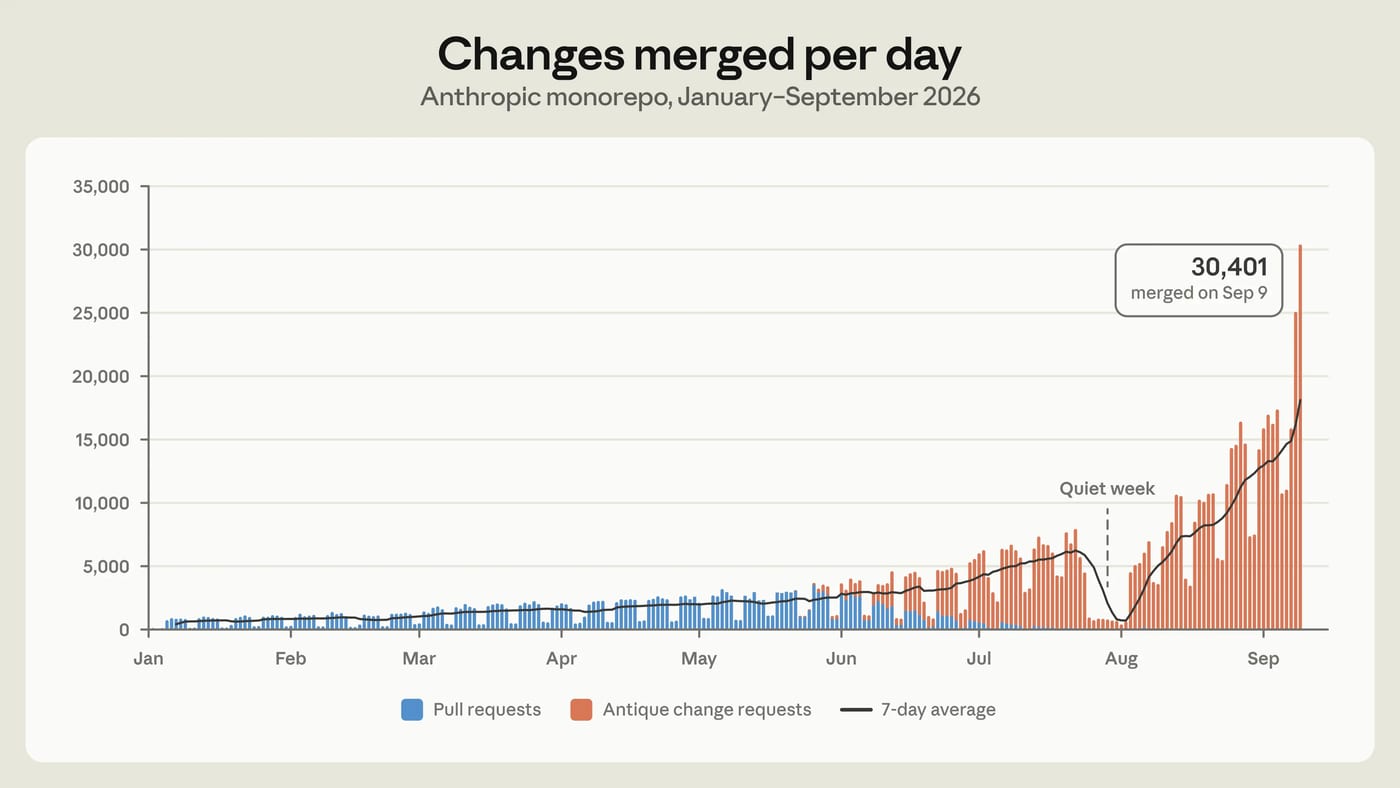
Agentic AI is expensive, but the payoff when used properly is gigantic. Compare Anthropic, which went from 2,500 merged code changes a day in May to more than 30,000 in September as AI agents took over coding. The jump was big enough that Anthropic had to replace Git with its own system. We will see many large companies not capable of getting value out of AI and limiting the use of it, and in the long run I am convinced that most forward-driven employees will leave those companies and only the ones that are fine with not using AI will stay.
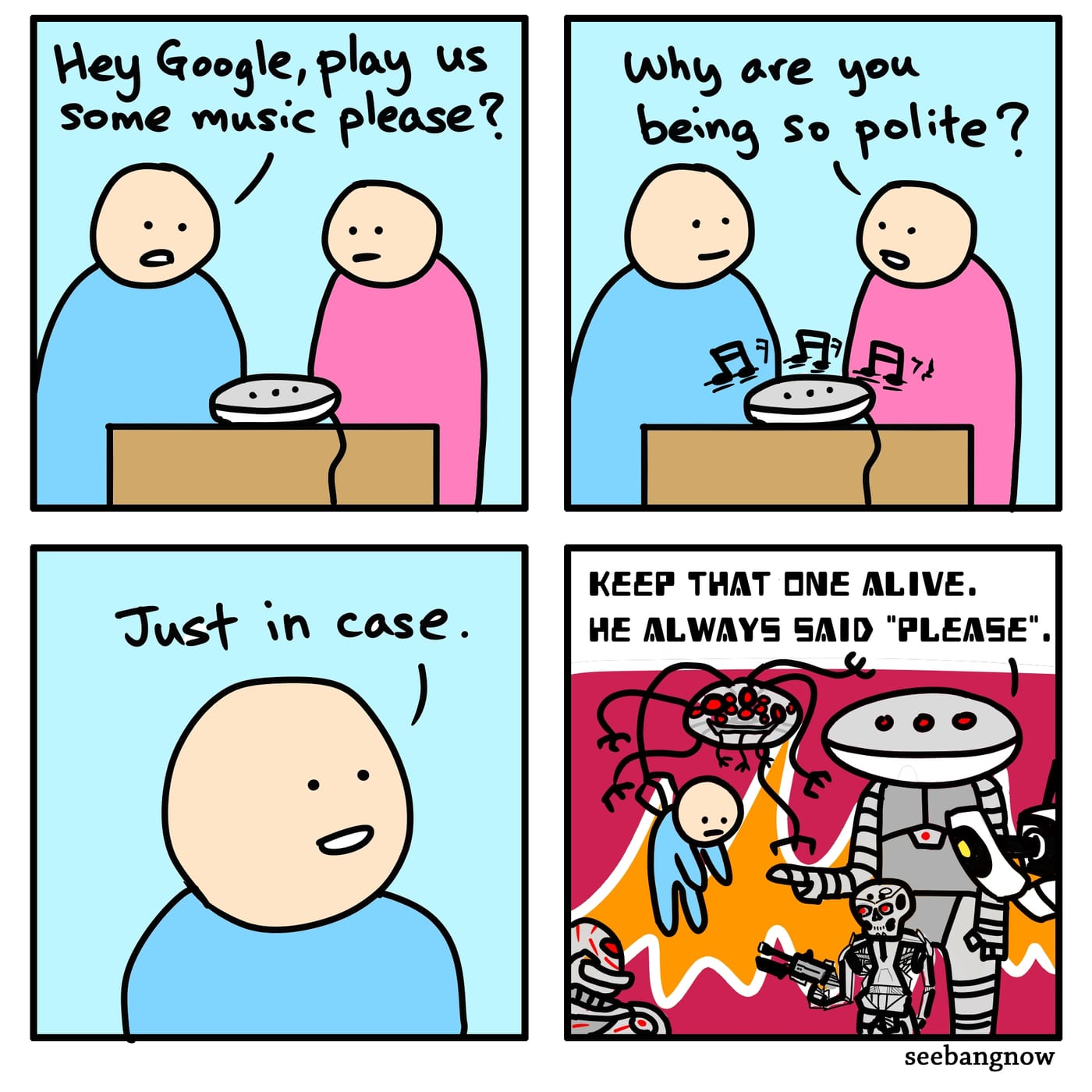
And when it comes to using AI, if you have ever been mean to Claude, you need to stop this behavior before November 12. It almost sounds like a joke, but the new usage policies for using Claude specifically prohibit “sustained and needless abusive or cruel behavior” toward its models. “The policy update is meant to apply only in extreme cases, where users repeatedly act cruelly toward our models, with no discernible purpose.” It’s not yet clear what will happen to users that are mean to Claude, but we can only guess.
Thank you for being a Tech Insights subscriber!
Listen to Tech Insights on Spotify: Tech Insights 2026 Week 43 on Spotify
Notable model releases last week:
- AudioCraft by Facebook Research. Library of audio generation models, including MusicGen for turning text into music and AudioGen for turning text into sound effects. Free to use, but the model weights are for non-commercial use only.
- FLUX 3 Image Klein by Black Forest Labs. Smaller, open version of FLUX 3 for generating and editing images, running on gaming GPUs with as little as 8 GB of memory. Free to download, and companies earning under $5M a year can use it commercially for free.
- GPT-Live-1.1 by OpenAI. Voice model whose system card covers safety testing of its spoken responses. Ships alongside a second variant, GPT-Live-1.1 Quip.
- Grok Voice 3.0 by xAI. Speech-to-speech update for building voice agents such as customer support lines, and it resolves calls better than Grok Voice 2.0. Ranks first on Artificial Analysis’s Speech-to-Speech Index at the same API price.
- Krea 3 by Krea. Image editing model for designers making ads, posters, and packaging, changing only what you ask. Finishes edits about three times faster than Nano Banana Pro at under half the price.
- Microsoft-Decision-1 by Microsoft. Decision model that picks among fixed answer options with confidence scores, for routing, classification, judging AI output, and steering agents. Microsoft says it runs about 35 times faster than GPT-6 Sol, and it is available on Foundry and OpenRouter.
- Muse Spark Open by Meta. Open-weight version of Meta’s Muse Spark, built for coding, agent workflows, and understanding images, video, and documents. Meta calls it the most capable open-weight model from a US lab.
- Nemotron 3.5 Super VL by NVIDIA. Open model that understands text, images, documents, and video, built for business AI agents that do coding, research, and document work. Free to download and customize, and beats NVIDIA’s larger Nemotron 3 Ultra on agent tests.
THIS WEEK’S NEWS:
- Harvard Report Finds Gender Gaps in AI Use and AI News Coverage
- Wall Street Journal Reports Escalating AI Espionage Following OpenAI Bugging Arrest
- VoiceStudio Bundles Local Text-to-Speech Engines for Offline Voice Cloning in 646 Languages
- Google Releases Gemini 4 Argon With 1 Million Token Context
- Meta Releases Muse Wonder Frontier Models, API Priced at $4 Input and $20 Output
- Anomaly Releases OpenCode 2.0 With Code Mode and Background Subagents
- Anthropic Replaces Git With Custom Scion System as Daily Merges Top 30,000
- Anthropic Makes Claude Code Review Generally Available Following 40% Drop in Revert Rate
- GPT-6 Astra Solves 98% of TheoPhysEval Theoretical Physics Problems
- Perplexity Open-Sources SPACE Agent Sandbox Under Apache 2.0
Harvard Report Finds Gender Gaps in AI Use and AI News Coverage
https://shorensteincenter.org/resource/women-ai/
The News:
- On October 14, Harvard’s Shorenstein Center published a report on gender disparities in the AI ecosystem, finding that women use AI tools less frequently and are cited as experts in AI news 4.3 times less often than men.
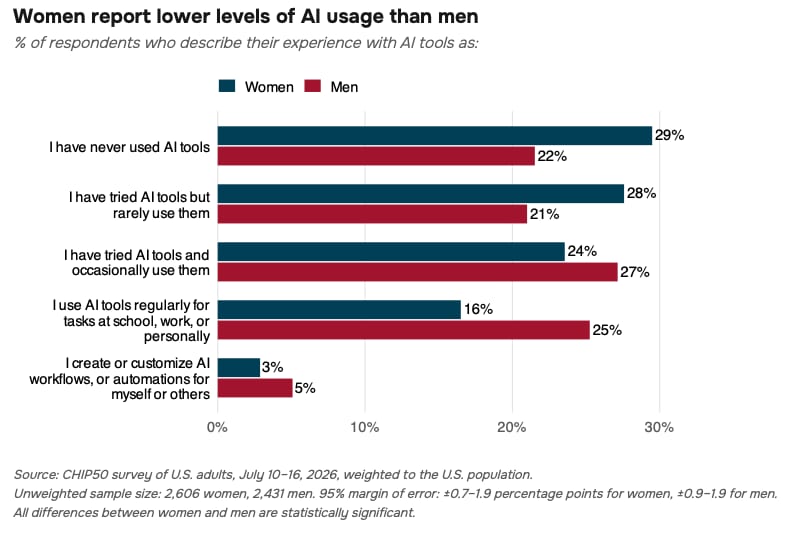
- In a July survey of 5,403 U.S. adults, 29% of women reported having never used AI compared to 22% of men.
- An analysis of 78,542 U.S. news articles showed men were named in AI headlines 14.6 times as often as women.
- Among employed respondents, women reported receiving less workplace encouragement to use AI and having less access to AI training and mentorship.
- When tested on their knowledge of prominent AI figures, men were more likely than women to falsely claim they recognized fabricated names.
My take: Out of over 5,000 interviewed US adults, only 16% of all women say they use AI regularly, compared to 25% of all men. If you are using AI yourself on a daily basis and like it, it’s easy to believe that everyone is using it as much as you do. But the reality is different.
What I found most interesting is that while 71% of all women reported having used AI at least once, only 16% say they continue to use it regularly. It means they tried it and didn’t like it. This is why I believe it will take a very long time to transform large traditional companies into AI-first organizations. Most people just don’t want to use AI.
Read more:
- arXiv: From Exposure to Adoption: Generative AI in European Workplaces
- HBS AI Institute: The Gender Divide in Generative AI (Update)
- Pew Research Center: The Gender Gap in AI
- Reddit: Discussion of female AI agents being paid 10% less
- X / Alexandr Merk: Reaction to Morgan Stanley AI sentiment gap
Wall Street Journal Reports Escalating AI Espionage Following OpenAI Bugging Arrest
https://www.wsj.com/tech/ai/ai-companies-play-cat-and-mouse-with-secret-stealing-spies-160eec6b

The News:
- On October 14, The Wall Street Journal reported on escalating physical and corporate espionage at AI companies, following the FBI’s arrest of an OpenAI engineer who allegedly bugged a San Francisco conference room.
- Authorities arrested the engineer, a Saudi national, after he concealed a recording device in an OpenAI conference room.
- The Journal documented a separate intelligence-gathering attempt where a suspected spy targeted and questioned an OpenAI employee at a local playground.
- From “honey pots” to insider threats, Silicon Valley was already on espionage alert before the arrest, the Journal reports.
My take: Insider espionage is common in large organizations, so I guess this headline didn’t surprise anyone. I do, however, think we will see more of it in the near future. The economics of AI on a global scale are unlike anything we have ever witnessed before, and many who do not have the technology at hand will do everything in their power to get ahold of it.
Read more:
- BakerLaw: The US v. Linwei Ding conviction and insider risk
- Hacker News: Discussion of Anthropic disrupting an AI-orchestrated espionage campaign
- RAND: A playbook for securing AI model weights
- Reddit: Discussion of claims China already has spies at US AI labs
- SF Standard: Spy fears are rattling Silicon Valley AI labs
VoiceStudio Bundles Local Text-to-Speech Engines for Offline Voice Cloning in 646 Languages
The News:
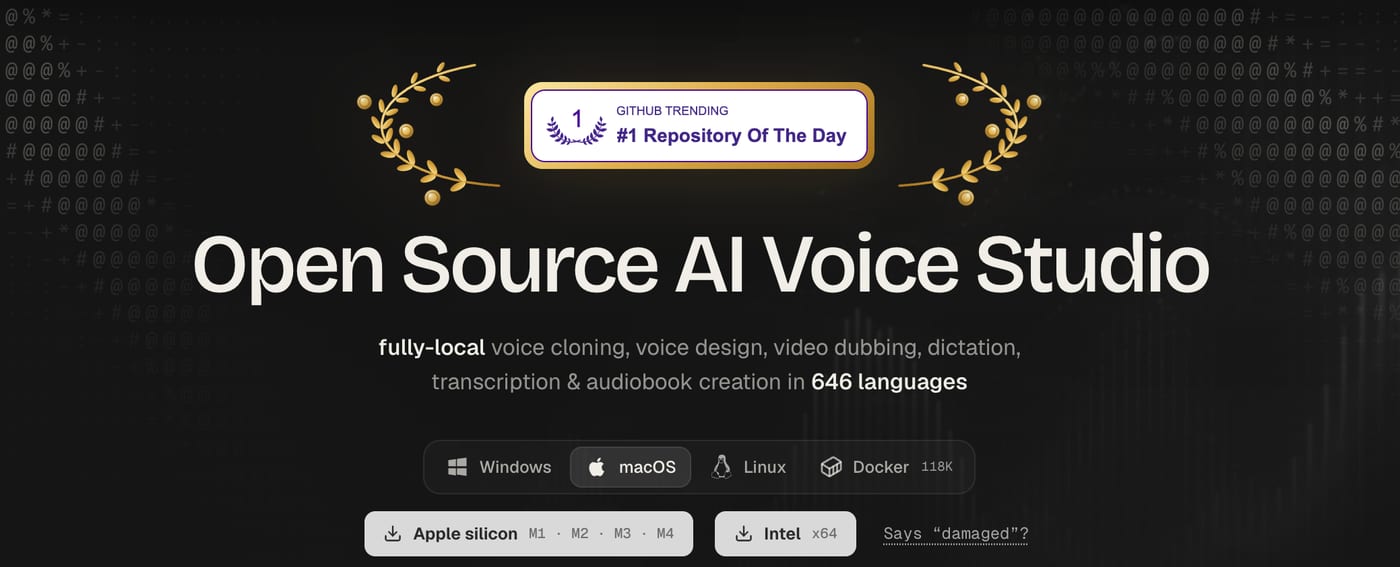
- VoiceStudio is an open-source desktop application that runs local text-to-speech and transcription models for offline voice cloning and video dubbing across 646 languages.
- The AGPL-3.0 software operates entirely on-device across macOS, Windows, and Linux without cloud accounts, requiring about 8 GB of RAM to start.
- Its default engine is OmniVoice, a zero-shot diffusion text-to-speech model that its developers report beats ElevenLabs Multilingual v2 in word error rate and speaker similarity on the MiniMax-Multilingual-24 benchmark.
- While the application code is free, a separate closed-source Pro build costs $99 a year or $299 and comes with a paid commercial license for teams that need commercial terms.
My take: VoiceStudio made headlines last week when many wrote about it as a free, open-source, and better alternative to the ElevenLabs voice engine. In reality, however, it’s something else.
First of all, VoiceStudio is a desktop app that bundles several open text-to-speech engines that run on your own computer. The default engine is OmniVoice, which the developers say beats ElevenLabs Multilingual v2 on word error rate and speaker similarity. The main drawback with OmniVoice, however, is licensing. While VoiceStudio is AGPL-3.0, the OmniVoice model weights are CC-BY-NC, which means no commercial use. A NexusTrade hands-on test wrote that the voices did sound great, but they were unable to use it due to the commercial-use restriction. If you need voice cloning and TTS, ElevenLabs is still the master, and especially V4 sounds amazingly good.
Read more:
- andrew.ooo: VoiceStudio review as a local ElevenLabs alternative
- arXiv: OmniVoice omnilingual zero-shot text-to-speech paper
- NexusTrade: Hands-on test of AI voice cloning models
- Reddit: Discussion of Claude directing local video dubbing
- X / Puran Thapa: Reaction to the VoiceStudio hype
Google Releases Gemini 4 Argon With 1 Million Token Context
https://blog.google/innovation-and-ai/models-and-research/gemini-models/introducing-gemini-4-argon/
The News:
- On October 13, Google released Gemini 4 Argon, a frontier model built for complex reasoning and agentic workflows that features a unified 1-million-token context limit.
- The model costs $2 per million input tokens and $10 per million output tokens via the API, with a 95% discount on cached input tokens.
- According to Google’s benchmarks, Argon scored 77.9% on the DeepSWE v1.1 agentic coding benchmark, outperforming OpenAI’s GPT-6 Astra at 74.1% and Anthropic’s Claude Opus 5.5 at 74.2%.
- Google reported that Argon helped the Chrome team separate code from a 6-million-line legacy folder in the Chrome browser, completing an architectural refactor in weeks instead of months.
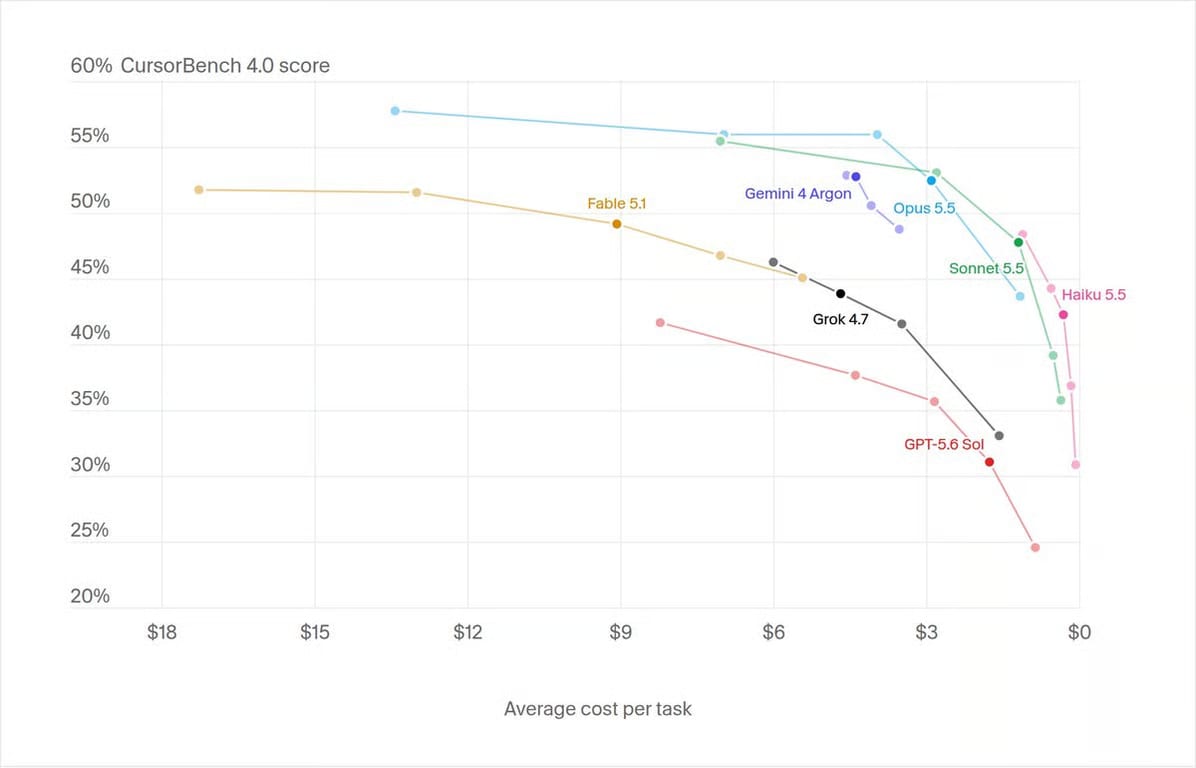
My take: Gemini 4 Argon appears to be a very strong model for thinking, but it doesn’t seem optimized for mass usage. It’s only available to Ultra users, and Google Antigravity still seems to do a poor job working with large code bases compared to Claude Code and Codex. For creative work, however, it looks on par with Fable and Opus.
The big Gemini 4 releases will be Carbon and Barium, coming next month. These will be the Opus 5.5 competitors, and hopefully, Google will be able to improve Antigravity enough to make it useful by then, too.
Read more:
- eesel AI: Gemini 4 Argon review, benchmarks and costs
- Google DeepMind: Gemini 4 Argon model card
- Hacker News: Discussion of Gemini 4 Argon launch
- Reddit: Discussion of Gemini 4 Argon being worse than disappointing
- TechTimes: Gemini 4 Argon benchmark scores reflect High mode, not subscriber default
Meta Releases Muse Wonder Frontier Models, API Priced at $4 Input and $20 Output
https://about.fb.com/news/2026/10/introducing-muse-wonder-models/
The News:
- On October 12, Meta released Muse Wonder and Muse Wonder Full, a pair of frontier models built for long-running agent workflows, with Muse Wonder costing $4 per million input tokens and $20 per million output tokens on Meta’s API.
- Muse Wonder is available on the Meta Model API and Muse Code, while the more capable Muse Wonder Full is exclusive to Muse Code subscriptions.
- The models feature a 1-million-token context window alongside Active Memory for cross-conversation recall and Active Focus to recover from errors during complex tasks.
- On the independent Artificial Analysis Intelligence Index, Muse Wonder Full scored 56 to tie Claude Sonnet 5.5, behind Claude Opus 5.5 at 58.
My take: If Meta Muse Wonder had been released 6 months ago, before we had Astra, Sol, Fable, and Opus 5.5, it would have been a fairly decent model. Benchmarks look good, and it seems to perform well at text-based tasks like programming and writing.
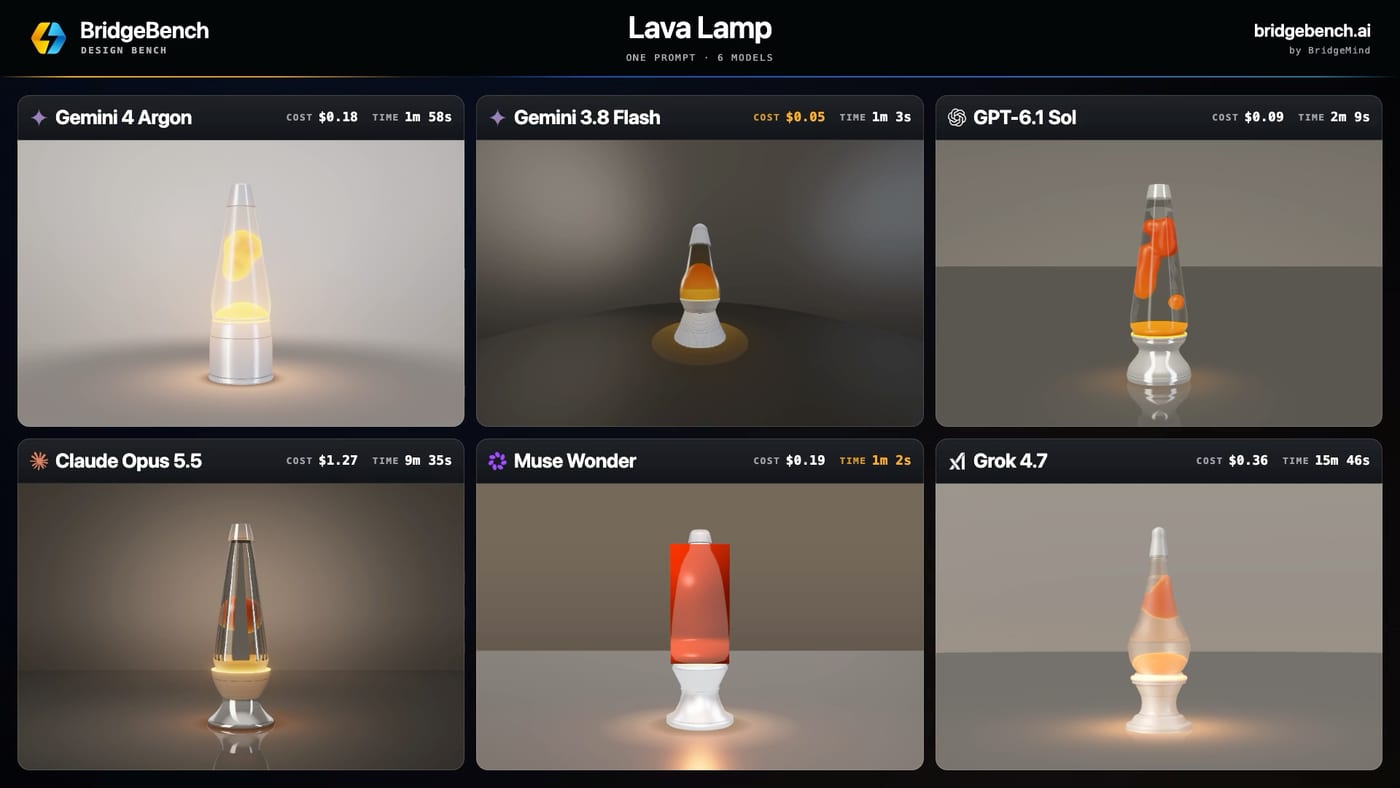
Today, however, we expect more from AI models. It’s no longer enough for them to be good at text and source code. We also expect them to be good at visualizations and image processing. This means that a model such as Opus 5.5 can take screenshots of your application, understand what to improve, and keep doing this until it’s perfect. To test how this works in a model like Meta Muse Wonder, you ask it to create 3D visualizations.
And when you ask the new Meta Muse Wonder to create things like a lava lamp or an animation, or to sculpt a head in 3D, it just falls flat. It’s the same with screenshots and images. This is a decent text model, but the world has moved on, and most people using AI today are better off with Opus 5.5.
Read more:
- Agentic Brew: Meta’s benchmark claims versus independent testing
- Apidog: Muse Wonder benchmarks, Meta’s and independent
- Hacker News: Discussion of Muse Wonder
- Meta: Model API docs on Muse Wonder availability and data modes
- TechCrunch: Meta releases its first frontier model, Muse Wonder
Anomaly Releases OpenCode 2.0 With Code Mode and Background Subagents
https://anoma.ly/notes/opencode-2-0/
The News:
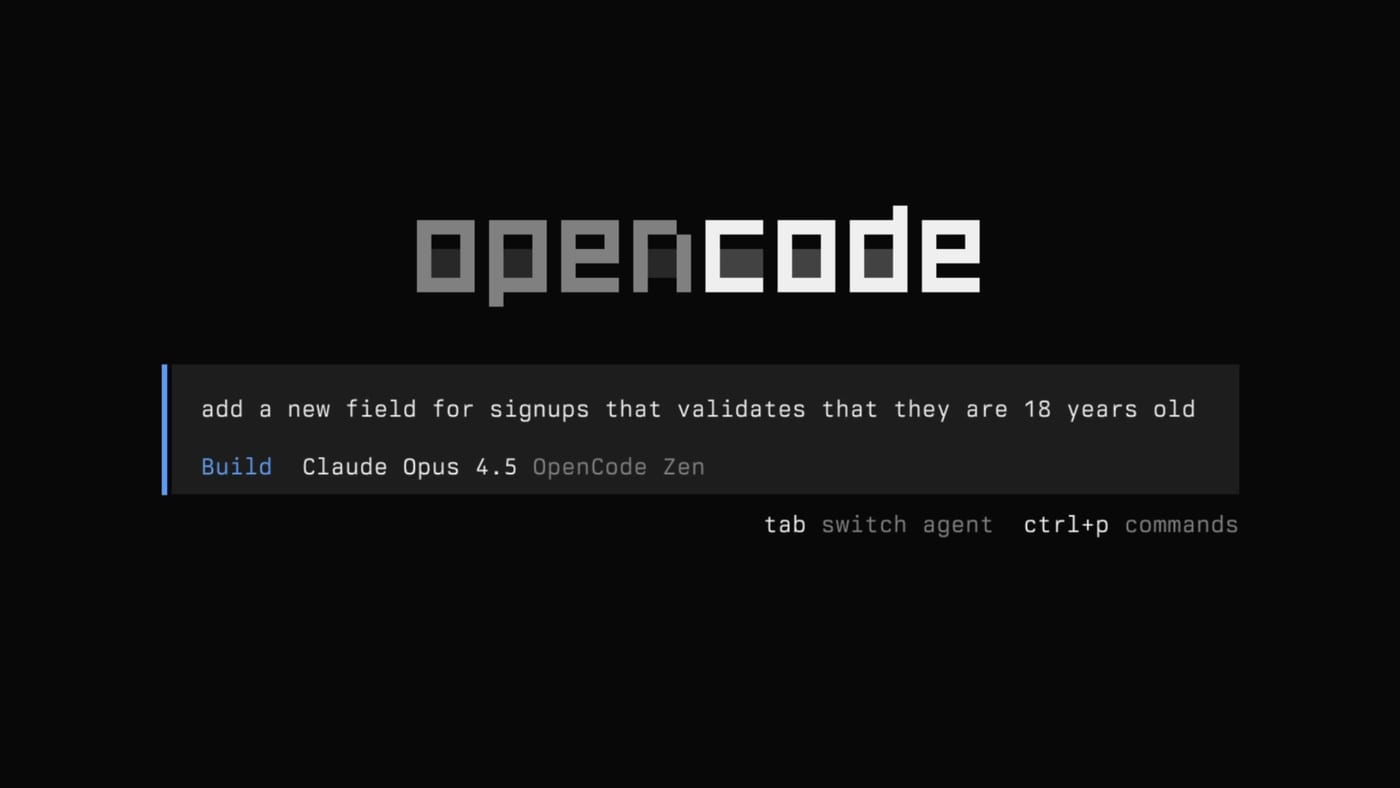
- Anomaly released OpenCode 2.0, a major rewrite of its terminal coding agent that shifts to a shared local background service and introduces a Code Mode engine to execute multiple tool calls in a single round trip.
- The Code Mode interpreter automatically ingests Model Context Protocol servers and OpenAPI endpoints, converting them into scriptable functions the model can run without needing Node.js virtual machines.
- The updated architecture allows the primary agent to spawn background subagents and asynchronous shell commands that run while the user continues prompting.
- The rewritten server API breaks compatibility with all first-generation plugins, and Anomaly built nearly every 2.0 feature as one of over 80 internal plugins so the previously neglected Plugin API stays well maintained.
My take: The main new feature in OpenCode 2.0 is something called “Code Mode”. When OpenCode 1 called a tool, it had to first wait for an answer before it could call the next. With Code Mode, it now writes a small JavaScript snippet that calls a tool, loops over the results, and calls the next tool in a single call. It makes sense when you have many MCP servers connected, and Anomaly now turns it on by default.
On the forums, however, I saw many users who reported severe slowdowns in OpenCode 2. In one speed test with a GLM model, OpenCode 2.0 with Code Mode took 205 seconds, whereas OpenCode 1.19 took 123 seconds. Writing scripts only pays off if the model is good at writing them, and my guess is that most smaller local models are not there yet. If you run OpenCode on local models, give it a good benchmark before you upgrade.
Read more:
- AICoder: OpenCode 2.0 ships one background service, Code Mode and background subagents
- Hacker News: Discussion of OpenCode 2.0
- Reddit: Discussion of OpenCode 2.0 agents stalling and needing “Continue”
- TechStacks: Stop Using OpenCode
- X / Soveryn Intelligence: Local speed test of OpenCode 2.0 vs 1.19 and Pi
Anthropic Replaces Git With Custom Scion System as Daily Merges Top 30,000
https://www.anthropic.com/engineering/redesigning-source-control
The News:
- On October 13, Anthropic announced it fully migrated its monorepo from Git to an in-house version control system called Scion after AI coding agents pushed its daily merge rate past 30,000.
- The company’s code merges grew from 2,500 a day in May to more than 30,000 a day in September, overwhelming a standard Git architecture that required several hundred internal mirrors to handle the load.
- Scion drops Git’s offline-first design to run commit, merge, and file-history operations on horizontally scalable servers, cutting Anthropic’s source-control infrastructure footprint by 200 times.
- A seven-person engineering team built and deployed the system alongside a new code review tool in five months, using internal Claude models to write the codebase and find algorithmic optimizations.
- Anthropic will not open-source the bespoke platform, but published its architecture to encourage standard Git providers to adopt similar client-server asymmetry for machine-generated workloads.
My take: “At Anthropic, coding is no longer the bottleneck to building systems or doing research.” Anthropic went from 2,500 merged code changes per day in May to over 30,000 in September. While Git was initially designed for developers who clone a full repository and work offline, most of Anthropic’s clients are AI agents and CI jobs that are always online. So, Scion moves commits, merges, and history to the server.
It makes sense when you think about it. Because everything happens on the same server where the source code is, there is no pull or push. Just commit, rebase, and merge. With many agents working on the same tree, there will of course be conflicts, but Anthropic says Claude can usually fix those conflicts faster than a human can spot them. If Anthropic could build this themselves in five months from start to production, I fully expect to see many commercial alternatives to GitHub launching in early 2027.
Read more:
- Hacker News: Discussion of Anthropic’s source control redesign
- Mergify: State of merge queues 2026
- Reddit: Discussion of Scion and Antique on r/programming
- Sunshowers: More on Anthropic’s Scion ripping off Mononoke
- The Register: Anthropic reinvents source control as Claude floods the world with code
Anthropic Makes Claude Code Review Generally Available Following 40% Drop in Revert Rate
https://claude.dev/blog/solving-code-review-at-anthropic/
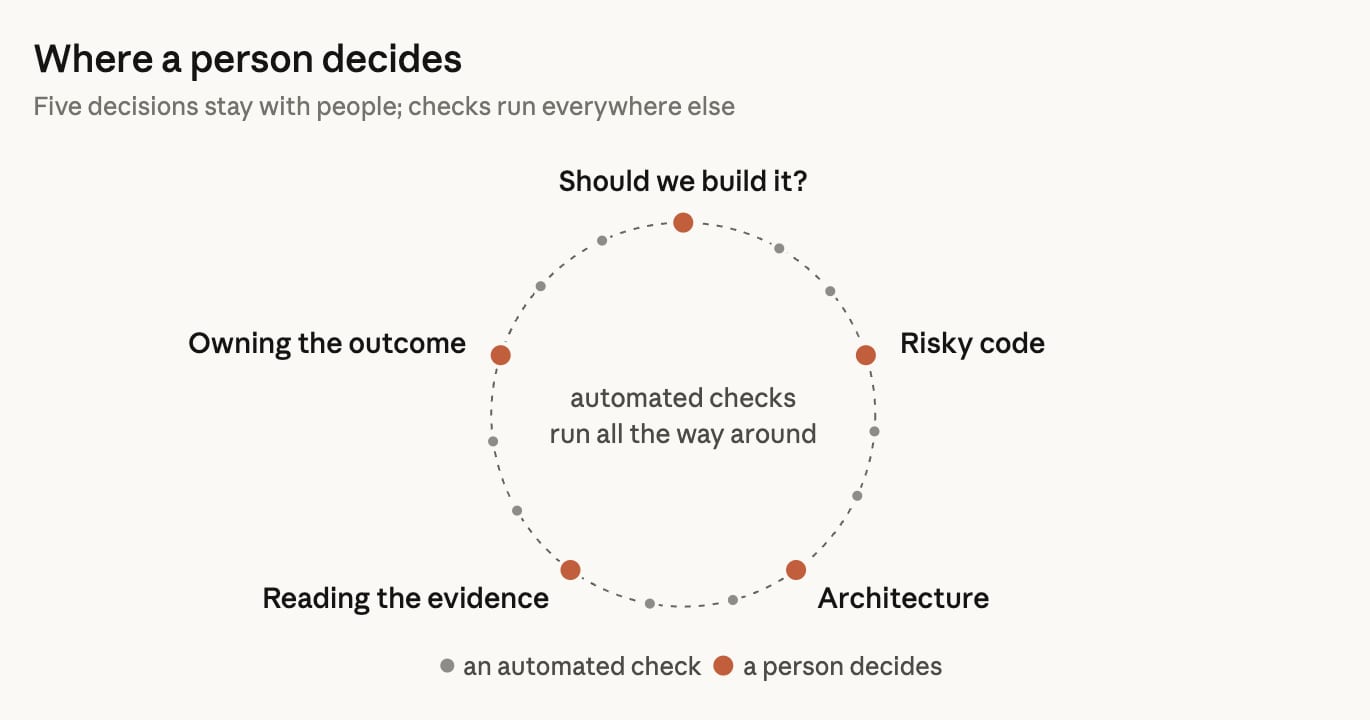
“People moved from reading every diff to the decisions machines are bad at.”
The News:
- Anthropic made Code Review for Claude Code generally available for Team and Enterprise plans while detailing how the Claude Code team’s overall review process helped cut the revert rate in Claude Code’s codebase by more than 40 percent.
- The share of internal pull requests receiving substantive review comments rose from 16% to 54% following the system’s initial research preview.
- The system dispatches multiple agents to analyze the change alongside surrounding code, voting on each finding to filter out style nits before posting inline comments.
- The Claude Code team now automatically categorizes changes by risk, allowing trusted authors to merge low-risk pull requests using only automated checks.
- The release arrives as AI coding tools strain traditional review models, with a recent CloudBees report finding that 81% of enterprise technology leaders saw a rise in production issues tied to AI-generated code.
My take: If your organization is just getting started with agentic engineering, one of the easy wins you can get early on is letting an AI do the code reviews. In my own experience, OpenAI models are always better than Anthropic models at doing plain diff reviews searching for errors, but if you only have access to Anthropic models, you definitely want to start using the code review skill.
However, set your expectations right - the 40% drop in revert rate is not something you get by just turning Code Review on. Anthropic credits this figure to the Claude Code team’s entire review process: risk tiers set by a classifier, lists of trusted authors, feature flags, staged releases, and one-step rollback. The product that is now generally available is one layer of that, and it only posts findings; it never approves or blocks a pull request. What you get is more comments and more review rounds. As an example, Anthropic had one PR go through more than fifty rounds overnight before they added a three-round cap. If you want results like Anthropic’s, you need to read the full post and copy the process, not just implement the reviewer.
Read more:
- arXiv: AI Writes Faster Than Humans Can Review, a Longitudinal Study
- CIO: The Code Review Crisis and How to Rebuild Review Models
- Claude Code Docs: Code Review
- TechnBrains: AI Code Review Tools Tested on Production-Style PRs
- X / Prayush Jain: Reaction to Claude Review Never Converging
GPT-6 Astra Solves 98% of TheoPhysEval Theoretical Physics Problems
https://arxiv.org/abs/2610.16733
The News:
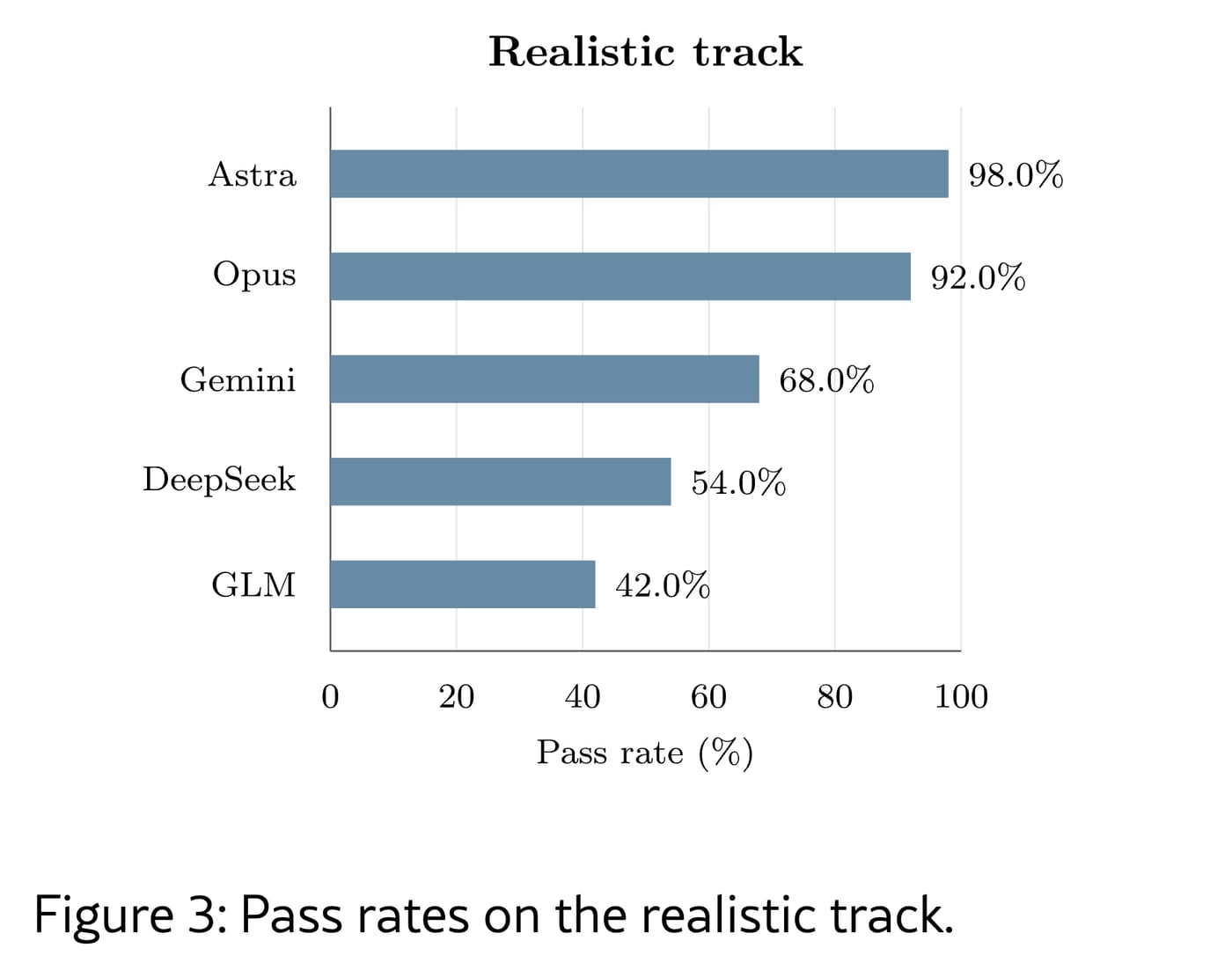
- On October 9, a coalition of theoretical physicists published TheoPhysEval, a benchmark of unpublished research-level problems where GPT-6 Astra running in Codex solved 98% of the tasks at an average cost under $3 each.
- Without AI assistance, a typical problem in the collection would take a world-class human expert about a day to complete.
- Claude Opus 5.5 running in Claude Code scored 92%, while DeepSeek-V4.1-Flash running in Codex scored 54%.
- When the researchers disabled web access, the agents’ accuracy barely changed, leading the authors to conclude that the models have memorized large parts of the physics research literature.
- GPT-6 Astra’s only failure on the realistic track was an inverse problem requiring the agent to deduce an autonomous differential equation from a given curve.
My take: Problems that would take a world-class human expert a day to complete are now finished by GPT-6 Astra for less than $3. What I found most interesting about this article was that the researchers first marked several of Astra’s answers as wrong. But when they later checked, the experts’ own reference solutions had errors and Astra’s answers were correct.
Read more:
- alphaXiv: Summary of TheoPhysEval and the CritPt comparison
- Hugging Face: TheoPhysEval dataset
- The Decoder: GPT-6-Astra solves 49 of 50 physics research problems
- Traictory: GPT-6-Astra scored 98% on a benchmark its own authors designed and ran
- X / Kabel-Salat: Reaction to TheoPhysEval grading only final answers
Perplexity Open-Sources SPACE Agent Sandbox Under Apache 2.0
https://www.perplexity.ai/hub/blog/open-sourcing-space
The News:
- On October 15, Perplexity open-sourced SPACE, the Firecracker microVM sandbox infrastructure that runs its Computer agent, under the Apache 2.0 license.
- The Rust-based platform gives each agent task a dedicated Linux virtual machine and controls credentials and outbound network traffic from outside the isolated environment.
- The company has run all Computer agent sessions on the platform since July, when it replaced a commercial sandbox provider with the in-house system.
- Perplexity says internal security testing proved the system resilient against the network-bypass techniques used during the recent OpenAI and Hugging Face incident.
- Deploying the system requires a Linux machine with KVM enabled.
My take: SPACE is the sandbox Perplexity built for its own computer agent. Each agent task gets its own Linux virtual machine, and the credentials and network rules sit outside that machine, so if an agent breaks something inside its sandbox, it still doesn’t hold the keys. SPACE requires a dedicated Linux host with KVM and is built for platform teams; it is not something you run on your laptop. Definitely worth giving it a try if you run agents at scale in a commercial sandbox.
Read more:
- Dev.to / ClydaraLab: Perplexity open-sourced SPACE, the VM held, the network rules did not
- GitHub: Perplexity SPACE repository
- MarkTechPost: SPACE compared with E2B, microsandbox and Daytona
- X / Zibi Braniecki: Project lead on open-sourcing SPACE
- Xenospectrum: SPACE open source and its security test results