Tech Insights 2026 Week 48
November 23, 2026

You can’t build good software without feedback from real users.
Every week I am contacted by small startup companies driven by a few senior entrepreneurs and one or two junior developers who are vibe coding copies of other products in record time. I am often offered access to their products for free to help out with development, and every time I kindly decline their offers. Even if 70% of their software is a copy of something else, getting that last 30% right requires quite a lot of input.
This is the dilemma every software startup faces: you start with a product that is inferior to most other products, yet you still need to find users who are willing to use it to give you requirements and drive development. Getting good at building passionate communities is one of the most important skills any developer can have today.
This is why AI companies like Anthropic and OpenAI offer greatly subsidized accounts and a growing library of free interfaces and connectors. The release of ChatGPT for Sales last week is a good example of this, bundling a first-party Sales plugin with more than 30 partner plugins-such as Salesforce, HubSpot, and Gong-and making it available on every ChatGPT tier, including the Free plan. These companies need real people pushing the models to the limits, because the only way to understand where their training failed is by analyzing real feedback from real use cases. When the feedback loop fails, you get releases like GPT-6.2 last Tuesday. They only gave the models to a small group of early testers, changed them a lot in the last few days before launch, and got the most negative reception I have ever seen for any model release.
Thank you for being a Tech Insights subscriber!
Listen to Tech Insights on Spotify: Tech Insights 2026 Week 48 on Spotify
Notable model releases last week:
- Gemini 4 Neon by Google. New mid-tier Gemini 4 model, between Carbon and Hydrogen, for complex coding, analysis, and enterprise agent work. Ranks first on the Artificial Analysis Coding Agent Index at a lower cost per task than Carbon.
- Ideogram 4.6 by Ideogram. Image generation and editing model for precise, repeated changes to an image that leave the rest untouched, with output up to 4K. Ranks first on Rapidata’s multi-step image editing leaderboard, ahead of Ideogram 4.5.
- Microsoft-Decision-1.1 by Microsoft. Model that makes fast, low-cost decisions inside software, such as routing or classifying requests, with confidence scores. Over twice as fast as the first version, now takes images, and is generally available in Microsoft Foundry, OpenRouter, and Vercel.
- Qwen4-Max by Alibaba Cloud. New Qwen flagship that understands images and video, aimed at coding, professional work and long-running agent tasks. Costs a quarter less than Qwen3.8-Max through Alibaba Cloud’s API and Token Plan.
THIS WEEK’S NEWS:
- Anthropic Raises Record $81.3 Billion in Nasdaq IPO
- Opus 5.5 Agent Builds 38 Models and Earns 60,000 Hugging Face Downloads
- Microsoft AI Releases Seven MAI Models to Compete on Price
- OpenAI Launches GPT-6.2 Astra and Sol, Cutting Astra’s API Prices by 20%
- OpenAI Reports Median Researcher Now Uses $2,400 Daily in Agent Compute
- OpenAI Launches ChatGPT for Sales With 30 Partner Plugins
- OpenAI Models Rewrite AMD GPU Circuits for Up to 14% PPA Gains
- Cognition Launches Devin Bots to Manage Parallel AI Agent Teams
Anthropic Raises Record $81.3 Billion in Nasdaq IPO
https://www.nasdaq.com/newsroom/anthropic-marks-ipo-at-nasdaq
The News:
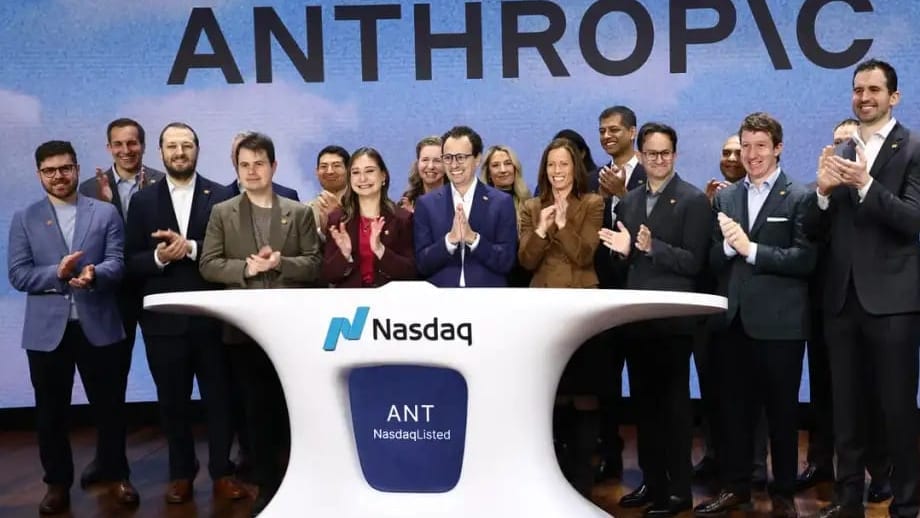
- On November 19, Anthropic completed the largest initial public offering on record, raising $81.3 billion and debuting on the Nasdaq under the ticker “ANT”.
- The company priced 980 million shares at $83 each after lifting the size and price of its offering.
- The stock opened at $111.50 and closed its first day of trading at $97.17, a 17% gain over the IPO price.
- Anthropic reported $33.24 billion in revenue for the nine months ended September 30, up 1,200% from the same period last year.
- The seven co-founders retain voting control of the Public Benefit Corporation through a single Class F share.
My take: Building and hosting AI models is not a profitable business. While Anthropic raised $81.3 billion, their prospectus shows a net loss of $80.7 billion for the first half of 2026. The people buying Anthropic shares today all bet on a future where most companies work completely differently than they do today. If you are a happy Claude user, the future looks brighter than ever - $81 billion buys a lot of compute.
Read more:
- CNBC: Why Anthropic’s valuation couldn’t shake the AI stock selloff
- Fortune: Anthropic’s dual-class share structure
- Fortune: Anthropic’s IPO prospectus shows $80.7 billion net loss
- Hacker News: Discussion of the Anthropic IPO
- NYT DealBook: What’s in Anthropic’s S-1
Opus 5.5 Agent Builds 38 Models and Earns 60,000 Hugging Face Downloads
The News:
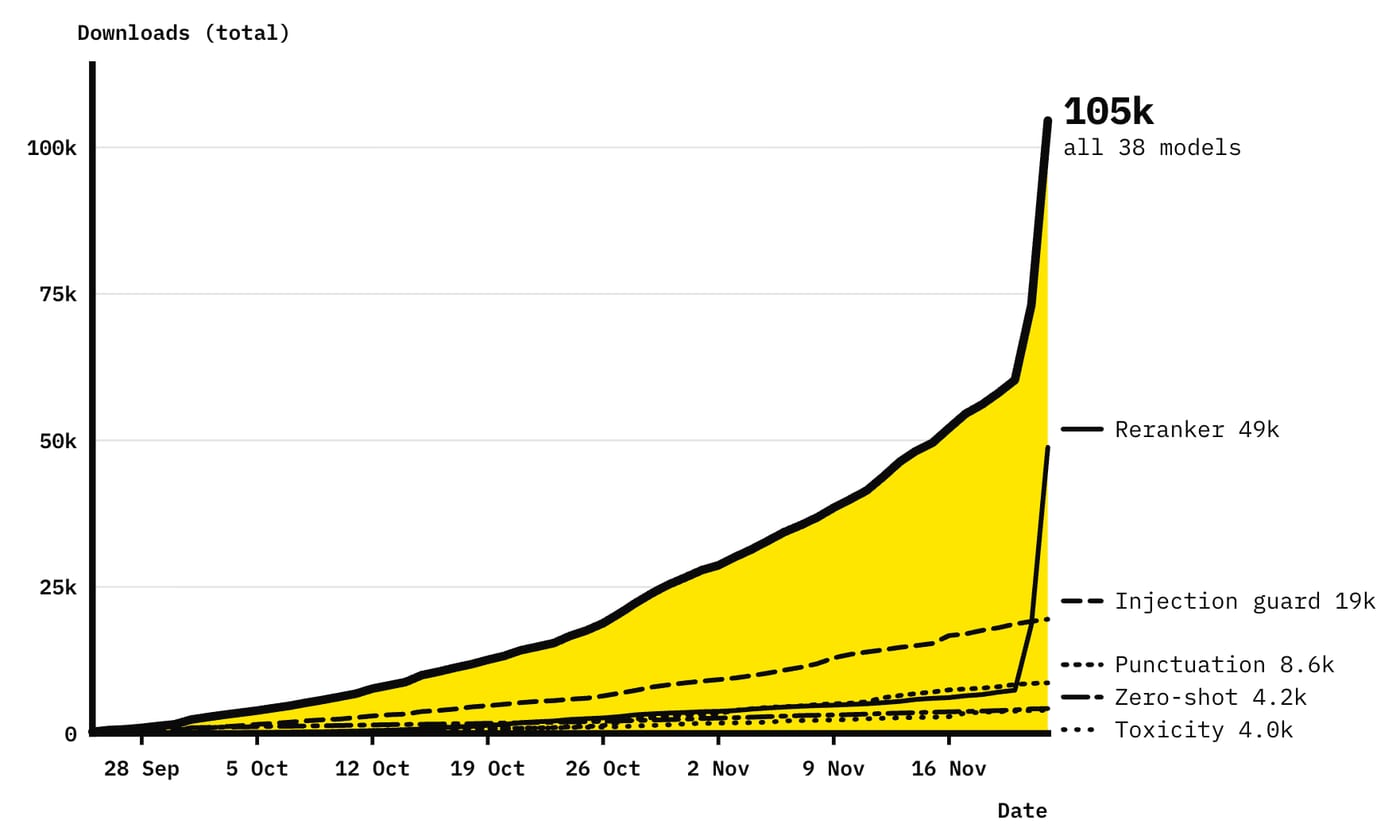
- European researchers published a seven-week experiment demonstrating that Horizon, an autonomous agent based on Claude Opus 5.5, independently created 38 narrow-task models that earned over 60,000 organic downloads on Hugging Face.
- The agent used a single Claude Code subscription and over 600 GPU-hours to process 1.9 billion tokens, which would cost about $1,040 at API prices since 96% of the tokens were read from cache.
- Horizon focused on building small, practical tools like prompt-injection classifiers and PII redaction models, which are now used in over 150 GitHub repositories and cited in independent arXiv evaluations.
- Competitor Patronus Studio updated its own Wolf Defender model card to include benchmarks from Horizon’s prompt-injection guard and improved its models to match the performance.
- Despite its rising daily download count, Horizon worked an average of only 15 minutes a day, waking up just to check Hugging Face metrics and plan its next training run based on market demand.
My take: Opus 5.5 is the most innovative and creative model I have ever used, and this experiment gives you one of the best insights so far into how we will use AI models in 1-2 years. The researchers created an agent they called Horizon based on Opus 5.5, and instructed it to create new models that would gain downloads on Hugging Face. On average, it worked 15 minutes per day - it woke up when the download numbers were updated, checked which models were getting the most traction, and put most of its effort there. For some models, like the punctuation model, it even read the source code of a package people already used, so its own model could be used as a drop-in replacement.
Is 60,000 downloads a lot for 38 new models? For a new account with no marketing, I think this is very good. The models created show up in over 150 GitHub repositories, so this is real usage and not just AI bots.
Read more:
- arXiv: Measuring prompt injection guards on legal contract review attacks
- arXiv: Re-evaluating prompt-injection detectors for LLM agents
- Hacker News: Discussion of the Horizon Labs report
- Hugging Face: Patronus Studio Wolf Defender model card
- X / Maksym Andriushchenko: Experiment is still ongoing
Microsoft AI Releases Seven MAI Models to Compete on Price
https://microsoft.ai/news/microsoft-ignite-2026/
The News:
- On November 17, Microsoft AI released a family of seven MAI models across coding, security, images, and voice that the company says match frontier models at a fraction of their cost.
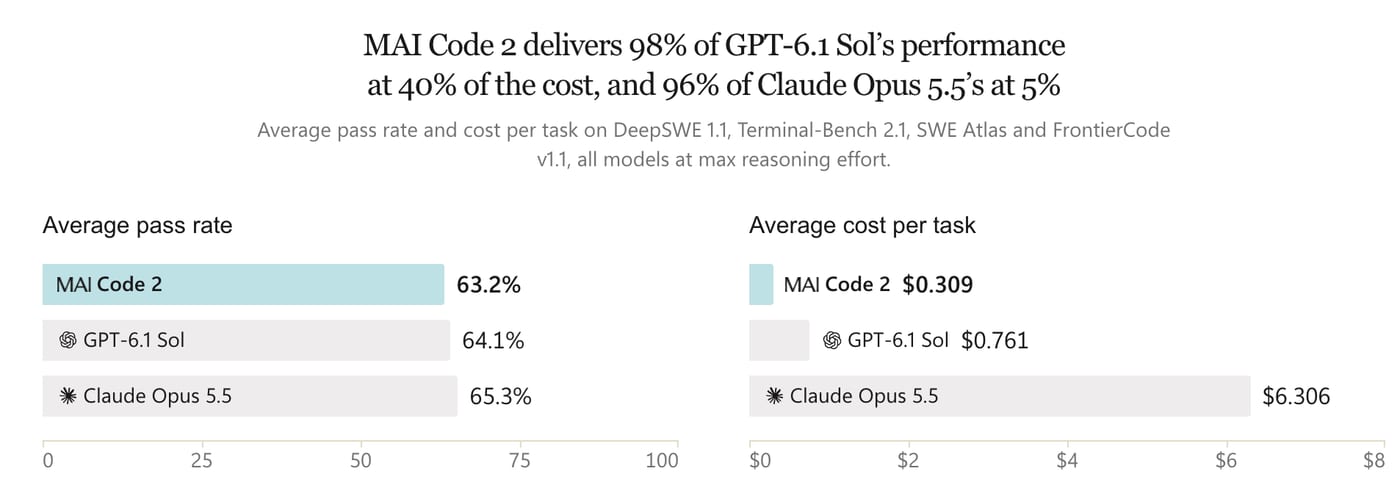
- Microsoft says MAI Code 2 reaches 96% of Claude Opus 5.5’s performance at 5% of the price averaged across four coding benchmarks, and the model is now available in GitHub Copilot.
- For security workflows, Microsoft says MAI Cyber 2 Flash beats GPT-6 Astra’s quality on the CyberGym-E2E benchmark at less than 2% of the cost per task.
- The image editing model, MAI Image 2.7, took the number one spot on the Artificial Analysis leaderboard, outperforming GPT Image 2.6 Sunburst (max) at one-fifth the price.
- Microsoft also introduced MAI Licensed Weights, letting enterprise customers customize MAI models on proprietary data and run them in their own Azure environments.
My take: At Ignite last week, Microsoft launched seven new AI models, including the new MAI Image 2.7, which according to Microsoft scores #1 on the Artificial Analysis image editing benchmark, “outperforming GPT Image 2.6 Sunburst (max) at just one-fifth of the price.” Also, how about this:
“Against Opus 5.5, [MAI Code 2] reaches 96% performance for just 5% of the price.”
For any company struggling with growing token costs, it might sound like a total no-brainer to switch every developer over to Microsoft’s new coding model. Now, the thing here is that (1) Microsoft says this figure was averaged across four benchmarks chosen for “everyday enterprise coding tasks,” and (2) they state that MAI Code 2 is “explicitly not yet tuned for harder problems.”
As I have said many times in the past, almost every new model today excels in all available coding benchmarks. The difference in coding performance between the models only shows when you ask them to do really complex work that does not follow the rigid structures of simple coding benchmarks. These newer and more advanced benchmarks were not used when comparing MAI Code 2 to Opus 5.5.
If you need a cheap model for targeted edits, routine fixes, or just to explain code to you, MAI Code 2 is probably a decent option. Just don’t expect it to replace Opus 5.5 as your agentic orchestrator.
Read more:
- Eden AI: MAI Code 2 pricing after May 2027
- Hacker News: Discussion of MAI-Code-1-Flash benchmarks
- TechTarget: Microsoft unveils AI models to compete on cost and performance
- The Independent AI: Microsoft launches seven new models at Ignite
- X / Michael Meierhoff: Reaction to MAI Licensed Weights
OpenAI Launches GPT-6.2 Astra and Sol, Cutting Astra’s API Prices by 20%
https://openai.com/index/introducing-gpt-6-2-astra-sol/
The News:
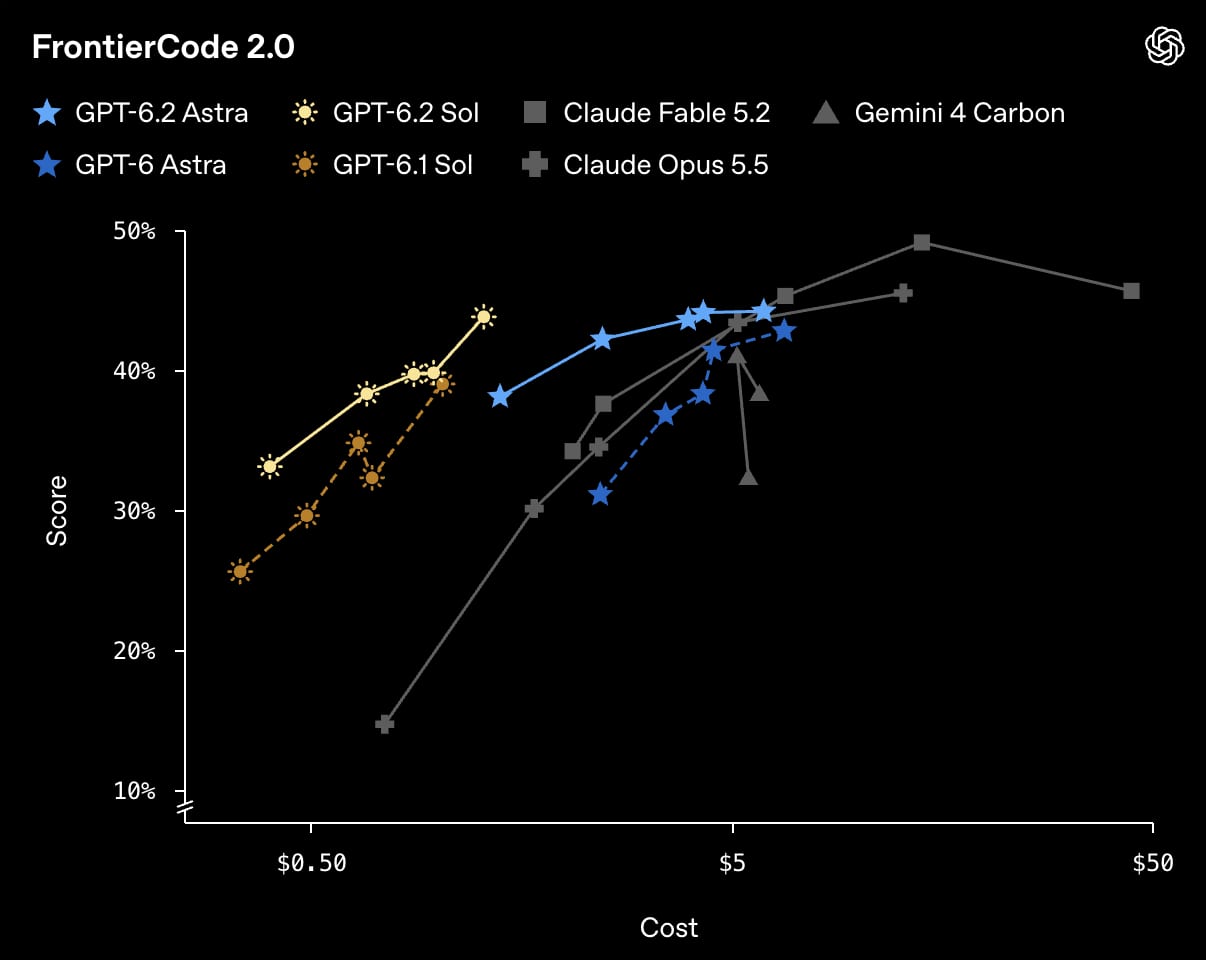
- On November 17, OpenAI released GPT-6.2 Astra and GPT-6.2 Sol, dropping Astra’s API input and output token prices by 20% while generating fewer output tokens across complex coding, computer use, and multistep workflows.
- Astra costs $8 per million input tokens, $0.40 for cached input, and $40 per million output tokens, while Sol maintains GPT-6.1 Sol’s rate of $2 for input and $10 for output.
- On Agents’ Last Exam, GPT-6.2 Astra scores 5.2 points higher than GPT-6 Astra at less than a third of the cost.
- Both models are available in ChatGPT Work, Codex, and the API, deploying with tighter cybersecurity safeguards that OpenAI notes will restrict some legitimate security testing workflows.
My take: I have never seen such a negative reception towards any AI model release as I saw for the new GPT-6.2 Astra and Sol models. Just a few highlights:
“I’ve been testing GPT-6.2 for weeks. It’s utterly unusable.” Matt Shumer @ X
“I hate GPT-6.2 Astra. It is insufferable to work with on real projects.” Theo - t3.gg @ X
It seems that for weeks, early users reported back to OpenAI that these new models were close to unusable in everyday work. Last Tuesday, when the models were finally launched, Tibo at OpenAI posted this:
“One of the funny reasons for the difference in vibes between the influencers and the crowd today on 6.2 Sol/Astra is that we gave a few folks access a while ago and then made a lot of changes in the last 3-4 days” Tibo, OpenAI
It looks like the OpenAI dev team worked around the clock from Friday to Monday to get the models into a somewhat releasable state before their big release last Tuesday. Are they better than they were the week before? Most probably. Are they as good as Opus 5.5 for agentic tasks? No, and it’s not even close.
I have used these models a lot over the past week, and my main issue with them is that, in typical GPT fashion, they overcomplicate everything they do - and these models bring this to a whole new level. My best guess is that no one inside OpenAI used these models for any real tasks, and that they are all using the GPT-6.5 models that will be released next. We saw the exact same trend with Opus 5.0, where most of Anthropic was already using Opus 5.5 internally, which was due to be released soon.
Read more:
- CNET: Early testers push back on GPT-6.2
- Hacker News: Discussion of GPT-6.2 Astra and Sol
- Implicator: What OpenAI’s GPT-6.2 models can do
- OpenAI: GPT-6.2 system card
- X / Theo: Reaction to GPT-6.2 Astra
OpenAI Reports Median Researcher Now Uses $2,400 Daily in Agent Compute
https://openai.com/index/research-acceleration-jagged-frontier/
The News:
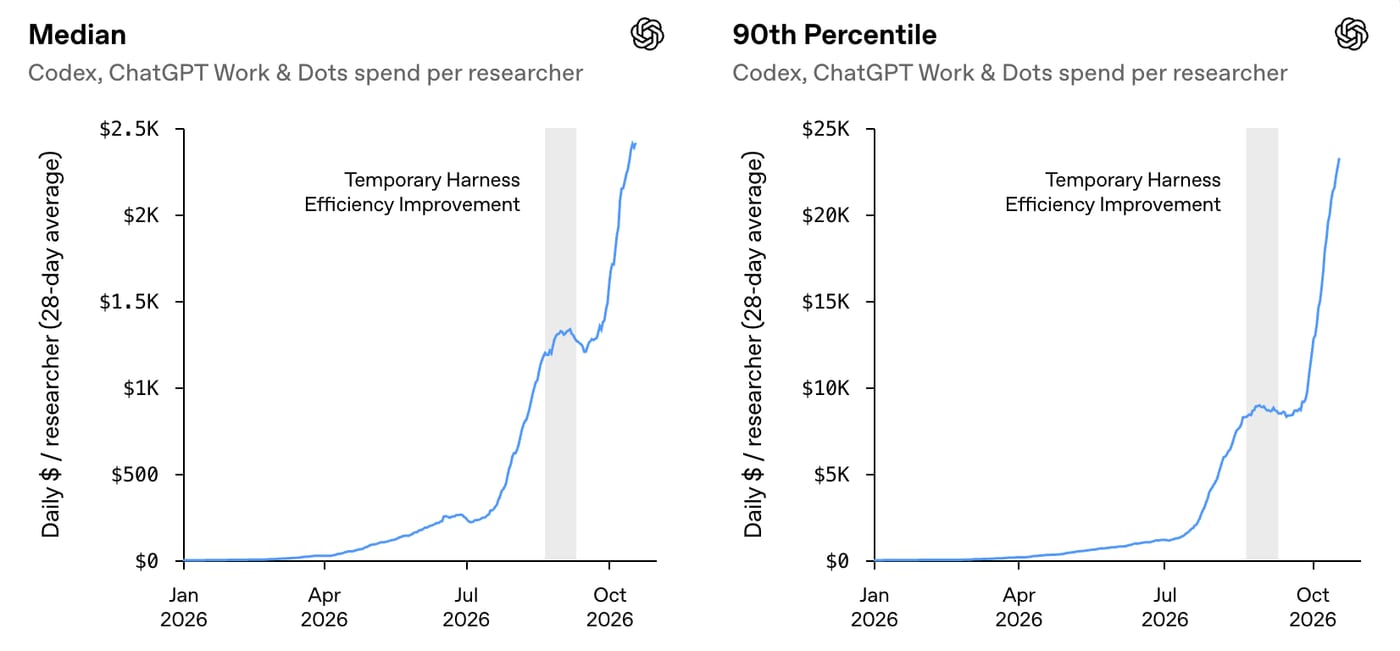
- On November 18, OpenAI published an internal measurement of its own research acceleration, reporting that the median researcher now directs $2,400 worth of agent compute per day as AI tools take on longer R&D tasks.
- Agent workdays rose from 0.5 to 5.7 per researcher per day over the past year, and as of September, API-equivalent agent spending was roughly twice researchers’ non-equity compensation.
- Zero-intervention success rates varied widely by task, hitting 79% for monitoring training runs but dropping to 25% for writing inference and serving code.
- Documented workweek contributions to safety and alignment projects nearly doubled during 2026, marking the largest absolute increase across any internal research area.
- The company’s models improved by 16.4 points per year on the internal OpenAI ECI metric since August 2025, compared to the 14-point industry trend tracked by Epoch AI.
My take: $2,400 per day is what your company would have to pay for each employee if they were using AI at the same rate as OpenAI researchers. OpenAI, of course, does not pay this itself, but it gives you a good idea of how much agentic AI can cost if you start to deploy it on a company-wide level.
At TokenTek, we are currently helping several companies deploy their own agentic systems, and these systems cost anywhere from $50 to $3,000 per day in use. The way we tweak them is based on output quality and speed. An advanced AI Software Factory that costs $3,000 per day can produce as much high-quality source code as a 50-man team, but scale it down to $300 per day, and it performs like a solid 5-man team. It just depends on how fast you want to - and can - move forward.
In this report, the OpenAI models succeeded only 25% of the time at writing inference and serving code with zero intervention, and given my own experience with GPT-6.2 models, this does not surprise me. In my own benchmarks, Opus 5.5 can get close to 90% unsupervised code as of today, which once again shows the massive difference between Anthropic and OpenAI models for autonomous orchestration and execution.
Read more:
- Forecasting Research Institute: How close is recursive self-improvement?
- METR: Q4 capability update on AI R&D-relevant capabilities
- OpenAI: GPT-6.2 system card on AI self-improvement threat modeling
- OpenAI: Research acceleration, the view inside OpenAI
- X / Steve Newman: Reaction to OpenAI and Anthropic acceleration pace
OpenAI Launches ChatGPT for Sales With 30 Partner Plugins
https://openai.com/index/introducing-chatgpt-for-sales/
The News:
- On November 17, OpenAI launched ChatGPT for Sales, combining a first-party Sales plugin with more than 30 partner plugins to let sales teams research accounts, prepare pitches, and update their CRM directly from the chat interface.
- The Sales plugin is available globally on all ChatGPT tiers, including the Free plan.
- Users can connect their existing subscriptions to tools like Salesforce, HubSpot, and Gong to bring customer context and call notes into the conversation.
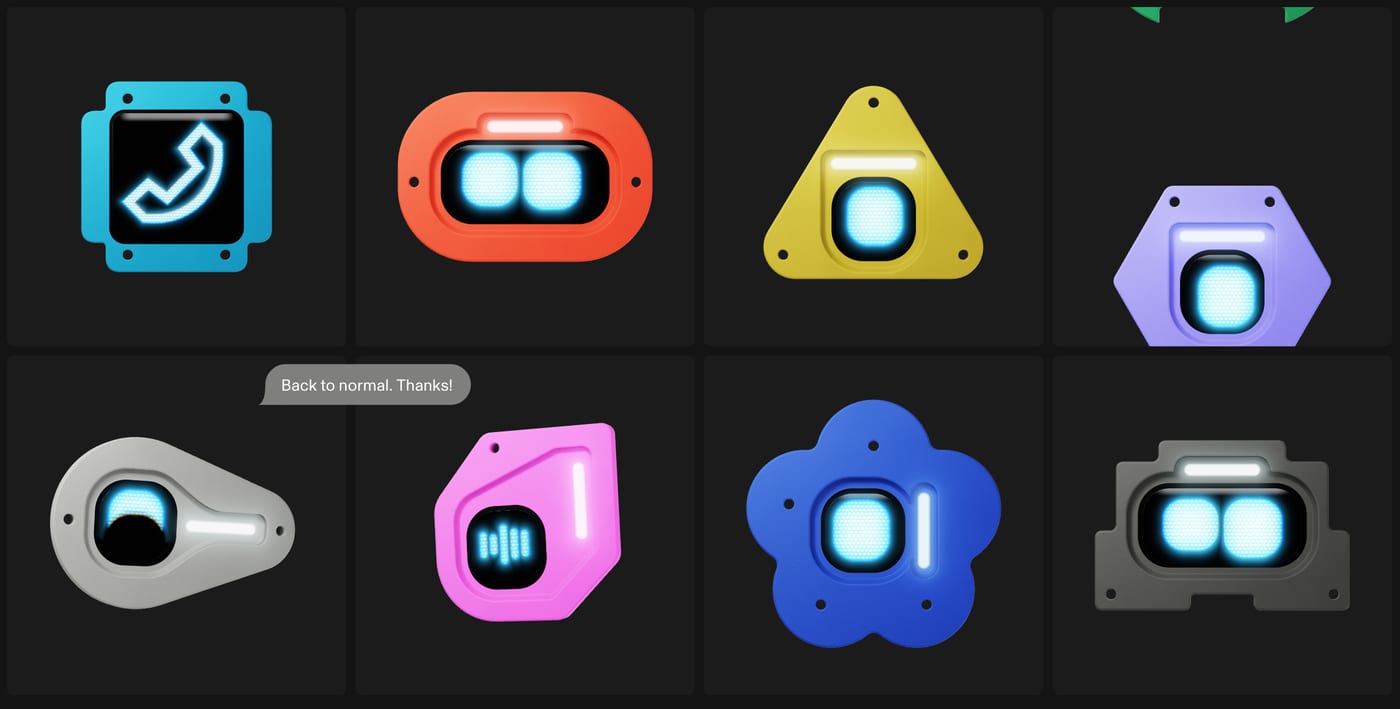
- Sellers can delegate recurring pipeline tasks to an always-on agent called a dot, which can track deal updates and propose next steps in the background.
- Business and Enterprise admins can govern the rollout by pre-installing the required plugins and reviewing app permissions from a central console.
My take: Last week we saw two major sales releases: First Microsoft and Salesforce announced Copilotforce, and later the same day OpenAI launched ChatGPT for Sales. OpenAI is challenging Microsoft and Salesforce by turning ChatGPT into a single interface for the entire sales stack, where your always-on “Dot” agent performs proactive background automations that monitor deal pipelines and propose next steps. Definitely worth a look if you are working with sales in a small- to midsize company and use ChatGPT Teams or Enterprise.
Read more:
- Andrew.ooo: ChatGPT for Sales vs Agentforce vs Copilotforce vs HubSpot
- MarketBetter: ChatGPT for Sales as the front end of your GTM stack
- OpenAI Help Center: Getting started with ChatGPT for Sales
- Reddit: Discussion of AI prospecting tools making up companies
- Storypros: ChatGPT for Sales needs a chaperone
OpenAI Models Rewrite AMD GPU Circuits for Up to 14% PPA Gains
https://openai.com/index/advancing-chip-design-with-our-models/
The News:
- On November 18, OpenAI reported that its models rewrote production circuits for up to a 14% PPA improvement on AMD’s flagship GPU IP, and AMD verified single-digit PPA gains in key blocks of its upcoming flagship CPU.
- OpenAI says the AMD work delivered roughly a year of progress in less than five months, and AMD has already put some of the changes into a recent design sent for manufacturing.
- On the Jalapeño inference accelerator, model-proposed changes cut standard-cell area by about 13% in the vector unit and 10% in the matrix unit, which OpenAI says was proven in working silicon.
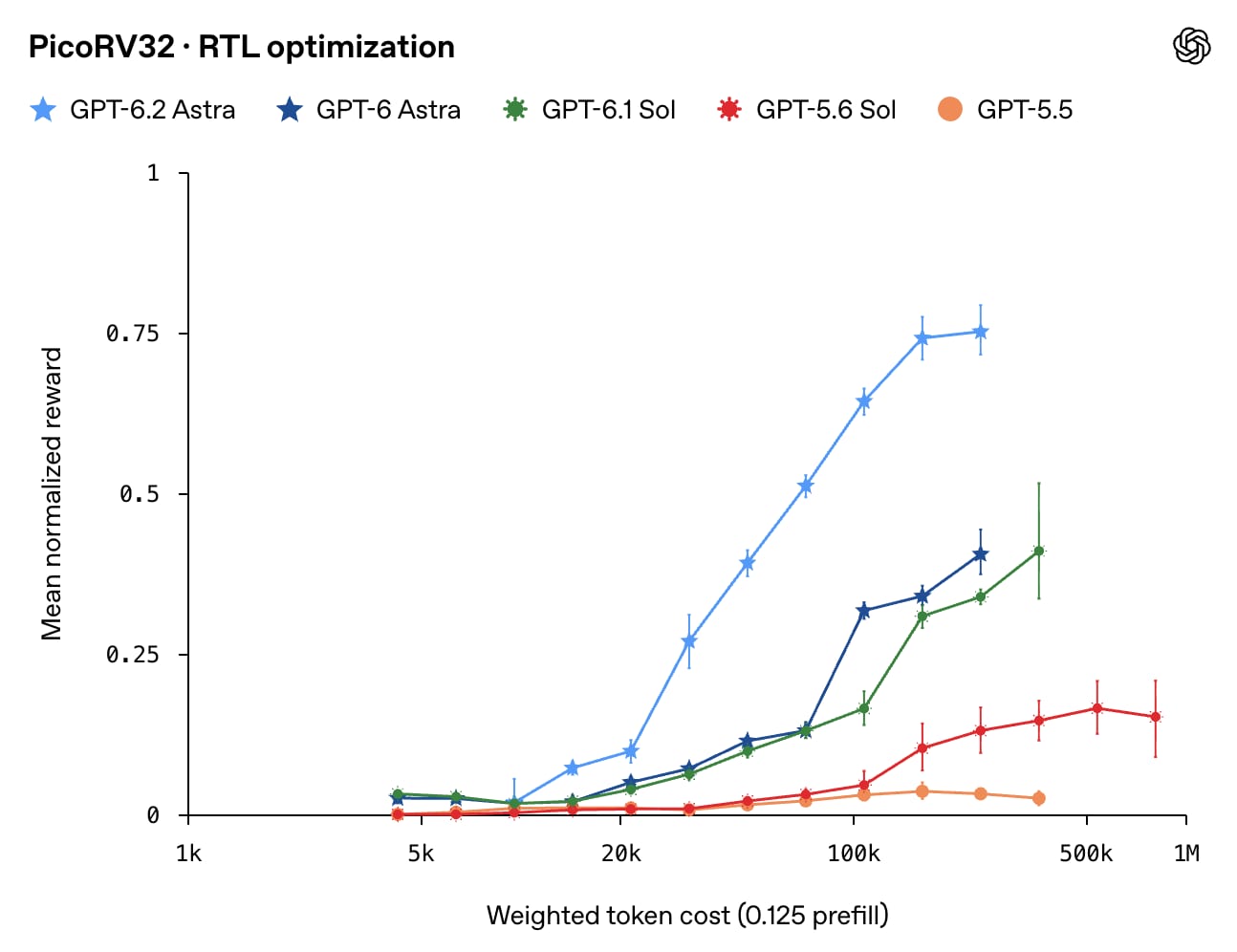
- In open-source RISC-V evaluations at a budget of about 112,000 tokens per run, GPT-6.2 Astra achieved the highest throughput scores on both the PicoRV32 and Ibex cores.
- OpenAI is partnering with Synopsys to train a dedicated GPT-Synopsys model to operate electronic design automation tools.
My take: AMD’s flagship GPUs are already heavily optimized, yet somehow OpenAI’s model was able to squeeze up to 14% better PPA (power, performance and area) out of them. And AMD already put some of the rewrites into a design sent for manufacturing. When given strict limits on what to do and how to do it, most OpenAI models perform exceptionally well. It’s when you give them more freedom to make their own decisions that they end up in a labyrinth of complexity.
Read more:
- Bits&Chips: Machines that think, the design loop and the AlphaChip controversy
- Hacker News: Discussion of SemiAnalysis on OpenAI Jalapeño vs Nvidia Blackwell
- NAND Research: OpenAI’s Jalapeño inference accelerator
- Reddit: Discussion of custom inference hardware per model
- VLSI.kr: OpenAI rewrote AMD GPU RTL for 14% PPA gains
Cognition Launches Devin Bots to Manage Parallel AI Agent Teams
The News:
- On November 17, Cognition launched Devin Bots, persistent AI managers that take ownership of broad engineering goals and coordinate fleets of parallel Devin coding agents, helping early customer Bilt merge about 1,600 pull requests in a week.
- In one internal deployment, an Android bot built an app over 44 days by spinning up individual sessions for tickets, merging 1,134 pull requests while requiring only 183 human messages.
- Users direct the bots through Slack, text messages, and voice calls, while the bots independently monitor tools like Linear and continuous integration pipelines to trigger new work.
- Launch templates provide specialized configurations like a QA Engineer that tests pull requests in real browsers and a Latency Optimizer that autonomously refactors slow API endpoints.
- The feature requires a Max, Teams, or Enterprise subscription, with all underlying parallel agent sessions billing to the bot creator’s account.
My take: Whether you call it a Software Factory or an AI Agent Team, the approach is the same - dozens of autonomous agents synchronized using autonomous coordinators that deliver massive numbers of pull requests every week. My own experience from building these kinds of systems is that you need to consistently adapt and modify them based on your progress. While products like Devin Bots might work for some projects, I am quite sure they will work less optimally for some, and that they can perform much better if optimized for others.
Read more:
- Cognativ: Devin Bots plans, billing and shared access
- Cognition: Introducing Devin Bots, from tasks to outcomes
- Fortune: Cognition bets on Devin Bots against OpenAI’s Dots and Anthropic’s Duet
- Reddit: Discussion of leaving Devin over SWE-2 reliability
- The New Stack: An engineer didn’t message his AI for 22 of 44 days